


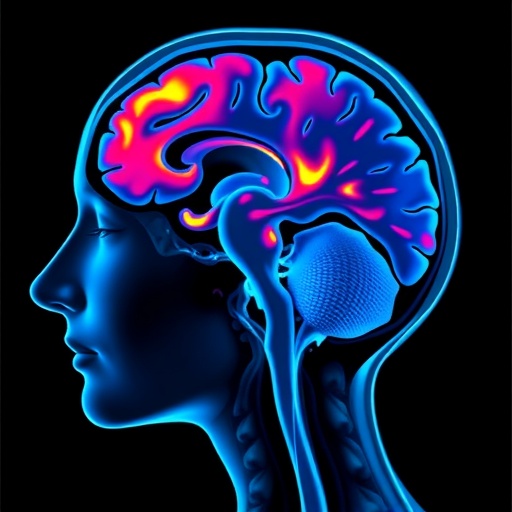
A new randomized controlled fMRI study is putting one of psychiatry’s most closely watched drugs under the microscope, asking how ketamine changes the brain dynamics associated with rumination—the repetitive, self-focused thinking that can trap people in cycles of regret, worry and hopelessness. Published in Translational Psychiatry, the study by Meiering, Weigner, Gärtner and colleagues examines ketamine’s impact on the neural processes linked to this persistent mental loop. Its focus is not simply whether people feel better after treatment, but how the brain’s moment-to-moment activity may shift when the mind becomes less rigidly attached to negative thoughts. The research arrives as scientists increasingly move beyond static brain images and investigate neural activity as a constantly changing system, with patterns that form, dissolve and reconfigure over seconds.
Rumination is a major feature of depression and is also associated with anxiety and other forms of psychological distress. Unlike ordinary reflection, which can help people solve problems or learn from experience, rumination tends to be repetitive, emotionally charged and unproductive. People may revisit the same failure, anticipate the same threat or repeatedly analyze their feelings without reaching a resolution. Neuroscientists have linked this style of thinking to communication among several large-scale brain networks, particularly the default mode network, which is active during self-referential thought and autobiographical reflection. When the default mode network remains overly dominant or insufficiently coordinated with systems involved in attention, decision-making and emotional regulation, internal thought can become difficult to interrupt. The new trial centers on whether ketamine can alter this network behavior in a measurable way.
Ketamine is best known as an anesthetic and, in recreational settings, as a dissociative drug. In carefully controlled medical research, however, low doses have produced rapid antidepressant effects in some patients, including individuals who have not responded to conventional treatments. Its primary pharmacological action involves blocking a subtype of glutamate receptor called the N-methyl-D-aspartate, or NMDA, receptor. Glutamate is the brain’s main excitatory neurotransmitter, and NMDA receptors help regulate synaptic plasticity—the capacity of neural connections to strengthen, weaken and reorganize. By temporarily changing how glutamate circuits operate, ketamine may trigger downstream molecular events that enhance communication between neurons. Researchers believe that these effects could help the brain escape entrenched patterns of activity, although the precise relationship between molecular changes, network dynamics and subjective experience remains under intense investigation.
The fMRI component of the study is important because it allows researchers to observe these changes across the living brain without reducing them to a single measure of activity. Functional magnetic resonance imaging detects fluctuations in blood oxygenation that indirectly reflect neural activity. Traditional fMRI analyses often calculate average connectivity between regions over an extended scan. That approach can reveal whether two areas tend to work together, but it may miss the fleeting configurations through which thoughts actually unfold. A dynamic analysis instead examines how connectivity patterns evolve over time. It can identify recurring brain states, transitions between those states and the stability or flexibility of each configuration. In the context of rumination, this framework may show whether ketamine reduces the persistence of internally focused network states or increases the brain’s ability to move toward patterns associated with attention, cognitive control and engagement with the external world.
The randomized controlled design strengthens the study’s ability to distinguish drug-related effects from expectation, time and repeated testing. In a randomized trial, participants are assigned to treatment conditions using a method intended to balance relevant characteristics across groups. A control condition is essential for ketamine research because the treatment can produce noticeable subjective sensations, including altered perception, dissociation and changes in bodily awareness. Those experiences may influence how participants report their mood or thoughts. By comparing groups under controlled conditions and pairing self-report measures with fMRI data, researchers can ask whether changes in rumination correspond to specific alterations in brain organization rather than merely reflecting participants’ expectations. The title of the study indicates that the investigators designed the experiment specifically to connect ketamine exposure, rumination-related thought and time-sensitive neural activity.
One potential implication is that ketamine may work partly by loosening the grip of highly repetitive mental states. This does not necessarily mean that the drug erases negative memories or eliminates difficult emotions. A more plausible neural interpretation is that ketamine may temporarily increase the flexibility of communication among brain systems, making it easier for attention to shift and for new interpretations or behaviors to emerge. The default mode network does not operate in isolation. It interacts with the salience network, which helps identify important internal and external signals, and with frontoparietal control networks involved in planning, inhibition and goal-directed thought. Rumination may become especially persistent when these systems fail to coordinate effectively. If ketamine modifies the timing or probability of transitions among them, the result could be a brain less locked into one self-referential pattern.
The study also speaks to a wider transformation in depression research. For decades, treatment development focused heavily on chemical imbalances and the average activity of individual brain regions. Modern neuroscience increasingly describes psychiatric symptoms as emergent properties of distributed circuits. In this view, depression is not located in one malfunctioning structure; it arises from interactions among systems that regulate reward, memory, threat, attention, self-evaluation and motivation. Rumination is particularly well suited to this network-based approach because it is defined by the repeated coordination of cognition and emotion across time. Dynamic fMRI can therefore provide a bridge between subjective experience and measurable physiology. A patient’s description of being unable to stop thinking may correspond to identifiable features of neural persistence, reduced flexibility or abnormal transitions between functional brain states.
At the same time, the findings must be interpreted with appropriate caution. fMRI measures changes in blood flow and oxygen use, not thoughts directly, and the relationship between the signal and neuronal activity is indirect. Brain networks identified in one experiment are also statistical descriptions rather than isolated anatomical machines. Ketamine’s effects can vary according to dose, treatment setting, previous medication exposure, psychiatric diagnosis and individual biology. Rapid symptom relief may not persist without follow-up care, and the drug can carry risks, including increases in blood pressure, perceptual disturbances and misuse potential. A brain pattern associated with reduced rumination would not, by itself, prove that ketamine is suitable for every patient. Clinical decisions require evidence from larger studies, longer observation periods and careful assessment of safety.
The significance of Meiering and colleagues’ work lies in its attempt to connect ketamine’s rapid psychological effects with the brain’s changing computational landscape. Rather than asking only whether a patient’s mood score improves, the study investigates what happens to the neural choreography underlying repetitive self-focused thought. That approach could help identify biomarkers for treatment response, clarify why some people benefit while others do not and guide the development of therapies that reproduce ketamine’s beneficial effects with fewer risks. As psychiatric medicine searches for faster and more precise interventions, the most important breakthrough may not be a single drug but a better explanation of how entrenched mental states form—and how the brain can regain the flexibility to move beyond them.
Cite Scienmag News
Glenn Wilkins. (August 18, 2026). Randomized fMRI Trial Reveals How Ketamine Alters Rumination-Linked Brain Dynamics. Scienmag. https://scienmag.com/randomized-fmri-trial-reveals-how-ketamine-alters-rumination-linked-brain-dynamics/
Glenn Wilkins. "Randomized fMRI Trial Reveals How Ketamine Alters Rumination-Linked Brain Dynamics." Scienmag, 18 August 2026, https://scienmag.com/randomized-fmri-trial-reveals-how-ketamine-alters-rumination-linked-brain-dynamics/. Accessed 3 September 2026.
Glenn Wilkins. "Randomized fMRI Trial Reveals How Ketamine Alters Rumination-Linked Brain Dynamics." Scienmag. August 18, 2026. https://scienmag.com/randomized-fmri-trial-reveals-how-ketamine-alters-rumination-linked-brain-dynamics/


