


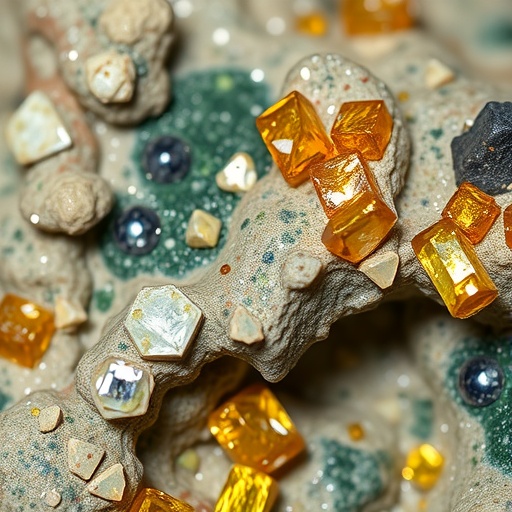
Chalcopyrite, a copper iron sulfide mineral, has long been recognized as a primary source of copper, an essential metal in numerous technological applications. Researchers have identified conventional high-temperature mechanisms for chalcopyrite formation. However, groundbreaking insights have emerged regarding a novel pathway for chalcopyrite synthesis at low temperatures, particularly within the acidic, metal-rich microenvironments found in certain sedimentary contexts. This discovery not only challenges existing paradigms in mineral formation but opens new avenues for understanding geochemical processes indynamic ecosystems.
The research team’s findings offer compelling evidence that low-temperature chalcopyrite formation can occur under specific conditions that were previously overlooked. The focus is primarily on acidic microenvironments commonly found in regions affected by human activities, such as mining and industrial runoff. These areas often accumulate heavy metals and generate acidic conditions that can influence mineral precipitation dynamics significantly. The implications of this research are far-reaching, affecting our understanding of both mineralogy and environmental remediation strategies.
Exploring the mechanisms behind this novel chalcopyrite formation pathway necessitates a detailed understanding of the physicochemical conditions present in these microenvironments. The researchers conducted rigorous field studies in sediments collected from several geographically diverse sites, revealing unique chemical signatures and mineral compositions. Factors such as pH, temperature, and the concentration of various ions play pivotal roles in facilitating the synthesis of chalcopyrite at lower temperatures than traditionally accepted.
Additionally, the involvement of microbial activity emerged as a critical component in this novel pathway. The interplay between bacteria and mineral formation processes alters the chemistry of the surrounding environment, potentially leading to the precipitation of chalcopyrite. Such findings underscore the importance of biogeochemical interactions in mineral formation and highlight the unpredictable nature of these processes in acidic environments.
The sediment analysis revealed that the intricate relationships between microbial communities and the geochemical parameters of the sediments significantly contributed to the preservation and formation of chalcopyrite. Through a series of laboratory experiments, the researchers simulated conditions observed in the field, validating their hypotheses regarding microbial influence and confirming that temperature thresholds for chalcopyrite formation can indeed be lower than traditional models suggest.
Moreover, the researchers emphasized the environmental significance of unveiling this pathway. Given the critical role of chalcopyrite in the global copper supply chain, understanding various formation mechanisms can transform our approach to mineral resource management. Additionally, it could contribute to effective remediation of metal-contaminated sites, leveraging naturally occurring processes to enhance recovery of valuable minerals while also addressing environmental concerns.
This research also aligns with broader discussions surrounding sustainable mining practices. By gaining insights into low-temperature chalcopyrite formation, mining industries can adapt their methods, employing environmentally friendly approaches that mimic natural processes. The potential for bioremediation or biotreatment strategies based on these findings is immense, paving the way for environmentally responsible mining and resource extraction initiatives.
In light of the ongoing challenges posed by metal contamination and climate change, the study offers a crucial perspective on how we approach environmental challenges. By fostering a deeper understanding of mineral formation pathways, we can develop innovative solutions to mitigate environmental degradation and enhance the recovery of essential metals.
As naturally occurring processes often dictate mineralization pathways, mining companies and environmental engineers can work in harmony with these mechanisms. This research illustrates how human activities interact with geological processes, emphasizing the need for sustainable approaches that align with the natural behavior of ecosystems.
The study will undoubtedly spark additional research focused on low-temperature mineral formation processes. The implications of these findings encourage scientists to further explore the complexities of mineralogenesis in diverse environments, which could revolutionize our understanding of mineral deposits and contribute to new industrial applications.
In conclusion, the discovery of a novel pathway for chalcopyrite formation at low temperatures within acidic, metal-rich sediments is a particularly exciting development in mineral geology. This research not only provides new insights into the mechanisms of mineral formation but also encourages a reevaluation of how we manage mineral resources, emphasizing sustainability, and environmental stewardship. As the scientific community delves deeper into these findings, we can expect a ripple effect across various disciplines, impacting mining, environmental science, and geology.
Ultimately, understanding mineral formation is essential for harnessing the resources needed for a sustainable future. By redefining our approaches based on new evidence, we can ensure that the extraction of vital minerals, like copper, aligns with ecological integrity. With continued exploration into these newly discovered pathways, the potential for scientific advancement and environmental remediation expands exponentially.
Through interdisciplinary collaboration and innovative research strategies, the path forward is illuminated. As new questions arise from this pioneering work, the scientific community is poised to unravel more of nature’s mysteries surrounding mineral genesis and their implications for both our environment and technological progress.
Cite Scienmag News
Violet Maxwell. (November 20, 2025). Low-Temperature Chalcopyrite Formation in Acidic Sediments. Scienmag. https://scienmag.com/low-temperature-chalcopyrite-formation-in-acidic-sediments/
Violet Maxwell. "Low-Temperature Chalcopyrite Formation in Acidic Sediments." Scienmag, 20 November 2025, https://scienmag.com/low-temperature-chalcopyrite-formation-in-acidic-sediments/. Accessed 3 September 2026.
Violet Maxwell. "Low-Temperature Chalcopyrite Formation in Acidic Sediments." Scienmag. November 20, 2025. https://scienmag.com/low-temperature-chalcopyrite-formation-in-acidic-sediments/


