


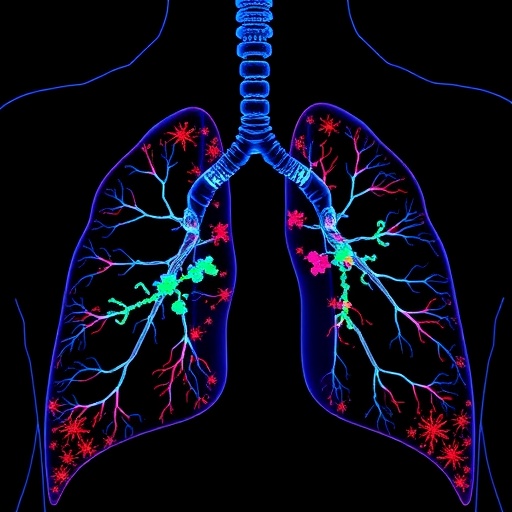
A groundbreaking study recently published in the esteemed journal Genes & Diseases unveils the sophisticated regulatory circuitry by which the long non-coding RNA (lncRNA) ROLLCSC potentiates metastatic dissemination in lung adenocarcinoma (LUAD). This innovative research, spearheaded by scientists at Chongqing Medical University and Southwest Medical University, elegantly deciphers how ROLLCSC acts as a pivotal driver in transferring metastatic capacity from cancer stem cells to their non-stem cell counterparts, thereby intensifying tumor progression.
Delving deep into the molecular underpinnings, the research team harnessed an array of advanced molecular biology techniques alongside comprehensive multi-omics analyses to elucidate the mechanism orchestrating this metastatic transfer. Central to their findings is the identification of a highly intricate positive feedback loop that regulates extracellular vesicle (EV) uptake, a process critical for intercellular communication within the tumor microenvironment. The GTPase protein CDC42 emerges as a key facilitator by enabling the encapsulation of ROLLCSC within EVs derived from LUAD stem cells.
Once these ROLLCSC-enriched EVs are internalized by recipient lung cancer cells, the stability of ROLLCSC is ensured through N6-methyladenosine (m6A) RNA demethylation, a post-transcriptional modification mediated by the fat mass and obesity-associated protein (FTO). This demethylation event reduces m6A methylation on ROLLCSC, which in turn allows its recognition and binding by IGF2BP2, an m6A reader protein. Such stabilization is essential as it amplifies the lncRNA’s regulatory impact on cellular processes within these recipient cells.
Intriguingly, by stabilizing ROLLCSC, the system drastically remodels lipid metabolism in the target cancer cells, which is a critical determinant of tumor aggressiveness. The study reveals that ROLLCSC serves as a molecular scaffold facilitating the interaction between the E3 ubiquitin ligase ELOC and acyl-CoA synthetase long chain family member 4 (ACSL4). This interaction accelerates ubiquitination and subsequent degradation of ACSL4, a known promoter of lipid peroxidation.
The degradation of ACSL4 effectively suppresses ferroptosis—a specialized form of regulated cell death driven by lipid peroxidation—thereby conferring resistance to oxidative stress-induced cell demise. This metabolic reprogramming enables tumor cells to survive under hostile microenvironmental conditions, fostering enhanced metastatic potential. Furthermore, ROLLCSC exerts a competing endogenous RNA (ceRNA) function by targeting microRNA miR-5623-3p, which leads to upregulation of SLC25A11. This mitochondrial transporter facilitates increased intra-mitochondrial glutathione (GSH) import, bolstering the antioxidant capacity of cancer cells and further mitigating ferroptotic vulnerability.
The translational significance of these molecular mechanisms was powerfully validated in orthotopic lung metastasis models. Therapeutic interventions aimed at disrupting the ROLLCSC signaling axis—either through forced overexpression of ACSL4 or knockdown of ELOC—substantially reinstated ferroptosis sensitivity. This restoration corresponded with a marked decrease in metastatic tumor nodules within the lungs, underscoring the potential of targeting this pathway for therapeutic gain.
Complementing experimental data, clinical analyses draw robust correlations between elevated expression levels of ROLLCSC, CDC42, and SLC25A11 and adverse clinical outcomes in LUAD patients. High expression associates strongly with advanced tumor stage and diminished overall survival, painting a compelling portrait of this signaling network’s impact on human disease progression.
This study underscores a vital paradigm: extracellular vesicle-mediated lipid metabolic reprogramming is a formidable driver of lung adenocarcinoma aggressiveness. However, the authors thoughtfully highlight that additional investigations are warranted to establish the efficacy and safety of ROLLCSC-targeted therapies across diverse clinical cohorts and tumor contexts.
By illuminating the multilayered molecular choreography whereby ROLLCSC reshapes the tumor microenvironment and modulates ferroptosis susceptibility, this research offers a visionary dual-action therapeutic strategy. Disrupting EV-delivered ROLLCSC function simultaneously enhances ferroptotic cell death and retards metastatic progression driven by lipid metabolism abnormalities, positioning these pathways as compelling targets for next-generation lung cancer treatments.
In sum, this seminal work opens promising avenues for the development of specific inhibitors targeting ROLLCSC and its downstream metabolic effectors. Such novel agents could profoundly alter the clinical landscape, improving outcomes for patients afflicted with lung adenocarcinoma by attacking the metabolic vulnerabilities underpinning tumor spread.
The convergence of non-coding RNA biology, epigenetic regulation via m6A modification, and cancer metabolism illuminated here exemplifies the growing sophistication of molecular oncology research. As these scientific insights continue to translate into tangible therapeutic opportunities, the fight against aggressive lung cancers gains powerful new weapons grounded in cutting-edge biomedical discovery.
—
News Publication Date: Information not provided
References: DOI 10.1016/j.gendis.2025.101788 (Genes & Diseases)
Cite Scienmag News
Nathaniel Bowman. (May 5, 2026). lncRNA ROLLCSC Identified as Key Prognostic Marker and Promising Therapeutic Target in Lung Adenocarcinoma. Scienmag. https://scienmag.com/lncrna-rollcsc-identified-as-key-prognostic-marker-and-promising-therapeutic-target-in-lung-adenocarcinoma/
Nathaniel Bowman. "lncRNA ROLLCSC Identified as Key Prognostic Marker and Promising Therapeutic Target in Lung Adenocarcinoma." Scienmag, 5 May 2026, https://scienmag.com/lncrna-rollcsc-identified-as-key-prognostic-marker-and-promising-therapeutic-target-in-lung-adenocarcinoma/. Accessed 5 September 2026.
Nathaniel Bowman. "lncRNA ROLLCSC Identified as Key Prognostic Marker and Promising Therapeutic Target in Lung Adenocarcinoma." Scienmag. May 5, 2026. https://scienmag.com/lncrna-rollcsc-identified-as-key-prognostic-marker-and-promising-therapeutic-target-in-lung-adenocarcinoma/


