


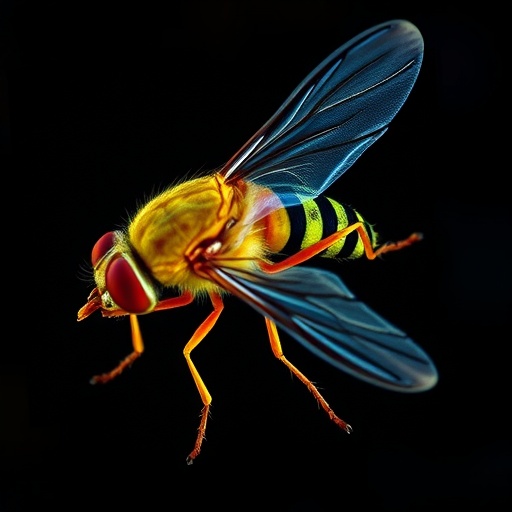
In an extraordinary leap forward for metabolic biology, a groundbreaking study published in Nature Communications unveils a previously uncharted role of hepatocyte-like cells in the fruit fly, Drosophila melanogaster, revealing how these cells orchestrate systemic lipid metabolism during periods of starvation. The research, led by Li, Huang, Dibra, and colleagues, illuminates the desaturase-dependent secretory pathways of these specialized cells, offering profound insights into the cellular and molecular frameworks that maintain energy homeostasis under nutritional stress. This breakthrough not only enriches our understanding of metabolic adaptation in invertebrates but also provides tantalizing parallels to mammalian lipid regulation, potentially guiding future therapeutic interventions for metabolic disorders.
Understanding how organisms adapt to starvation is a fundamental question in biology. The ability to mobilize and utilize lipid reserves efficiently can determine survival during extended nutrient deprivation. Drosophila, a widely used genetic model, possesses hepatocyte-like cells that exhibit functional similarities to mammalian liver cells but have remained somewhat enigmatic in their systemic roles. Previous research outlined the importance of such cells in lipid storage and energy balance, yet the signaling mechanisms and specific enzymes orchestrating these functions remained largely unexplored. This study rigorously deciphers the molecular cues underpinning the secretory behavior of hepatocyte-like cells, emphasizing the pivotal role of desaturase enzymes.
Desaturases, enzymes known to introduce double bonds into fatty acid chains, fundamentally alter lipid properties, impacting membrane fluidity and signaling molecule synthesis. Li et al. have demonstrated that specific desaturase activity within these hepatocyte-like cells modulates their secretory capacity during starvation, thus influencing systemic lipid homeostasis. Employing a combination of genetic manipulation, lipidomics, and advanced imaging techniques, the researchers meticulously traced how the enzymatic activity of desaturase governs the secretion of lipid-containing factors into the hemolymph—the insect’s circulatory fluid—thereby delivering metabolic cues to peripheral tissues.
A particularly compelling aspect of the study is the identification of secretory vesicles enriched in polyunsaturated fatty acid derivatives, which emerge during fasting conditions. The study carefully elucidates the biogenesis of these vesicles, linking increased desaturase activity to enhanced vesicular trafficking and release. These findings suggest a sophisticated cellular adaptation mechanism whereby hepatocyte-like cells convert intracellular lipid stores into signaling entities that coordinate systemic metabolic responses, ensuring energy supply to essential tissues during nutrient scarcity.
Moreover, the investigation delves into the receptor-mediated pathways in peripheral tissues that receive these secretory signals. By analyzing transcriptomic changes in muscle and adipose-like tissues upon exposure to desaturase-dependent vesicular signals, Li and colleagues uncover a cascade of gene expression alterations that promote enhanced lipid uptake and oxidation. This cross-talk between central hepatocyte-like cells and peripheral tissues exemplifies a finely tuned feedback network critical for metabolic resilience.
One must appreciate the study’s methodological rigor, as the team utilized CRISPR-Cas9 genome editing to knockout key desaturase genes specifically in hepatocyte-like cells. Subsequent phenotypic analyses revealed that flies deficient in these enzymes exhibited marked defects in lipid mobilization and compromised survival rates under fasting conditions. Confocal microscopy provided visual confirmation of decreased secretory vesicle formation, corroborating biochemical data and underscoring the indispensable role of desaturase activity in starvation adaptation.
Additionally, by integrating untargeted lipidomic profiling, the researchers identified novel oxygenated lipid mediators secreted during starvation, whose synthesis depended on desaturase function. These lipid mediators appear to act as hormonal signals, modulating gene expression beyond mere nutrient mobilization. This discovery aligns with increasing evidence that lipid-derived molecules function as systemic signals regulating energy homeostasis, expanding our understanding of inter-organ communication.
The implications of this study transcend Drosophila biology. Given the evolutionary conservation of metabolic pathways, these findings could illuminate similar mechanisms in mammals, especially concerning hepatic desaturase enzymes and their role in lipid metabolism during caloric restriction or fasting states. This opens potential therapeutic avenues for metabolic diseases such as obesity, diabetes, and fatty liver disease by manipulating desaturase activity or the secretion of lipid mediators in hepatocytes.
Furthermore, the study’s insights into lipid-mediated inter-organ communication invite comparisons with known mammalian liver-pancreas or liver-muscle signaling axes. It raises the intriguing possibility of a conserved evolutionary strategy wherein hepatocyte-derived lipids modulate peripheral tissue metabolism under energetic stress. Unraveling the molecular language of these secretory vesicles could revolutionize the development of targeted lipid-based treatments.
Another fascinating dimension is the role of desaturase-dependent lipid alterations in membrane dynamics and vesicle formation. The biophysical properties of membranes enriched with unsaturated lipids may enhance vesicle budding and fusion processes, a hypothesis supported by the observed increase in secretory vesicle abundance under heightened desaturase activity. This mechanistic insight bridges enzymology, cell biology, and physiology, emphasizing the multifaceted impact of lipid modification.
The study also paves the way for future research exploring the regulatory networks upstream of desaturase expression during starvation. Understanding the transcriptional and post-transcriptional controls that fine-tune desaturase enzyme levels could provide deeper insights into adaptive responses and metabolic homeostasis. Li et al.’s work hints at complex signaling involving nutrient sensors, possibly including TOR and AMPK pathways, modulating desaturase function in a context-dependent manner.
In conclusion, this landmark investigation by Li and colleagues provides a comprehensive view of how desaturase-dependent secretory functions in hepatocyte-like cells orchestrate systemic lipid metabolism during starvation in Drosophila. The integration of genetic, biochemical, and lipidomic approaches presents a compelling narrative of cellular adaptation and inter-organ communication through lipid mediators. As metabolic diseases continue to pose global health challenges, such fundamental discoveries highlight the immense value of model organisms in uncovering universal biological principles and inspiring novel therapeutic strategies.
The elucidation of desaturase-driven lipid secretion underscores an elegant cellular strategy to manage energy scarcity, expanding the frontier of metabolic biology. This research exemplifies the power of multidisciplinary approaches to decode intricate physiological processes, forging a path toward a deeper understanding of starvation biology and metabolic regulation.
Li, J., Huang, K., Dibra, I. et al. Desaturase-dependent secretory functions of hepatocyte-like cells control systemic lipid metabolism during starvation in Drosophila. Nat Commun (2025). https://doi.org/10.1038/s41467-025-66571-5
Cite Scienmag News
Juliet Wilcox. (November 21, 2025). Liver-like Cells Control Lipids During Starvation in Flies. Scienmag. https://scienmag.com/liver-like-cells-control-lipids-during-starvation-in-flies/
Juliet Wilcox. "Liver-like Cells Control Lipids During Starvation in Flies." Scienmag, 21 November 2025, https://scienmag.com/liver-like-cells-control-lipids-during-starvation-in-flies/. Accessed 6 September 2026.
Juliet Wilcox. "Liver-like Cells Control Lipids During Starvation in Flies." Scienmag. November 21, 2025. https://scienmag.com/liver-like-cells-control-lipids-during-starvation-in-flies/


