


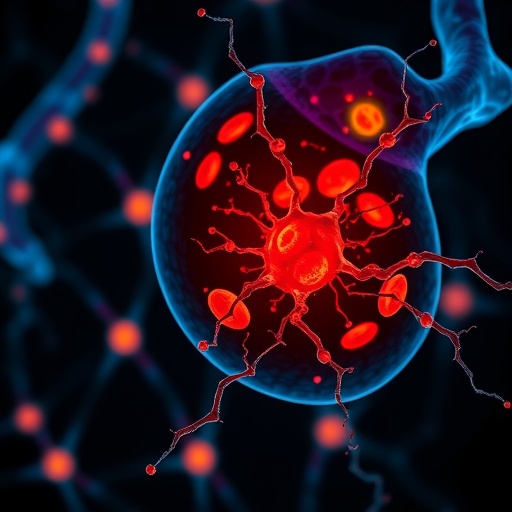
In a groundbreaking study recently published in Nature Metabolism, researchers have unveiled a novel subset of macrophages that play a pivotal role in liver regeneration through a lipid-dependent mechanism. The liver’s ability to regenerate after injury is crucial for maintaining tissue homeostasis and preventing disease progression. Despite decades of research, the cellular and molecular drivers orchestrating hepatocyte proliferation during liver repair remain largely enigmatic. This study sheds light on a previously unrecognized population of monocyte-derived macrophages (MDMs), termed lipo-inflammatory macrophages (LIMMs), that accumulate transiently in the injured liver and orchestrate regenerative inflammation via a distinct lipid metabolic program.
The liver is unique among mammalian tissues for its exceptional regenerative capacity. Liver injury triggers a highly coordinated response involving immune activation, metabolic rewiring, and parenchymal cell proliferation. Macrophages, especially Kupffer cells (KCs), have long been known to contribute to the inflammatory milieu that promotes liver repair. However, this study revealed that a specialized subcluster of MDMs, characterized by abundant cytosolic lipid droplets and an enhanced inflammatory profile, dominates the regenerative landscape following hepatic insult. These LIMMs distinctively diverge from resident KCs, both in their lipid composition and transcriptional states, highlighting functional heterogeneity within the hepatic macrophage compartment.
Single-cell transcriptomic analyses coupled with comprehensive lipidomic profiling illuminated the molecular attributes defining LIMMs. The authors demonstrated that LIMMs are enriched in lipids, particularly ceramide species, which appear to drive their pro-regenerative functionality. This lipid accrual is mediated by the scavenger receptor CD36, whose expression is upregulated during liver injury in monocyte-derived macrophages. Blocking CD36 activity markedly reduced LIMM abundance and severely impaired hepatocyte proliferation, underscoring the essentiality of this receptor in the regenerative cascade.
Delving into the mechanistic underpinnings, the study unraveled a signaling axis where CD36-dependent ceramide synthesis triggers the activation of the endoplasmic reticulum (ER) stress sensor IRE1α and its downstream transcription factor XBP1 within LIMMs. This activation leads to a potent inflammatory response characterized by the production of the regenerative cytokine interleukin-6 (IL-6). IL-6 is well recognized for its mitogenic effects on hepatocytes, promoting cell cycle entry and tissue renewal. The intimate coupling between lipid metabolism and inflammatory signaling underscores a novel paradigm in regenerative immunology.
Importantly, the investigators provided compelling evidence that disrupting the CD36–IRE1α–XBP1 signaling pathway within LIMMs compromises liver regeneration, highlighting a potential therapeutic target. Pharmacological or genetic interventions that impair CD36-dependent lipid uptake dampen ceramide biosynthesis and downstream inflammatory outputs, culminating in defective tissue repair. These insights open promising avenues for modulating macrophage lipid metabolism as a strategy to enhance liver regeneration in clinical contexts such as acute liver failure or chronic liver disease.
The identification of LIMMs adds a layer of complexity to our understanding of hepatic macrophages, revealing that injury-induced monocyte recruitment and differentiation can yield specialized subsets with distinct functional profiles. Prior work largely focused on resident KCs or bulk macrophage populations, but this study harnessed cutting-edge multi-omic technologies to dissect cellular heterogeneity with unprecedented resolution. This approach elucidates how microenvironmental cues shape macrophage fate decisions, linking metabolism and inflammation to regenerative outcomes.
Biologically, the lipid-laden phenotype of LIMMs is reminiscent of immune cells in other metabolic contexts, such as foam cells in atherosclerosis. Yet, here the lipid accumulation is not pathogenic but rather an adaptive feature that facilitates regenerative signaling. This challenges traditional views associating lipid-laden macrophages exclusively with inflammation-induced tissue damage and expands the functional repertoire of lipids in immune regulation. Ceramides, in particular, emerge as signaling lipids that fine-tune macrophage inflammatory outputs in a context-dependent manner.
The role of ER stress sensors like IRE1α and transcriptional regulators like XBP1 in inflammatory macrophages has been documented, but their integration downstream of lipid uptake in regenerating tissues is a novel insight. This signaling axis translates metabolic cues into transcriptional programs that orchestrate cytokine production and tissue repair. It exemplifies the intricate crosstalk between cellular metabolism and immune function that is increasingly recognized as a cornerstone of regenerative biology.
Clinically, the findings offer hope for improving regenerative strategies in liver diseases, many of which lack effective treatments. Modulating CD36 or its downstream pathways could boost endogenous regenerative capacities or improve outcomes following liver transplantation and surgery. Furthermore, understanding macrophage lipid metabolism might elucidate why some patients fail to mount sufficient regenerative responses, revealing biomarkers or therapeutic targets for personalized medicine.
Future studies will be necessary to explore how LIMMs interact with other immune and non-immune cells during liver repair, and whether similar lipid-dependent macrophage subsets exist in other regenerating tissues. Additionally, the long-term effects of modulating this pathway need thorough evaluation to avoid unwanted chronic inflammation or fibrosis. Nevertheless, this research represents a major leap in decoding the cellular and molecular complexity of tissue regeneration.
Overall, this work redefines the conventional paradigm by revealing that an injury-induced, lipid-centric macrophage subset is indispensable for tissue regeneration in the liver. The convergence of lipid metabolism, ER stress signaling, and inflammatory cytokine production within LIMMs orchestrates a finely balanced regenerative program critical for recovery from hepatic injury. These findings profoundly enhance our understanding of the immunometabolic regulation of liver regeneration and unveil promising targets for future regenerative medicine interventions.
Cite Scienmag News
Ophelia Keating. (March 11, 2026). Lipid-Driven Macrophages Key to Tissue Regeneration. Scienmag. https://scienmag.com/lipid-driven-macrophages-key-to-tissue-regeneration/
Ophelia Keating. "Lipid-Driven Macrophages Key to Tissue Regeneration." Scienmag, 11 March 2026, https://scienmag.com/lipid-driven-macrophages-key-to-tissue-regeneration/. Accessed 4 September 2026.
Ophelia Keating. "Lipid-Driven Macrophages Key to Tissue Regeneration." Scienmag. March 11, 2026. https://scienmag.com/lipid-driven-macrophages-key-to-tissue-regeneration/


