


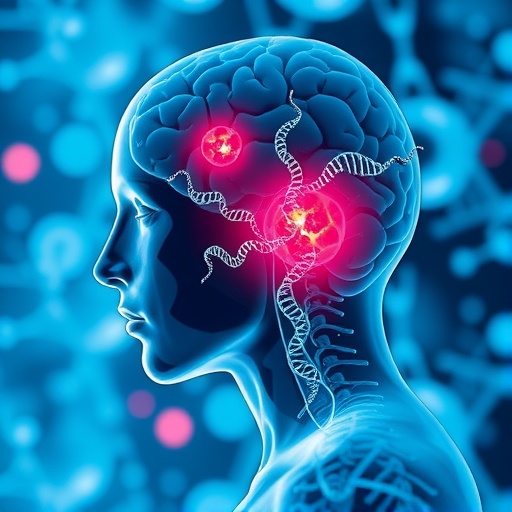
In a groundbreaking study published recently in Translational Psychiatry, an international team of researchers have unveiled pivotal insights into the biochemical underpinnings of depression by focusing on the nucleus accumbens, a central brain region implicated in reward and motivation. The study, led by Camargo, Kaya, Sturchio, and colleagues, leveraged cutting-edge spatial lipidomics combined with neuron-specific transcriptomic analyses to unravel a previously underappreciated dimension of depression pathophysiology: phospholipid dyshomeostasis. This multidisciplinary approach has illuminated the complex molecular interplay within neural circuits that contribute to depression-related maladaptations, offering novel avenues for targeted therapeutic interventions.
The nucleus accumbens is renowned for its critical role in processing rewarding stimuli and orchestrating motivational behaviors. Dysregulation within this hub has long been linked to mood disorders, including major depressive disorder. However, the exact molecular alterations that drive maladaptive neural plasticity in depression have remained elusive. By employing spatial lipidomics—a sophisticated technique that maps lipid distributions at high resolution across brain tissues—the researchers were able to visualize alterations in phospholipid composition with unprecedented spatial and molecular specificity.
Lipids, often overshadowed by proteins and nucleic acids in neuropsychiatric research, are fundamental constituents of neuronal membranes and serve essential roles in cellular signaling, synaptic function, and neuroinflammation. Phospholipids, a major class of lipids, maintain membrane integrity and modulate receptor function and neurotransmitter signaling. The investigation revealed that depression is accompanied by pronounced disruptions in phospholipid homeostasis within the nucleus accumbens, implicating lipid metabolism as a critical player in the neurobiological alterations underlying depressive states.
Complementing the lipidomic data, the team implemented neuron-specific transcriptomic profiling to dissect gene expression changes in discrete neuronal populations. This approach allowed for the identification of cell-type specific molecular signatures associated with phospholipid dysregulation. Notably, transcripts involved in lipid biosynthesis, remodeling, and degradation pathways exhibited altered expression patterns, further corroborating the lipidomic findings and reinforcing the concept that metabolic dysregulation at the lipid level is tightly interwoven with transcriptomic remodeling in depression.
One of the study’s most salient discoveries was the spatial heterogeneity of these lipidomic and transcriptomic changes. Rather than being uniform across the nucleus accumbens, the alterations localized to specific subregions and neuronal subtypes, revealing a nuanced landscape of biochemical disruption. This spatial resolution is crucial, as it highlights that depression-related neural maladaptations are not monolithic but highly compartmentalized, which may explain why certain behavioral and cognitive symptoms manifest with such variability.
This investigation also provides compelling evidence linking phospholipid dyshomeostasis with impaired synaptic function. Given that phospholipids modulate membrane fluidity and receptor dynamics, their dysregulation could hinder synaptic plasticity mechanisms essential for adaptive mood regulation and resilience. Such insights bridge a critical gap between molecular disturbances and circuit-level dysfunctions known to characterize depressive pathology.
The implications of these findings extend beyond academic knowledge. Targeting lipid metabolic pathways may represent a novel therapeutic strategy, diverging from traditional approaches that predominantly modulate neurotransmitters like serotonin and dopamine. Pharmacological agents or dietary interventions aimed at restoring phospholipid balance could potentially ameliorate depressive symptoms by reinstating normal synaptic and neuronal function.
Moreover, the study underscores the power of integrating multimodal omics technologies to unravel the complexity of psychiatric disorders. Spatial lipidomics and neuron-specific transcriptomics offer complementary perspectives that together paint a richer picture of brain pathology than either method alone. This combinatorial methodology could be adapted to other neuropsychiatric conditions where metabolic and molecular heterogeneity complicate understanding and treatment.
The authors also pondered the origin of phospholipid dyshomeostasis in depression. While causal mechanisms remain to be elucidated, hypotheses include chronic stress-induced metabolic impairments, inflammation-driven lipid peroxidation, and genetic vulnerabilities affecting lipid enzymes. Future research is directed towards disentangling these contributory factors and exploring their temporal dynamics in relation to depression onset and progression.
In the context of translational application, this research encourages the development of biomarkers based on lipidomic signatures that could aid in the diagnosis, prognosis, and stratification of depressive disorders. Non-invasive imaging modalities or peripheral assays detecting phospholipid perturbations might eventually complement existing clinical assessments, guiding personalized medicine.
Furthermore, elucidating neuron-specific transcriptional alterations offers a blueprint for designing cell-targeted therapies. Strategies like gene therapy, RNA interference, or CRISPR-based modulation could precisely rectify maladaptive gene expression profiles linked to lipid metabolism in vulnerable neuronal populations.
While the findings are compelling, the authors note limitations, including the need for validation in human postmortem tissue and longitudinal studies to establish causality. Expanding investigations to include other brain regions implicated in mood disorders will also be essential to fully map the neurochemical networks affected in depression.
This landmark study represents a significant leap forward in neuropsychiatric research by positioning lipid metabolism at the forefront of depression pathophysiology. The integration of spatial lipidomics and neuron-specific transcriptomics has unveiled intricate molecular landscapes, offering fresh perspectives and promising paths for innovative treatment modalities. As science continues to probe deeper into brain metabolism’s role in mental health, the hope for more effective and precise interventions grows ever stronger.
Cite Scienmag News
Glenn Wilkins. (May 14, 2026). Lipid and Gene Changes Linked to Depression Uncovered. Scienmag. https://scienmag.com/lipid-and-gene-changes-linked-to-depression-uncovered/
Glenn Wilkins. "Lipid and Gene Changes Linked to Depression Uncovered." Scienmag, 14 May 2026, https://scienmag.com/lipid-and-gene-changes-linked-to-depression-uncovered/. Accessed 7 September 2026.
Glenn Wilkins. "Lipid and Gene Changes Linked to Depression Uncovered." Scienmag. May 14, 2026. https://scienmag.com/lipid-and-gene-changes-linked-to-depression-uncovered/


