


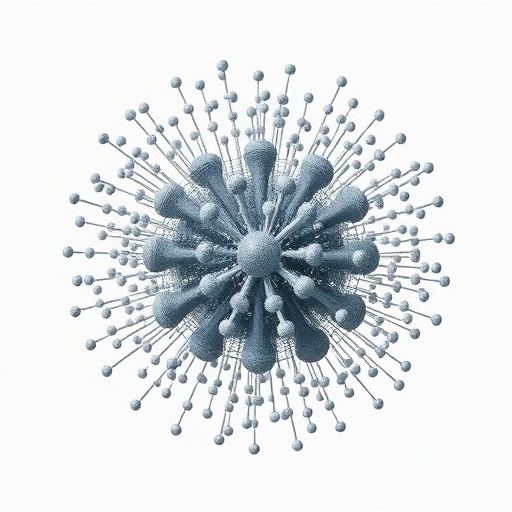
In a seminal leap forward for quantum information science, researchers have announced the realization of a programmable photonic quantum processor named Jiuzhang 4.0, a device that integrates an unprecedented 1,024 high-efficiency squeezed light sources into an 8,176-mode hybrid spatial-temporal network. This advancement marks a transformative milestone in Gaussian boson sampling technology, dramatically enhancing scale and computational capacity beyond the limits previously demonstrated, and thus accelerating the journey towards fault-tolerant quantum computing.
Gaussian boson sampling, a specialized computational paradigm leveraging the quantum properties of photons, has been at the forefront of proposals to achieve quantum computational supremacy. Historically, the primary bottleneck in scaling these systems has been the substantial photon loss and operational inefficiency in encoding progressively larger quantum photonic states. Jiuzhang 4.0 addresses these challenges by employing a novel integration of 1,024 squeezed states with exceptional 92% source efficiency and an overall system efficiency surpassing 51%, setting a new benchmark for integrated photonic quantum technology.
A key innovation underpinning this breakthrough is the architecture’s cubic connectivity scaling, effectively enabling interactions across 4,096 interconnected modes within the quantum circuit. Such complexity exponentially expands the effective Hilbert space dimension—estimated on the order of 10^2,461—which is far beyond the reach of classical simulation methods, including sophisticated matrix product state algorithms tailored to exploit photon loss. The capacity to harness and manipulate quantum correlations across this expansive mode network illustrates the potent scalability potential for photonic quantum processors.
One of the most remarkable experimental achievements of Jiuzhang 4.0 is its generation of quantum samples with detection events involving up to 3,050 photons. This represents an order-of-magnitude increase in photon number over precedents set by earlier boson sampling demonstrations. The massive photon counts achieved not only confirm the device’s low-loss and high-fidelity performance but also significantly elevate the complexity of bosonic interference patterns accessible for quantum computational tasks.
From a technical standpoint, the use of squeezed states—non-classical states of light characterized by reduced quantum noise in one quadrature—forms the bedrock of this experiment. By coherently combining these squeezed modes in a hybrid spatial-temporal encoding framework, the researchers effectively multiplexed thousands of photonic modes without incurring prohibitive losses. This hybrid encoding bracket addresses scalability and control challenges inherent to purely spatial or temporal architectures, providing a balanced route toward ultra-large quantum processor configurations.
Additionally, the effective photon source efficiency of 92% stands as a testament to the sophistication of the underlying photonic hardware and optical engineering. Achieving such high efficiency involves meticulous optimization of nonlinear optical processes responsible for squeezing generation, along with precise phase stabilization and low-loss optical routing. Equally critical is the maintenance of system-wide coherence and minimal decoherence during the photon propagation and measurement stages, enabling the realization of high-fidelity boson sampling outputs.
The sampling outputs produced by Jiuzhang 4.0 have undergone rigorous validation protocols, comparing experimental data against all known classical simulation strategies. Especially notable is the challenge posed by tensor network-based matrix product state algorithms which traditionally exploit photon loss to reduce complexity. However, the photonic processor’s low-loss performance and large-scale implementation have decisively outpaced these efforts, reinforcing the demonstration’s standing as a landmark quantum computational simulation.
Beyond the immediate demonstration of scalable boson sampling, the work signals potent implications for fault-tolerant architectures. Gaussian boson sampling does not merely serve as a quantum advantage testbed; it inherently relates to the generation of bosonic error-correcting codes such as Gottesman-Kitaev-Preskill (GKP) codes, which are instrumental in correcting photon loss and other operational errors. The progress embodied by Jiuzhang 4.0 thereby paves the way for physically realizable, fault-tolerant photonic quantum computing hardware.
Looking further ahead, the programmatic control over thousands of photons in a low-loss integrated platform unlocks new vistas for constructing massive multidimensional cluster states. Such states form the substrate for measurement-based quantum computation and are considered a key resource for implementing universal quantum algorithms within photonic systems. The cubic connectivity and expansive mode count demonstrated hint at feasible pathways toward creating trillion-qumode, three-dimensional cluster states—a critical step toward scalable quantum error correction and practical quantum computation.
The technical strides achieved by this platform cannot be overstated. They encapsulate a suite of innovations in optical engineering, quantum state generation, system integration, and error mitigation strategies. The seamless integration of squeezed state sources with complex interferometric circuitry exemplifies cutting-edge photonic synthesis capabilities, signaling an era where quantum circuit complexity will continue to advance exponentially while maintaining operational stability.
In the broader context of quantum information processing, Jiuzhang 4.0 embodies the crucial balance between scalability and coherence preservation—the defining challenge in the pursuit of quantum advantage. Its hybrid encoding strategy might set a design blueprint for future photonic quantum processors aiming to scale to tens or hundreds of thousands of modes without compromising efficiency or fidelity. Such scalability is prerequisite to tackling real-world quantum applications beyond boson sampling, including simulation of molecular processes and optimization problems.
The combination of programmatic configurability and high photon number sampling observed in Jiuzhang 4.0 heralds a quantum computational frontier where quantum supremacy transitions into utility. Whereas prior quantum devices showcased advantage primarily as proof-of-concept milestones, this processor’s capability suggests imminent practical applications and benchmark datasets that classical algorithms will increasingly struggle to emulate in reasonable timeframes.
As this work demonstrates, foundational theoretical constructs around Gaussian boson sampling and non-classical photonic states are maturing toward tangible quantum devices capable of outperforming classical counterparts robustly in extensive parameter regimes. The landscape of quantum photonics development is poised for radical transformation, leveraging innovations from this research to accelerate the advent of fault-tolerant, large-scale quantum processors.
In conclusion, the Jiuzhang 4.0 processor’s integration of 1,024 squeezed light sources with ultra-large mode networks and high-efficiency hardware signals the dawn of a new quantum era. By pushing the boundaries of photon number handling, connectivity complexity, and system-wide efficiency, this advancement is set to redefine the benchmarks of quantum computational capability. The experimental results underscore a critical stride beyond classical reach and chart a promising course toward scalable, fault-tolerant photonic quantum computing technologies in the near future.
Cite Scienmag News
Katie Riggs. (May 14, 2026). Gaussian Boson Sampling: 1,024 Squeezed States, 8,176 Modes. Scienmag. https://scienmag.com/gaussian-boson-sampling-1024-squeezed-states-8176-modes/
Katie Riggs. "Gaussian Boson Sampling: 1,024 Squeezed States, 8,176 Modes." Scienmag, 14 May 2026, https://scienmag.com/gaussian-boson-sampling-1024-squeezed-states-8176-modes/. Accessed 4 September 2026.
Katie Riggs. "Gaussian Boson Sampling: 1,024 Squeezed States, 8,176 Modes." Scienmag. May 14, 2026. https://scienmag.com/gaussian-boson-sampling-1024-squeezed-states-8176-modes/


