


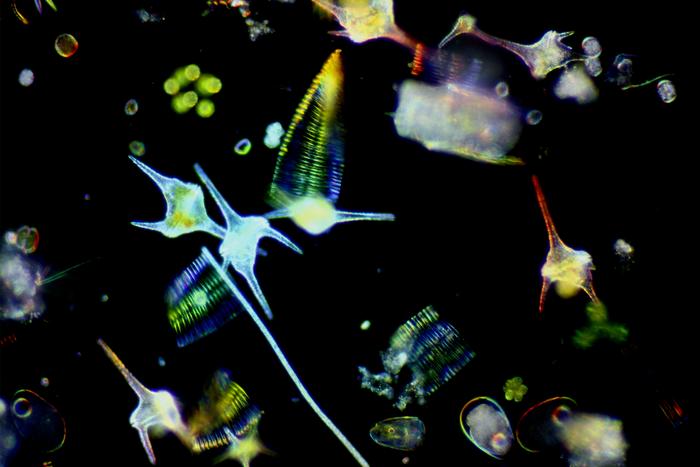
Freshwater resources are limited, accounting for only 3.5% of Earth’s water, with just 0.25% accessible on the surface. Nevertheless, freshwater lakes are essential for ecosystem functioning and global carbon cycling due to their high biological productivity and microbial activity. They are critical to human survival, providing drinking water, supporting agriculture, fisheries, and recreation. However, climate change – particularly rising temperatures – threatens these habitats by disrupting microbial communities that are essential for nutrient cycling and water quality maintenance.

Credit: Martina Schalch, University of Zurich
Freshwater resources are limited, accounting for only 3.5% of Earth’s water, with just 0.25% accessible on the surface. Nevertheless, freshwater lakes are essential for ecosystem functioning and global carbon cycling due to their high biological productivity and microbial activity. They are critical to human survival, providing drinking water, supporting agriculture, fisheries, and recreation. However, climate change – particularly rising temperatures – threatens these habitats by disrupting microbial communities that are essential for nutrient cycling and water quality maintenance.
Challenging established evolutionary paradigms
“Considering the essential roles bacterial species play in freshwater environments and their vital ecological functions, understanding their adaptive capacity to changing environmental conditions is crucial for ecosystem resilience and sustainable resource management,” says Adrian-Stefan Andrei. He is head of the Microbial Evogenomics Laboratory at the Department of Plant and Microbial Biology of the University of Zurich (UZH). His research team analyzed time-series samples from five European freshwater lakes, collected between 2015 and 2019: Lake Zurich, Lake Thun and Lake Constance in Switzerland, along with the Římov Reservoir and Jiřická Pond in the Czech Republic.
“Although niche adaptation is the main evolutionary mechanism driving population diversification and the emergence of new species, our results surprisingly show that many abundant freshwater bacteria with small genomes often experience extended periods of adaptive standstill,” says Andrei. This stalling of adaptive processes challenges the conventional expectation that microbial species can adapt to changing environmental conditions. “Given the vital functions these microbial communities play in freshwater systems, our study underscores the importance of understanding the limits of bacterial adaptability,” the researcher adds.
Secreted proteins as indicators of evolutionary adaptation
Bacteria adapt to their environments by utilizing specialized proteins, which can be secreted into the surrounding medium or bound to their cell membranes. These proteins play crucial roles in nutrient uptake, interbacterial communication, and the detection of and response to environmental stimuli. The adaptability of bacteria typically relies on the genetic diversity within the genes encoding these proteins. The researchers, however, now show that in abundant freshwater bacteria with reduced genome sizes, there is surprisingly little variation in these genes, indicating a phase of adaptive stagnation. These bacteria may therefore face challenges in adapting to changing environmental conditions.
Limited ability to adapt to changing environments
“Our observations suggest that these bacteria have likely achieved fitness peaks by reaching ideal protein structures and activity levels,” says Andrei. Their proteomes have already attained an optimal state through the course of evolution, where further major changes are neither advantageous nor necessary for the organisms to survive and adapt to their current niches. This inherent inflexibility limits the ability of these organisms to explore new genetic variation and effectively adapt to dynamic environmental conditions. “This knowledge is crucial as we navigate the escalating impacts of climate change, which significantly threatens freshwater habitats – environments especially susceptible to anthropogenic changes,” concludes Adrian-Stefan Andrei.
Journal
Nature Communications
Method of Research
Computational simulation/modeling
Subject of Research
Cells
Article Title
Freshwater genome-reduced bacteria exhibit pervasive episodes of adaptive stasis
Article Publication Date
23-Apr-2024
Cite Scienmag News
Sloane Callahan. (May 8, 2024). Limited adaptability makes freshwater bacteria vulnerable to climate change. Scienmag. https://scienmag.com/limited-adaptability-makes-freshwater-bacteria-vulnerable-to-climate-change/
Sloane Callahan. "Limited adaptability makes freshwater bacteria vulnerable to climate change." Scienmag, 8 May 2024, https://scienmag.com/limited-adaptability-makes-freshwater-bacteria-vulnerable-to-climate-change/. Accessed 3 September 2026.
Sloane Callahan. "Limited adaptability makes freshwater bacteria vulnerable to climate change." Scienmag. May 8, 2024. https://scienmag.com/limited-adaptability-makes-freshwater-bacteria-vulnerable-to-climate-change/

