


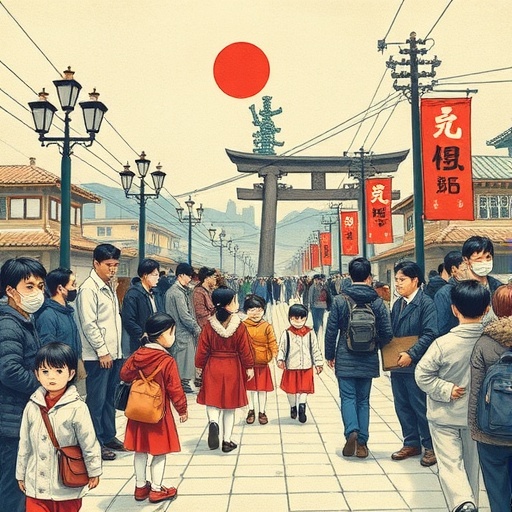
In a landmark contribution to migration studies, Professor Masumi Izumi of Doshisha University, Japan, has published a comprehensive essay entitled “Japanese Migration to Canada, 1877–1988” in the esteemed Oxford Research Encyclopedia of Migration Studies. This scholarly work offers an expansive, deeply researched historical analysis of Japanese migration to Canada, charting its evolution from the late 19th century arrival of the first documented migrant through to the pivotal redress settlement by the Canadian government in 1988. The essay embarks on not merely a narrative of ethnic migration but situates Japanese Canadian history within wider frameworks of settler colonialism, labor migration, citizenship, and civil rights, thereby enriching our understanding of North American history in a transnational context.
Professor Izumi’s essay begins by contextualizing the rise of Japanese labor migration to British Columbia during the late 1800s. It delves into the dynamics by which Japanese migrants integrated into the labor-intensive sectors of fisheries, logging camps, mines, and agriculture, simultaneously forging resilient trans-Pacific family and community networks. Significantly, Izumi challenges the traditionally unidirectional view of migration by illustrating a reciprocal circulation of people, economic exchanges, and cultural ideas between Japan and Canada, underscoring migration as an ongoing, dynamic process rather than a static transition.
Through meticulous examination, the essay outlines the establishment and flourishing of Japanese Canadian communities prior to World War II. It highlights the essential role that community institutions such as businesses, schools, newspapers, religious organizations, and mutual aid societies played in fostering a robust cultural and social fabric. Special attention is afforded to the contributions of women and family units, whose stabilizing influence underpinned not only immigrant life but also the emergence of the Canadian-born Nisei generation, those born in Canada primarily of Japanese descent.
A central theme of the essay is the profound impact of systemic anti-Asian racism and exclusionary policies on Japanese Canadians. Izumi details how these policies codified racial discrimination and shaped the lived experiences of immigrants and their descendants, molding social stratification and limiting opportunities for full civic participation. This elucidation is vital for understanding the socio-political fabric of Canada during this period, revealing the intersectionality of race, labor, and multicultural integration.
The essay presents a thorough account of one of the darkest periods in Japanese Canadian history: the forced removal and incarceration of approximately 23,000 Japanese Canadians during World War II. Izumi provides an analytical narrative of how families were uprooted from their homes on the Pacific Coast, subjected to dispossession of property, and confined in internment camps and settlements that functioned under stringent wartime emergency measures. This section meticulously documents the mechanisms of state power and the violation of civil liberties, positioning this historical injustice within a broader global context of wartime repression and racialization.
Rather than portraying Japanese Canadians only as victims, Izumi’s scholarship foregrounds their resilience and political agency. The essay explores the myriad ways Japanese Canadian communities engaged in activism, challenged governmental policies, and undertook efforts at community rebuilding both during and following incarceration. This emphasis shifts historical discourse towards a recognition of agency and resistance in the face of systemic oppression.
The essay culminates in an insightful exploration of the 1988 redress settlement, an unprecedented moment when the Canadian government officially apologized and granted compensation to survivors of wartime dispossession and incarceration. Izumi contextualizes this landmark event not only within Japanese Canadian history but also as a critical case study in transnational debates concerning citizenship rights, state accountability, and the politics of minority redress. This framing elevates the settlement’s significance as a model for restorative justice worldwide.
By integrating decades of research spanning migration studies, Asian American/Asian Canadian history, and trans-Pacific relations, the essay elucidates the multifaceted dimensions of Japanese Canadian migration. It serves as a nexus of scholarship that interrogates how migratory movements intersect with national borders, race, labor, and rights, broadening academic and public understanding.
Professor Masumi Izumi’s academic influence extends beyond this essay. Her body of work critically examines wartime uprooting and incarceration, postwar community resilience, and civil liberties debates in North America. Her seminal publications include “The Rise and Fall of America’s Concentration Camp Law,” a notable analysis of civil liberties from World War II through the radical 1960s, and the first comprehensive history of Japanese Canadians published in Japanese. Her translations and archival work further contribute to preserving and disseminating crucial narratives of Japanese Canadian history.
Izumi’s scholarship warns of the fragility of democratic civil rights in moments of fear and political pressure, providing vital historical lessons as contemporary societies grapple with similar issues related to migration, minority rights, and state power. The essay’s comprehensive scope and critical insights make it an indispensable resource for students, scholars, and policymakers alike, illuminating the complexities and lived realities of migration in a settler-colonial and transnational framework.
The article is accessible through the Oxford Research Encyclopedia of Migration Studies and stands as a significant academic milestone, embodying both methodological rigor and profound historical empathy. Its publication signals a growing recognition of Japanese Canadian narratives within global migration discourses and highlights the continuing relevance of such histories in contemporary debates surrounding migration, identity, and justice.
In capturing the contours of a migration story that spans over a century, Professor Izumi’s essay redefines how migration histories can be approached. It employs a multidisciplinary lens incorporating political history, labor studies, and cultural analysis, ensuring a nuanced portrayal of the Japanese Canadian experience intertwined with broader socio-political transformations.
Ultimately, “Japanese Migration to Canada, 1877–1988” is more than a historiographical account; it is a critical intervention that challenges reductive narratives. It illuminates the ongoing legacy of migration across borders and generations while foregrounding the resilience and agency of those who lived at the juncture of cultural encounter, institutional oppression, and community formation.
News Publication Date: April 2026
Web References:
Cite Scienmag News
Courtney Benton. (June 5, 2026). New Transnational Study Reveals Resilience and Community Building in Japanese Migration to Canada (1877–1988). Scienmag. https://scienmag.com/new-transnational-study-reveals-resilience-and-community-building-in-japanese-migration-to-canada-1877-1988/
Courtney Benton. "New Transnational Study Reveals Resilience and Community Building in Japanese Migration to Canada (1877–1988)." Scienmag, 5 June 2026, https://scienmag.com/new-transnational-study-reveals-resilience-and-community-building-in-japanese-migration-to-canada-1877-1988/. Accessed 4 September 2026.
Courtney Benton. "New Transnational Study Reveals Resilience and Community Building in Japanese Migration to Canada (1877–1988)." Scienmag. June 5, 2026. https://scienmag.com/new-transnational-study-reveals-resilience-and-community-building-in-japanese-migration-to-canada-1877-1988/


