


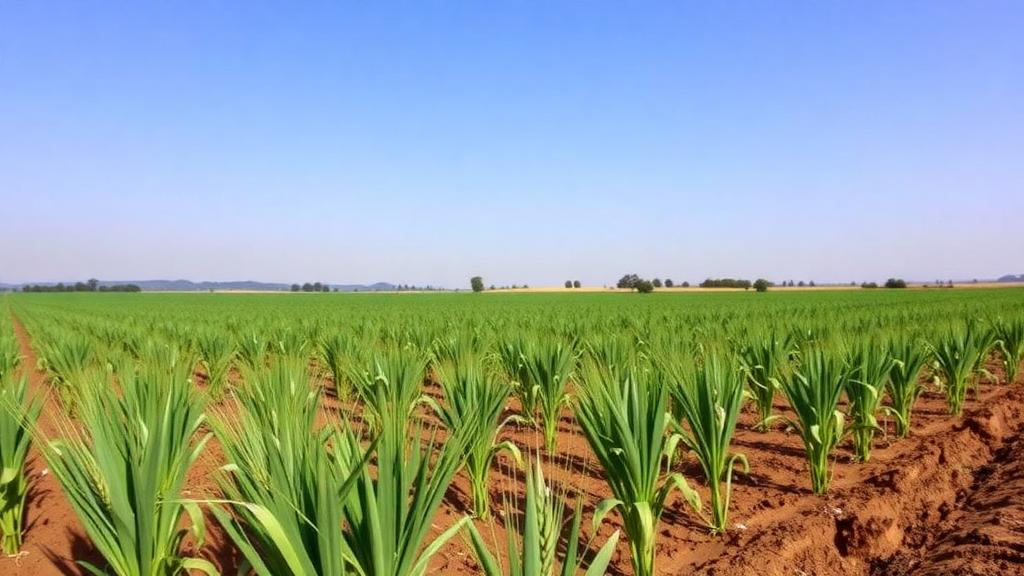
On the highland plateau of the Upper Blue Nile Basin in northwestern Ethiopia, wheat farmers face a stubborn and invisible enemy beneath their feet: soil acidity. A new two-year field experiment published in Plant and Soil by Belstie Lulie of Bahir Dar University and Debre Markos Agricultural Research Center, together with colleagues from the Ethiopian Institute of Agricultural Research, the International Maize and Wheat Improvement Center (CIMMYT) and the University of Hohenheim, has quantified precisely how lime, nitrogen and phosphorus interact on these degraded soils, and the results reveal a delicate balancing act between producing more grain and producing more nutritious grain. The study, conducted under the Guiding Acid Soil Investments in Africa (GAIA) project funded by the Bill & Melinda Gates Foundation, offers some of the most detailed evidence yet on how Ethiopian smallholders can intensify wheat production without sacrificing human nutrition.
Soil acidity is one of the most widespread constraints on crop production in tropical highlands, and Ethiopia is no exception. When soils become acidic, aluminum and manganese become soluble and toxic to plant roots, while essential nutrients such as phosphorus are locked into unavailable chemical forms. The molecular basis of this problem is well understood: root growth is inhibited, and the plant’s ability to take up water and nutrients collapses. For wheat, a staple crop that Ethiopia has been striving to produce in sufficient quantities for its growing population, acidic soils translate directly into depressed yields and poor returns on fertilizer investments. Previous work by the same research group has mapped the extent and distribution of surface soil acidity across Ethiopia’s rainfed areas, finding that the problem is extensive and worsening under continuous cultivation.
To untangle the interactions between acidity correction and nutrient supply, the researchers designed a split-plot factorial experiment. Two levels of agricultural lime occupied the main plots, while five nitrogen rates crossed with four phosphorus rates formed the sub-plots. This design allowed the team to measure not only the individual effects of each input but also the interactions among them, across two full growing seasons. They measured soil chemical properties, wheat grain and straw yields, nutrient uptake, nutrient recovery efficiency, and the concentration of zinc in the harvested grain. Zinc was a critical variable because wheat is a major dietary source of this micronutrient in Ethiopia, and zinc deficiency in human populations remains a serious public health concern according to the World Health Organization’s global reporting on micronutrient status.
The headline finding is that nitrogen, not phosphorus or lime, is the dominant yield-limiting nutrient on these acidic soils. Across the experiment, the median yield gain attributable to nitrogen application was 3.5 tonnes per hectare, substantially larger than the 2.0 tonnes per hectare gained from phosphorus and the 1.1 tonnes per hectare gained from liming. In practical terms, this means that a farmer who applies nitrogen fertilizer alone will see the largest single jump in productivity, but the full benefit of that nitrogen can only be captured when soil acidity is corrected and phosphorus supply is adequate. Lime worked largely by improving the soil chemical environment: neutralizing exchangeable acidity, reducing aluminum toxicity, and thereby enhancing the crop’s ability to take up and recover both nitrogen and phosphorus from the soil.
Yields responded strongly at first but showed clear diminishing returns as fertilizer rates climbed. The maximum observed yield in the first season was 4.8 tonnes per hectare, achieved with 150 kilograms of nitrogen and 40 kilograms of phosphorus per hectare. In the second season, the maximum rose to 5.6 tonnes per hectare, but notably this was reached at a lower nitrogen rate of 100 kilograms per hectare with 20 to 40 kilograms of phosphorus. This pattern illustrates a core principle of agronomy: as one constraint is relieved, the efficiency of additional inputs declines, and the economically optimal rate may be well below the agronomic maximum. For resource-poor smallholders, the difference between the last few kilograms of fertilizer and the yield they deliver can determine whether an input package pays for itself at all.
The most provocative result, however, concerns grain zinc concentration. The researchers uncovered a trade-off between wheat yield and grain nutritional quality that was independent of lime and nitrogen management: as phosphorus application increased, yields rose but grain zinc concentrations fell. Across the experiment, grain zinc rarely exceeded 35 milligrams per kilogram, a threshold relevant to biofortification targets for human nutrition. Lime, by contrast, increased grain zinc concentration, while excessive nitrogen and incremental increases in phosphorus rates both reduced it. This dilution effect, in which larger grain harvests spread a finite pool of micronutrients across more biomass, is a recognized phenomenon in crop physiology, but seeing it play out so clearly against a background of soil acidity correction is a warning for breeding and fertilizer programs alike.
The implications for policy are twofold. First, the study supports the integration of lime with balanced fertilization as the backbone of sustainable intensification in the Ethiopian highlands. Liming is expensive and logistically challenging, and recent analyses in Nature Food have argued that soil acidity remediation across sub-Saharan Africa requires targeted rather than blanket investments. This experiment provides the field-level evidence for such targeting: lime pays off most where it unlocks the response to nitrogen and phosphorus, and its benefits extend beyond yield to include improved nutrient recovery efficiency, meaning less fertilizer is wasted and less is lost to the environment. Second, the yield-versus-zinc trade-off means that cautious phosphorus management is needed, and complementary zinc supplementation, whether through foliar zinc sprays, zinc-enriched fertilizers, or zinc-biofortified wheat varieties, will be required to keep grain quality on track.
The research also speaks to a broader debate about how Africa achieves wheat self-sufficiency. Ethiopia’s national strategy has pursued yield gap closure, land expansion and irrigation, but the yield gap studies led by co-author João Vasco Silva have shown that soil fertility constraints, including acidity, are among the chief culprits keeping actual yields far below potential. By quantifying the marginal productivity of each input and their interactions, this experiment gives Ethiopian extension services and fertilizer blending programs an empirical basis for recommending site-specific packages. The finding that the second year’s maximum yield came at lower nitrogen rates than the first also hints at residual effects of lime and possibly carryover phosphorus, a reminder that soil fertility management is a multi-year enterprise rather than a season-by-season calculation.
Methodologically, the study is notable for its use of nutrient recovery efficiency as a diagnostic, following frameworks established by Dobermann and by the QUEFTS model for quantitative evaluation of tropical soil fertility. Recovery efficiency measures the fraction of applied nutrient that actually ends up in the aboveground crop, and it is a sensitive indicator of whether the soil environment is allowing roots to function. The observation that lime enhanced both uptake and recovery of nitrogen and phosphorus confirms the mechanistic chain: acidity correction improves root health, which improves capture of applied nutrients, which improves yield. The statistical analysis relied on linear mixed-effects models and quantile regression, tools that let the researchers characterize responses across the full distribution of plot-level outcomes rather than only at the mean.
For the farmers of the Upper Blue Nile Basin, the practical message is a recipe: correct the acidity first, supply nitrogen as the primary driver of yield, apply phosphorus judiciously rather than maximally, and plan for zinc. For scientists and breeders, the message is that productivity and nutrition goals must be evaluated together, because a fertilizer recommendation that maximizes tonnes per hectare may quietly erode the micronutrient content of the food that same hectare produces. As Ethiopia and its neighbors invest heavily in soil health and fertilizer value chains, this study demonstrates that the cheapest route to both more food and better food runs through the chemistry of the soil itself, and that ignoring the trade-offs hidden in that chemistry would be a costly mistake.
Subject of Research: Effects of lime, nitrogen and phosphorus management on wheat yield, nutrient use efficiency and grain zinc concentration in acidic soils of the Upper Blue Nile Basin, Ethiopia
Article Title: Nutrient management strategies to balance wheat productivity, grain quality and fertilizer use efficiency on acidic soils in the Upper Blue Nile Basin, Ethiopia
Article References: Lulie, B., Adgo, E., Desalegn, T., Sida, T. S., & Silva, J. V. (2026). Nutrient management strategies to balance wheat productivity, grain quality and fertilizer use efficiency on acidic soils in the Upper Blue Nile Basin, Ethiopia. Plant and Soil. https://doi.org/10.1007/s11104-026-09064-8
Image Credits: AI Generated
DOI: 10.1007/s11104-026-09064-8
Keywords: wheat, soil acidity, liming, nitrogen, phosphorus, zinc, nutrient use efficiency, Ethiopia, Upper Blue Nile Basin, grain quality, sustainable intensification, soil fertility
Cite Scienmag News
Alan Morgan. (October 12, 2026). Lime, Nitrogen and Phosphorus Trade-offs Shape Wheat Yields and Grain Zinc on Ethiopia’s Acid Soils. Scienmag. https://scienmag.com/lime-nitrogen-and-phosphorus-trade-offs-shape-wheat-yields-and-grain-zinc-on-ethiopias-acid-soils/
Alan Morgan. "Lime, Nitrogen and Phosphorus Trade-offs Shape Wheat Yields and Grain Zinc on Ethiopia’s Acid Soils." Scienmag, 12 October 2026, https://scienmag.com/lime-nitrogen-and-phosphorus-trade-offs-shape-wheat-yields-and-grain-zinc-on-ethiopias-acid-soils/. Accessed 12 October 2026.
Alan Morgan. "Lime, Nitrogen and Phosphorus Trade-offs Shape Wheat Yields and Grain Zinc on Ethiopia’s Acid Soils." Scienmag. October 12, 2026. https://scienmag.com/lime-nitrogen-and-phosphorus-trade-offs-shape-wheat-yields-and-grain-zinc-on-ethiopias-acid-soils/


