

Monday, July 27, 2026
Science
No Result
View All Result
  • Login
  • HOME
  • SCIENCE NEWS
  • CONTACT US
  • HOME
  • SCIENCE NEWS
  • CONTACT US
No Result
View All Result
Scienmag
No Result
View All Result
Home Science News Psychology & Psychiatry

Lifestyle Factors and BrainAGE Linked to Depression in Adults

July 27, 2026
in Psychology & Psychiatry
Reading Time: 2 mins read
0
Lifestyle Factors and BrainAGE Linked to Depression in Adults

Lifestyle Factors and BrainAGE Linked to Depression in Adults

65
SHARES
587
VIEWS
Share on FacebookShare on Twitter
ADVERTISEMENT

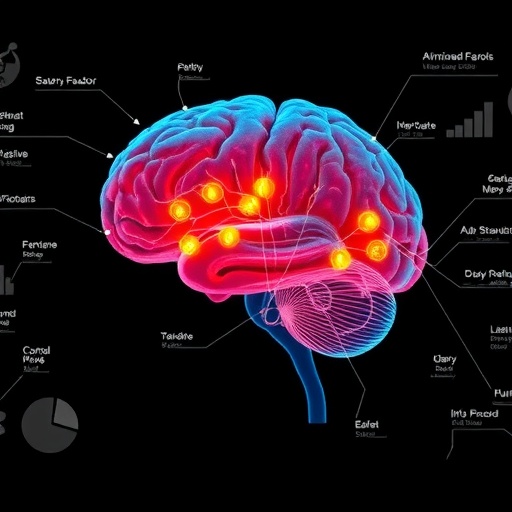
Adult depression doesn’t just reshape mood—it may also leave measurable footprints in the brain’s biological aging clock. In a new study published in Translational Psychiatry, researchers report links between lifestyle patterns and “BrainAGE,” a metric designed to estimate how old the brain appears relative to a person’s chronological age. The findings suggest that behaviors affecting daily health might correspond to differences in neural aging signatures, even after accounting for clinical factors.

To probe this idea, the team analyzed participants with adult depression alongside estimates of BrainAGE derived from neuroimaging-derived features. BrainAGE aims to translate complex brain measurements into a single quantitative index that can reveal accelerated—or slowed—aging processes. When BrainAGE increases, it often indicates that brain structure and/or function resembles an older state than expected, raising concerns about vulnerability to cognitive and neurological decline.

The study focuses on lifestyle rather than medication alone, evaluating how modifiable habits may align with BrainAGE. Lifestyle factors can influence inflammation, metabolic health, vascular function, sleep quality, and stress physiology—biological systems widely implicated in depression and in trajectories of brain aging. By connecting lifestyle variance to BrainAGE, the researchers provide an avenue for thinking about depression as partly intertwined with systemic aging biology.

Importantly, the researchers emphasize that depression is not solely a mood disorder; it can reflect broader physiological dysregulation. Lifestyle behaviors—such as physical activity patterns, diet-related health indicators, and sleep timing—could plausibly modulate the brain environment where neurodevelopmental and neurodegenerative processes unfold. This perspective reframes prevention and intervention as targets that may act through brain-aging mechanisms.

The team also situates the work within the growing field of computational psychiatry, where brain-based biomarkers help move beyond symptom-based categories. Metrics like BrainAGE offer a potential bridge between psychiatric diagnoses and biological processes, enabling more precise monitoring of disease-related change over time.

While cross-sectional analyses cannot fully establish causality, the observed associations point to a testable hypothesis: improving lifestyle may help reduce biological brain aging pressure. Future longitudinal studies will be crucial to determine whether lifestyle modifications can meaningfully shift BrainAGE trajectories.

For clinicians and patients, the message is both sobering and hopeful. Depression may accelerate aspects of brain aging, but the aging clock might be partially responsive to everyday choices. If validated in larger cohorts, BrainAGE could become a biomarker for tailoring lifestyle-focused strategies alongside standard treatment.

As science increasingly quantifies how behaviors map onto brain biology, studies like this underscore that “care” can extend beyond medication—potentially including targeted interventions aimed at the body-brain aging interface.

Subject of Research: Adult depression, BrainAGE (biological brain aging), lifestyle factors
Article Title: Lifestyle and BrainAGE in adult depression
Article References: Sanford, N., Yu, Y., Ge, R. et al. Lifestyle and BrainAGE in adult depression. Transl Psychiatry (2026). https://doi.org/10.1038/s41398-026-04297-8
DOI: https://doi.org/10.1038/s41398-026-04297-8
Image Credits: AI Generated

Tags: biological aging and mental healthbrain agingBrainAGE biomarkersdepression and lifestyle factorsinflammation and depressionmetabolic health and brain agingmodifiable health behaviorsneuroimaging and neural agingsleep quality and mental healthstress physiology and neurodegenerationsystemic aging biology and depressionvascular health and cognitive decline
Share26Tweet16
Previous Post

Assessing Mitigation Pathways for Mercury Emissions from Global Coal Power

Next Post

High-Throughput Chip Delivers Full-Frequency Encoded Illumination Super-Resolution Imaging

Related Posts

Gene expression signatures forecast psychotherapy response in posttraumatic stress disorder
Psychology & Psychiatry

Gene expression signatures forecast psychotherapy response in posttraumatic stress disorder

July 27, 2026
Whole-Exome Sequencing and Structural Brain Imaging Reveal Bipolar Disorder Markers
Psychology & Psychiatry

Whole-Exome Sequencing and Structural Brain Imaging Reveal Bipolar Disorder Markers

July 27, 2026
Esketamine Opioid-Free Anesthesia Improves Bariatric Surgery Pain and Mental Health
Psychology & Psychiatry

Esketamine Opioid-Free Anesthesia Improves Bariatric Surgery Pain and Mental Health

July 27, 2026
Early Parenting Shapes Neural Reward Responses From Childhood to Adolescence
Psychology & Psychiatry

Early Parenting Shapes Neural Reward Responses From Childhood to Adolescence

July 26, 2026
Optimizing Stimulation Networks in Substantia Nigra for Schizophrenia Hallucinations
Psychology & Psychiatry

Optimizing Stimulation Networks in Substantia Nigra for Schizophrenia Hallucinations

July 26, 2026
How Emotional Learning Biases Shape Everyday Food Choices
Psychology & Psychiatry

How Emotional Learning Biases Shape Everyday Food Choices

July 26, 2026
Next Post
High-Throughput Chip Delivers Full-Frequency Encoded Illumination Super-Resolution Imaging

High-Throughput Chip Delivers Full-Frequency Encoded Illumination Super-Resolution Imaging

  • Mothers who receive childcare support from maternal grandparents show more

    Mothers who receive childcare support from maternal grandparents show more parental warmth, finds NTU Singapore study

    27656 shares
    Share 11059 Tweet 6912
  • University of Seville Breaks 120-Year-Old Mystery, Revises a Key Einstein Concept

    1061 shares
    Share 424 Tweet 265
  • Bee body mass, pathogens and local climate influence heat tolerance

    682 shares
    Share 273 Tweet 171
  • Researchers record first-ever images and data of a shark experiencing a boat strike

    546 shares
    Share 218 Tweet 137
  • Groundbreaking Clinical Trial Reveals Lubiprostone Enhances Kidney Function

    531 shares
    Share 212 Tweet 133
Science

Embark on a thrilling journey of discovery with Scienmag.com—your ultimate source for cutting-edge breakthroughs. Immerse yourself in a world where curiosity knows no limits and tomorrow’s possibilities become today’s reality!

RECENT NEWS

  • USC Leads National AI Project to Speed Up Scientific Discovery
  • Many Countries Overusing Potent Antibiotics, Fuels Growing Resistance
  • Sericin directs silk fibroin assembly into ordered nanofibrils, study finds
  • Empty seashells evolved into new habitats 470 million years ago

Categories

  • Agriculture
  • Anthropology
  • Archaeology
  • Athmospheric
  • Biology
  • Biotechnology
  • Blog
  • Bussines
  • Cancer
  • Chemistry
  • Climate
  • Earth Science
  • Editorial Policy
  • Marine
  • Mathematics
  • Medicine
  • Pediatry
  • Policy
  • Psychology & Psychiatry
  • Science Education
  • Social Science
  • Space
  • Technology and Engineering

Subscribe to Blog via Email

Enter your email address to subscribe to this blog and receive notifications of new posts by email.

Join 5,146 other subscribers

© 2025 Scienmag - Science Magazine

Welcome Back!

Login to your account below

Forgotten Password?

Retrieve your password

Please enter your username or email address to reset your password.

Log In
No Result
View All Result
  • HOME
  • SCIENCE NEWS
  • CONTACT US

© 2025 Scienmag - Science Magazine

Discover more from Science

Subscribe now to keep reading and get access to the full archive.

Continue reading
