


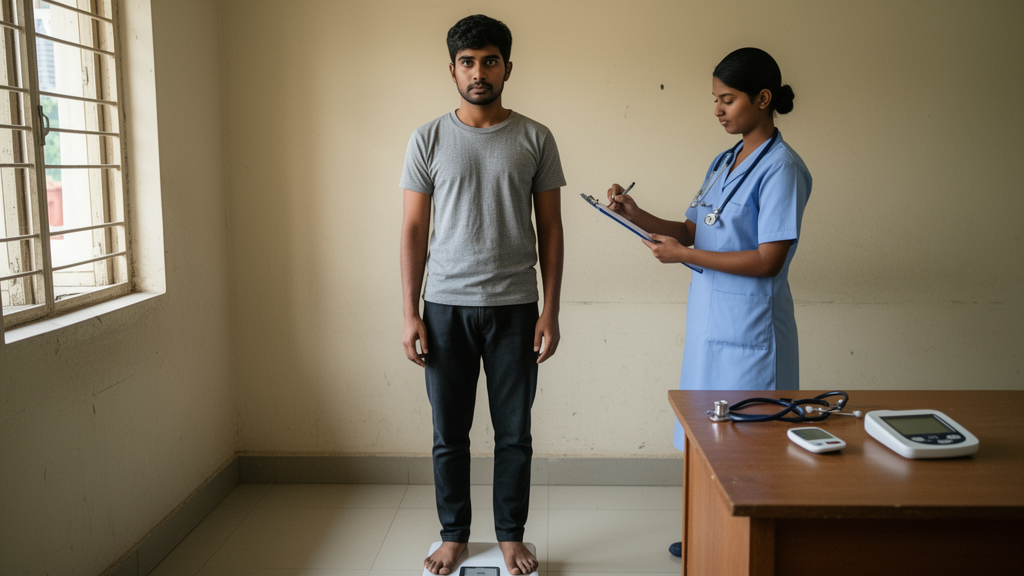
A new comment published in Health Science Reports raises questions about how a striking diabetes phenotype in Bangladesh should be classified. The comment, addressed to the editors, responds to a study by Hasan and colleagues that characterized lean, non-autoimmune young-onset diabetes in Bangladesh, describing affected individuals as a metabolically obese phenotype with a disproportionate insulin secretory defect. The commenters commend the researchers for examining an important but neglected diabetes phenotype among young people with low and normal body mass index, potentially affecting millions of individuals in low-income settings, and for narrowing the phenotype by excluding participants with pancreatic pathology, monogenic variants and fasting C-peptide levels below 200 pmol/L.
The commenters’ central concern is how the study defined its “lean” category. In the main text, this category combines participants with a BMI below 18.5 kg/m2 with those whose BMI falls between 18.5 and 22.9 kg/m2. Because the authors concluded that these lean subjects show modest insulin resistance and metabolic dysfunction, the commenters examined the BMI-based sub-analysis presented in the supplementary material to determine whether the leanest participants were actually insulin-resistant.
That sub-analysis reveals a notable imbalance. Of the 53 lean diabetes participants in the study, only 9 had a BMI below 18.5 kg/m2. The original authors reported that low- and normal-BMI diabetes participants showed similar phenotypic and metabolic features, but the commenters highlight that the waist-hip ratio, waist circumference and waist-height ratio were lower in the low-BMI diabetes group than in the normal-BMI group, with the difference in waist-height ratio reaching statistical significance at p = 0.033.
The metabolic differences follow the same direction. Median triglycerides were much lower in the low-BMI diabetes subgroup than in the normal-BMI subgroup, falling within the normal range and closely matching the median of the lean non-diabetes group. Median HOMA2-IR, fasting C-peptide and fasting insulin were also lower in the low-BMI diabetes group than in the normal-BMI group. The commenters acknowledge that none of these differences were statistically significant except for the waist-height ratio, but they argue that the direction and magnitude of the differences are consistent across nearly every relevant variable.
On that basis, the commenters suggest that the low-BMI diabetes subgroup appears consistent with the recently classified Type 5 Diabetes phenotype, which the original paper cites, and they propose that repeated laboratory and statistical measurements would help clearly distinguish it as a distinct phenotype. Type 5 Diabetes is characterized by a BMI below 18.5 kg/m2, and the commenters note that despite ongoing ambiguities about optimal diagnostic cut-offs and whether anthropometric measurements should be taken at initial presentation or after metabolic stabilization, exposure to persistent undernutrition remains one of its crucial characteristics.
A second methodological concern involves glucotoxicity. The lipid measurements in the original study were obtained cross-sectionally from participants with severe, uncontrolled hyperglycemia, without prior correction of glucotoxicity, as the authors themselves mentioned. The median HbA1c in the lean diabetes subgroup was 11.6%, which the commenters argue may have contributed to the apparent dyslipidemia in this group. The same caution applies to HOMA2-IR, because insulin resistance estimated during severe hyperglycemia is inflated by glucotoxicity and does not necessarily reflect participants’ baseline state. The commenters therefore propose that the glucose, lipid and HOMA-IR values used to identify metabolic dysfunction in the lean diabetes group may primarily reflect glucotoxicity, and they recommend repeating these measurements after correcting for glucotoxicity to properly assess insulin sensitivity.
Recruitment setting is a third point of discussion. The study participants were recruited from a young diabetes clinic at a tertiary referral centre in urban Dhaka, whereas Type 5 Diabetes is primarily reported in rural and socioeconomically disadvantaged populations. The commenters suggest that a detailed nutritional history of the study participants would help assess their nutritional status, although they acknowledge that this can be challenging in resource-limited areas. They propose that the Global Leadership Initiative on Malnutrition criteria, which combine simple, validated phenotypic and etiologic measures to identify malnutrition in adults, could address this challenge.
The commenters also recommend collecting data on other factors that may interact with insulin secretion and action to produce lower BMI, including intentional weight loss, genetic factors, and infections such as HIV and tuberculosis. They further suggest that expanding catchment areas to include rural and socioeconomically deprived regions would help identify individuals with this phenotype, and that targeted recruitment of underweight participants with diabetes would be a substantial contribution given Bangladesh’s burden of young-onset diabetes.
Overall, the comment frames the original cohort as a valuable characterization of lean, urban young-onset non-autoimmune diabetes, while arguing that the picture could change materially once measurements are repeated after glucotoxicity is corrected and undernutrition is formally assessed. It would be of particular interest, the commenters conclude, if future studies examining this condition correct glucotoxicity before analysing insulin sensitivity using HOMA-IR, and they suggest the original research group appears well placed to undertake such targeted recruitment.
Subject of Research: Lean, non-autoimmune young-onset diabetes in Bangladesh and the classification of an underweight diabetes phenotype
Article Title: Comment on ‘Lean, Non‐Autoimmune Young‐Onset Diabetes in Bangladesh: A Metabolically Obese Phenotype With Disproportionate Insulin Secretory Defect’
Article References: Pradnayshree, W., Silver, B., & Davis, K. (2026). Comment on ‘Lean, Non‐Autoimmune Young‐Onset Diabetes in Bangladesh: A Metabolically Obese Phenotype With Disproportionate Insulin Secretory Defect’. Endocrinology, Diabetes & Metabolism, 9(6), Article e70373. https://doi.org/10.1002/edm2.70373
Image Credits: AI Generated
DOI: 10.1002/edm2.70373
Keywords: Type 5 Diabetes, young-onset diabetes, Bangladesh, BMI, insulin resistance, HOMA2-IR, glucotoxicity, C-peptide, malnutrition, HbA1c, undernutrition, tertiary referral centre
Cite Scienmag News
Ophelia Keating. (October 27, 2026). Lean Young-Onset Diabetes in Bangladesh May Hide a Distinct Underweight Phenotype. Scienmag. https://scienmag.com/lean-young-onset-diabetes-in-bangladesh-may-hide-a-distinct-underweight-phenotype/
Ophelia Keating. "Lean Young-Onset Diabetes in Bangladesh May Hide a Distinct Underweight Phenotype." Scienmag, 27 October 2026, https://scienmag.com/lean-young-onset-diabetes-in-bangladesh-may-hide-a-distinct-underweight-phenotype/. Accessed 27 October 2026.
Ophelia Keating. "Lean Young-Onset Diabetes in Bangladesh May Hide a Distinct Underweight Phenotype." Scienmag. October 27, 2026. https://scienmag.com/lean-young-onset-diabetes-in-bangladesh-may-hide-a-distinct-underweight-phenotype/


