


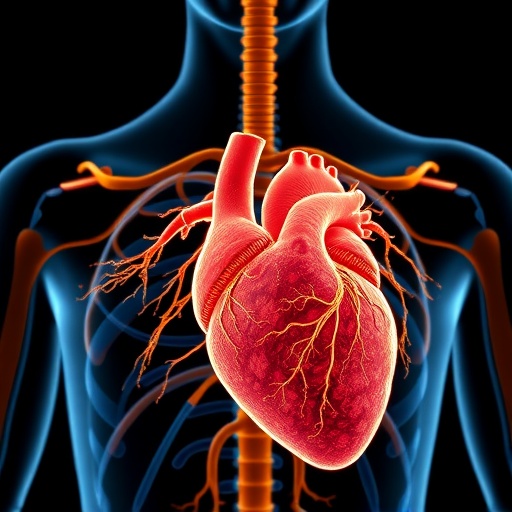
In an impressive convergence of computational biology and experimental pharmacology, researchers have uncovered new insights into LCZ696’s therapeutic potential against hyperthyroid-induced cardiac dysfunction. Hyperthyroidism, a condition marked by excessive thyroid hormone production, significantly burdens the cardiovascular system, often leading to heart disease characterized by arrhythmias, hypertrophy, and heart failure. Despite advances in managing thyroid dysfunction, specific treatments directly targeting the cardiac complications remain sparse. This breakthrough illuminates LCZ696, commonly known as sacubitril/valsartan, as a promising candidate to mitigate these debilitating cardiac manifestations through multiple biological pathways.
LCZ696, a dual-acting angiotensin receptor-neprilysin inhibitor, has previously made waves for its efficacy in treating heart failure with reduced ejection fraction. However, the biochemical intricacies underlying its potential action against hyperthyroid-induced heart disease were not well-understood until now. Employing an integrative methodology that blends network pharmacology, molecular docking simulations, and rigorous in vivo experimental validation, the research team unveiled a comprehensive portrait of LCZ696’s multi-targeted mechanism in this context. This holistic computational-experimental approach exemplifies the future of drug discovery, merging big data analytics with bench-side experimentation.
At the core of the study lies network pharmacology, an evolving discipline that transcends the traditional “one drug-one target” paradigm. By constructing complex interaction maps between LCZ696, thyroid-associated molecular targets, and cardiovascular signaling components, the scientists identified key nodes and pathways that are modulated post-treatment. The integrative network highlighted the drug’s influence on inflammation attenuation, oxidative stress reduction, and cardiac remodeling processes — hallmarks of hyperthyroid cardiomyopathy’s pathogenesis. This system-level perspective underscores the capacity for repurposed drugs to exert polypharmacological effects, tackling multifaceted diseases on several fronts simultaneously.
Complementing the computational predictions, molecular docking studies offered atomistic precision regarding LCZ696’s binding affinity and interaction modes with critical proteins implicated in hyperthyroid cardiac pathology. Docking algorithms simulated how sacubitril and valsartan moieties engage with components such as angiotensin II type 1 receptors, neprilysin enzymes, along with key inflammatory and fibrotic mediators. These simulations supported the hypothesis that LCZ696 disrupts maladaptive signaling cascades, thereby stabilizing cardiomyocyte function and preventing adverse structural remodeling. By revealing the molecular underpinnings, the study provides strong rationale for the clinical translation of this compound in the hyperthyroid patient population.
To verify computational insights, the research proceeded with rigorous in vivo validation using animal models mimicking hyperthyroid heart disease. Treatment with LCZ696 ameliorated cardiac hypertrophy, improved left ventricular function, and suppressed biochemical markers indicative of oxidative damage and inflammation. These physiological improvements were statistically significant compared to control groups, indicating robust therapeutic potential. The integrative approach thus confirms that the predicted biochemical interactions have tangible biological outcomes, further bolstering the case for LCZ696’s repositioning.
Hyperthyroidism-induced cardiac alterations often progress rapidly, driven by increased sympathetic activity, altered metabolism, and heightened oxidative stress. Conventional therapies primarily target thyroid hormone synthesis or cardiac symptoms rather than the molecular crosstalk sustaining disease progression. Therefore, the identification of a drug capable of intercepting pathological signaling at multiple nodes — as demonstrated by LCZ696 — presents a paradigm shift in managing thyrotoxic cardiomyopathy. This study not only advances pharmacological knowledge but also opens new therapeutic avenues harnessing polypharmacology.
This research contributes significantly to personalized medicine, as LCZ696’s multi-target actions may be particularly advantageous for patients with refractory hyperthyroid cardiac complications. By simultaneously modulating renin-angiotensin-aldosterone system (RAAS) dynamics and neprilysin activity, LCZ696 addresses critical mechanisms implicated in maladaptive cardiac remodeling and fibrosis. Future clinical trials could refine dosing regimens and identify biomarkers predictive of patient response, optimizing therapy for maximal efficacy and minimal side effects.
Furthermore, the employment of network pharmacology combined with molecular docking serves as a blueprint for evaluating other drug candidates in complex systemic diseases. Hyperthyroid heart disease embodies a multifactorial disorder with overlapping genetic, metabolic, and inflammatory elements. Traditional monotherapy approaches falter in such settings, whereas the network-centric view facilitates identification of synergistic drug interactions and novel therapeutic targets. Such integrative strategies sharpen our toolbox against multifaceted pathologies.
The study also delves into the biochemical milieu of hyperthyroid cardiac disease, highlighting upregulated inflammatory cytokines such as TNF-α and IL-6, elevated reactive oxygen species production, and profibrotic signaling through TGF-β pathways. LCZ696’s capacity to modulate these pathological mediators suggests potential cross-talk attenuation between thyroid hormone excess and cardiac molecular derangements. This dual-modulation could temper detrimental feedback loops exacerbating myocardial injury, underscoring the therapeutic promise.
In addition to direct cardiac effects, the study underscores implications for systemic vascular function. Thyroid hormone excess disrupts endothelial homeostasis and promotes vasoconstriction, which further burdens the heart. By inhibiting RAAS and facilitating natriuretic peptide accumulation through neprilysin inhibition, LCZ696 may restore vascular tone and reduce afterload. This comprehensive cardiovascular protection aligns well with improved outcomes observed in heart failure patients treated with the drug, and now extends its potential indications.
Emerging scientific literature corroborates these findings, where sacubitril/valsartan’s benefits transcend simple hemodynamic modulation to encompass anti-inflammatory and antifibrotic pathways. Critically, this study is among the first to rigorously evaluate these effects specifically in the setting of hyperthyroidism-mediated cardiac disease via integrative computational-experimental pipelines. This pioneering work paves the way toward repurposing well-characterized pharmaceuticals in nuanced clinical contexts.
While acknowledging the need for human clinical trials to validate safety and efficacy in hyperthyroid populations, the present data robustly support LCZ696 as a candidate worthy of expedited investigation. Multidisciplinary collaboration between endocrinologists, cardiologists, and pharmacologists will be essential to harness these insights for patient benefit. Personalized treatment paradigms that incorporate molecular profiling and computational analyses promise to refine therapeutic approaches further.
Beyond hyperthyroid cardiomyopathy, the methodology applied in this study may generalize to other endocrine-cardiac pathologies, such as diabetic cardiomyopathy or pheochromocytoma-induced cardiac dysfunction. Network pharmacology and molecular docking provide flexible frameworks adaptable across disease spectra. This study’s success reiterates the power of integrating systems biology with experimental models in contemporary drug development.
In conclusion, the discovery of LCZ696’s multifaceted mechanisms mitigating hyperthyroid heart disease marks a transformative advance in cardiovascular pharmacotherapy. By bridging computational predictions with empirical validation, researchers have illuminated new pathways to combat a complex, life-threatening condition. As medicine increasingly embraces polypharmacology and precision therapeutics, such integrative studies will drive future innovations, heralding improved patient outcomes worldwide.
Cite Scienmag News
Frances Kline. (April 30, 2026). LCZ696 Targets Hyperthyroid Heart Disease: Integrated Study. Scienmag. https://scienmag.com/lcz696-targets-hyperthyroid-heart-disease-integrated-study/
Frances Kline. "LCZ696 Targets Hyperthyroid Heart Disease: Integrated Study." Scienmag, 30 April 2026, https://scienmag.com/lcz696-targets-hyperthyroid-heart-disease-integrated-study/. Accessed 5 September 2026.
Frances Kline. "LCZ696 Targets Hyperthyroid Heart Disease: Integrated Study." Scienmag. April 30, 2026. https://scienmag.com/lcz696-targets-hyperthyroid-heart-disease-integrated-study/


