


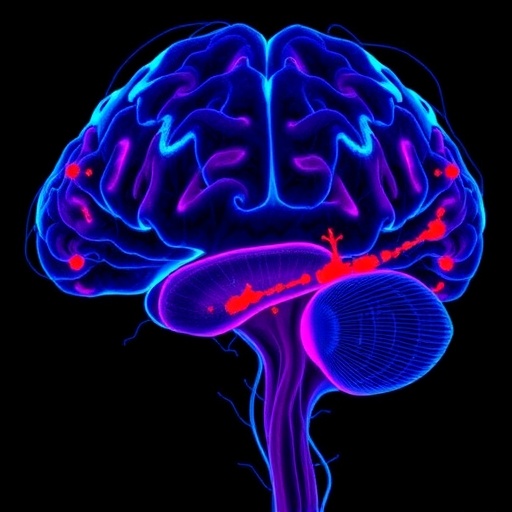
A neurotransmitter best known for quieting the brain has emerged as an unexpected accomplice in one of medicine’s most lethal cancers. In a study published in Nature Cancer, researchers report that gamma-aminobutyric acid, or GABA, the principal inhibitory messenger of the central nervous system, actively fuels glioblastoma progression — but only in female mice, and only through a surprising intermediary: a population of immunosuppressive immune cells known as myeloid-derived suppressor cells. The finding, from a team led by Ashish Pathak and colleagues, adds a striking new dimension to the growing recognition that brain tumors do not merely coexist with the nervous system — they exploit it.
Glioblastoma is the most common and aggressive primary malignant brain tumor in adults. Even with the full modern arsenal of surgery, radiation, and the chemotherapy drug temozolomide, median survival hovers around fifteen months, and the disease has long defied the wave of therapeutic advances that have transformed many other cancers. One reason is the tumor’s extraordinary adaptability: glioblastoma cells rewire their own metabolism, recruit and corrupt surrounding cells, and sculpt the local immune environment into one that shelters rather than attacks them. The new study points to a specific molecular conversation between the tumor microenvironment and the brain’s own signaling chemistry as a driver of that malignant orchestration — and identifies sex as a decisive variable in the conversation.
For decades, neuroscience and cancer biology operated on largely separate tracks. That began to change when researchers demonstrated that neurons can directly stimulate tumor growth, most famously in prostate, breast, gastric, and pancreatic cancers, and later in gliomas themselves, where neuronal activity was shown to promote tumor proliferation through activity-dependent secretion of factors such as neuroligin-3 and the signaling molecule BDNF. GABA, however, occupies a peculiar place in this emerging neuro-oncology landscape. As the brain’s dominant inhibitory neurotransmitter, it is released in vast quantities by interneurons throughout gray matter. Earlier work had suggested that some glioma cells could even metabolize GABA as a fuel source, and that GABAergic signaling might influence tumor cell proliferation. But the new study reframes the question: rather than acting directly on tumor cells, GABA signaling appears to exert its pro-tumor influence by reshaping the immune landscape of the tumor itself.
The research team set out to dissect this relationship using genetically engineered mouse models of glioblastoma, in which tumors arise spontaneously in the brain and recapitulate many features of the human disease, including its cellular heterogeneity and its infiltration by diverse immune populations. By manipulating GABA signaling in these models — enhancing it in some animals and dampening it in others — the investigators could trace its effects on tumor growth and survival. The results were unambiguous: activating GABA signaling accelerated glioblastoma progression, while interfering with that signaling slowed tumor growth. Female mice, in particular, bore the brunt of the effect, with GABA activation driving markedly more aggressive disease than in their male counterparts — a sex-specific pattern that mirrors, intriguingly, epidemiological data in humans, where glioblastoma incidence and certain molecular features of the disease differ between men and women.
The mechanism, however, proved to be the study’s most consequential revelation. When the researchers profiled the immune composition of tumors exposed to heightened GABA signaling, they found a striking expansion of myeloid-derived suppressor cells — a heterogeneous population of immature myeloid cells that, as their name suggests, suppress the activity of T cells and other antitumor immune players. In glioblastoma, where the tumor is infiltrated by an extraordinary abundance of myeloid-lineage cells that often make up the majority of its cellular mass, these suppressor cells are already recognized as central architects of the tumor’s immunosuppressive fortress. What the new study demonstrates is that GABA signaling acts, in effect, as a recruitment and activation signal for this immunosuppressive armada.
Delving into the cellular details, the team found that GABA exerts its influence on myeloid cells through GABA receptors expressed on their surface. Engagement of these receptors triggers intracellular signaling cascades that reprogram the cells’ behavior, skewing them toward a potently immunosuppressive state. The consequence is a dampening of cytotoxic T-cell activity within the tumor — the very immune cells that immunotherapies such as immune checkpoint inhibitors depend upon to eliminate cancer. In other words, GABA does not make tumor cells grow faster so much as it blinds the immune system to their presence. This distinction matters therapeutically: targeting a signaling pathway that acts on host immune cells rather than on genetically unstable tumor cells may offer a more durable intervention, one less prone to the rapid evolution of resistance that plagues treatments aimed directly at cancer cells.
The sex specificity of the effect adds a further layer of biological interest. Sex differences in cancer have long been catalogued but poorly explained, spanning differences in incidence, molecular subtype distribution, immune infiltration, and treatment response. In glioblastoma, males are diagnosed at somewhat higher rates, yet the underlying biology of sex dimorphism remains murky. The new findings suggest that one axis of this dimorphism may run through neurotransmitter signaling and its downstream immunological consequences. Whether the difference in mice reflects differences in GABAergic tone, hormone-dependent modulation of GABA receptor expression on myeloid cells, or sex-linked variation in the myeloid compartment’s responsiveness remains a question the authors and the field will now pursue. The implication, however, is clear: preclinical studies that use only male animals — a historical default in much of biomedical research — risk missing mechanisms of genuine clinical relevance.
Translating the finding to the clinic will require careful groundwork, and the authors and outside experts caution that mouse models, however sophisticated, capture only part of human glioblastoma biology. Still, the therapeutic logic is compelling. Drugs that modulate GABA signaling already exist in abundance, developed over decades for epilepsy, anxiety, and other neurological conditions. Gabapentinoids, benzodiazepines, GABA reuptake inhibitors, and receptor-selective modulators constitute a mature pharmacopoeia with well-characterized safety profiles and, in several cases, proven ability to cross the blood–brain barrier. Repurposing or carefully redeploying members of this pharmacological family to blunt the pro-tumor, immunosuppressive effects of GABA signaling in glioblastoma — particularly in female patients whose tumors may be more dependent on this pathway — represents an unusually direct route from mechanism to potential clinical trial.
The study also resonates with a broader and rapidly expanding body of work on the neuro-immune axis in cancer. It is now well established that the nervous system innervates tumors and their microenvironments, and that neural signals can regulate everything from cancer stem cell function to angiogenesis to immune surveillance. Within tumors, neurotransmitters act less as long-range wires than as chemical signals exchanged among neurons, glia, tumor cells, and immune cells. GABA itself has been implicated in other cancers: in some solid tumors of the pancreas and breast, GABAergic signaling has been reported to promote invasion and stem-like behavior. The new glioblastoma study extends this theme into the one organ where GABA is most abundant, and identifies the myeloid immune compartment — rather than the tumor cell itself — as the critical sensor. That reframing may resolve some of the confusion in earlier literature, where direct effects of GABA on tumor cells appeared modest or inconsistent.
For patients, the immediate significance lies less in a new treatment — none is yet available — than in a changed understanding of what glioblastoma is. A brain tumor is not simply a mass of dividing cells; it is an ecosystem, wired into the electrical and chemical circuitry of the organ it invades. Each new node of that circuitry that science maps is a potential point of intervention. The identification of GABA-driven, myeloid-mediated immunosuppression as a sex-biased engine of tumor progression provides both a mechanistic target and a biomarker opportunity: if human glioblastomas can be stratified by their dependence on GABAergic signaling — and by the sex of the patient — trials of GABA-targeted immunomodulation could be designed with a precision that glioblastoma therapy has rarely enjoyed.
The study, published in Nature Cancer, was conducted by Ashish Pathak, Sravya P., B. Colon, and colleagues, who combined spontaneous and transplant-based mouse glioblastoma models with immunophenotyping, receptor-level perturbation, and mechanistic dissection of myeloid cell function. Their demonstration that a core neurotransmitter of the healthy brain can be co-opted to disarm antitumor immunity is likely to spur a wave of follow-up work, from human tissue analyses to drug repurposing efforts. As the neuro-oncology field continues to dismantle the boundary between brain and tumor, the message of this study is both sobering and energizing: the very chemistry that lets the brain think may also, under the wrong circumstances, help a tumor hide — and that hiddenness, at last, is something science can begin to target.
Cite Scienmag News
Nathaniel Bowman. (September 5, 2026). GABA signaling fuels glioblastoma growth in female mice via suppressor cells. Scienmag. https://scienmag.com/gaba-signaling-fuels-glioblastoma-growth-in-female-mice-via-suppressor-cells/
Nathaniel Bowman. "GABA signaling fuels glioblastoma growth in female mice via suppressor cells." Scienmag, 5 September 2026, https://scienmag.com/gaba-signaling-fuels-glioblastoma-growth-in-female-mice-via-suppressor-cells/. Accessed 5 September 2026.
Nathaniel Bowman. "GABA signaling fuels glioblastoma growth in female mice via suppressor cells." Scienmag. September 5, 2026. https://scienmag.com/gaba-signaling-fuels-glioblastoma-growth-in-female-mice-via-suppressor-cells/


