


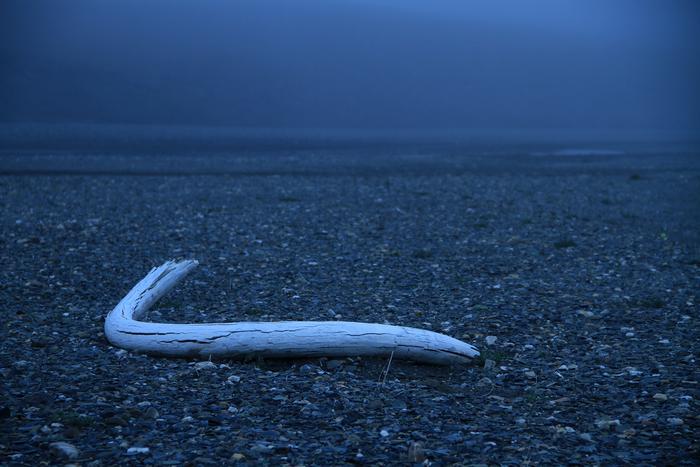
The last population of woolly mammoths was isolated on Wrangel Island off the coast of Siberia 10,000 years ago, when sea levels rose and cut the mountainous island off from the mainland. A new genomic analysis reveals that the isolated mammoths, who lived on the island for the subsequent 6,000 years, originated from at most 8 individuals but grew to 200–300 individuals within 20 generations. The researchers report June 27 in the journal Cell that the Wrangel Island mammoths’ genomes showed signs of inbreeding and low genetic diversity but not to the extent that it can explain their ultimate (and mysterious) extinction.

Credit: Love Dalén
The last population of woolly mammoths was isolated on Wrangel Island off the coast of Siberia 10,000 years ago, when sea levels rose and cut the mountainous island off from the mainland. A new genomic analysis reveals that the isolated mammoths, who lived on the island for the subsequent 6,000 years, originated from at most 8 individuals but grew to 200–300 individuals within 20 generations. The researchers report June 27 in the journal Cell that the Wrangel Island mammoths’ genomes showed signs of inbreeding and low genetic diversity but not to the extent that it can explain their ultimate (and mysterious) extinction.
“We can now confidently reject the idea that the population was simply too small and that they were doomed to go extinct for genetic reasons,” says senior author Love Dalén (@love_dalen), an evolutionary geneticist at the Centre for Palaeogenetics, a joint collaboration between the Swedish Museum of Natural History and Stockholm University. “This means it was probably just some random event that killed them off, and if that random event hadn’t happened, then we would still have mammoths today.”
In addition to shedding light on woolly mammoth population dynamics, this analysis of Wrangel Island mammoths could help inform conservation strategies for present-day endangered animals.
“Mammoths are an excellent system for understanding the ongoing biodiversity crisis and what happens from a genetic point of view when a species goes through a population bottleneck because they mirror the fate of a lot of present-day populations,” says first author Marianne Dehasque (@MariDehasque) of the Centre for Palaeogenetics.
To understand the genomic consequences of the Wrangel Island bottleneck on the mammoth population, the team analyzed the genomes of 21 woolly mammoths—14 from Wrangel Island, and 7 from the mainland population that predated the bottleneck. Altogether, the samples spanned the last 50,000 years of the woolly mammoth’s existence, providing a window into how mammoth genetic diversity changed through time.
Compared to their mainland ancestors, the Wrangel Island mammoth genomes showed signs of inbreeding and low genetic diversity. In addition to overall low genetic diversity, they showed reduced diversity in the major histocompatibility complex, a group of genes known to play a critical role in the vertebrate immune response.
The researchers showed that the population’s genetic diversity continued to decline throughout the 6,000 years that the mammoths inhabited Wrangel Island, though at a very slow pace, suggesting that the population size was stable up until the very end. And although the island’s mammoth population gradually accumulated moderately harmful mutations throughout its 6,000-year tenure, the researchers showed that the population was slowly purging the most harmful mutations.
“If an individual has an extremely harmful mutation, it’s basically not viable, so those mutations gradually disappeared from the population over time, but on the other hand, we see that the mammoths were accumulating mildly harmful mutations almost up until they went extinct,” says Dehasque. “It’s important for present day conservation programs to keep in mind that it’s not enough to get the population up to a decent size again; you also have to actively and genetically monitor it because these genomic effects can last for over 6,000 years.”
Though the mammoth genomes analyzed in this study straddle a large timespan, they do not include the final 300 years of the species’ existence. However, the researchers have unearthed fossils from the mammoth’s final period and plan to conduct genomic sequencing in the future.
“What happened at the end is a bit of a mystery still—we don’t know why they went extinct after having been more or less fine for 6,000 years, but we think it was something sudden,” says Dalén. “I would say there is still hope to figure out why they went extinct, but no promises.”
###
This research was supported by the Swedish Research Council, the Science for Life Laboratory, the National Genomics Infrastructure, and UPPMAX.
Cell, Dehasque et al. “Temporal dynamics of woolly mammoth genome erosion prior to extinction”
Cell (@CellCellPress), the flagship journal of Cell Press, is a bimonthly journal that publishes findings of unusual significance in any area of experimental biology, including but not limited to cell biology, molecular biology, neuroscience, immunology, virology and microbiology, cancer, human genetics, systems biology, signaling, and disease mechanisms and therapeutics. Visit http://www.cell.com/cell. To receive Cell Press media alerts, contact press@cell.com.
Journal
Cell
Method of Research
Observational study
Subject of Research
Not applicable
Article Title
Temporal dynamics of woolly mammoth genome erosion prior to extinction
Article Publication Date
27-Jun-2024
Cite Scienmag News
Drew Townsend. (June 27, 2024). Last surviving woolly mammoths were inbred but not doomed to extinction. Scienmag. https://scienmag.com/last-surviving-woolly-mammoths-were-inbred-but-not-doomed-to-extinction/
Drew Townsend. "Last surviving woolly mammoths were inbred but not doomed to extinction." Scienmag, 27 June 2024, https://scienmag.com/last-surviving-woolly-mammoths-were-inbred-but-not-doomed-to-extinction/. Accessed 4 September 2026.
Drew Townsend. "Last surviving woolly mammoths were inbred but not doomed to extinction." Scienmag. June 27, 2024. https://scienmag.com/last-surviving-woolly-mammoths-were-inbred-but-not-doomed-to-extinction/

