


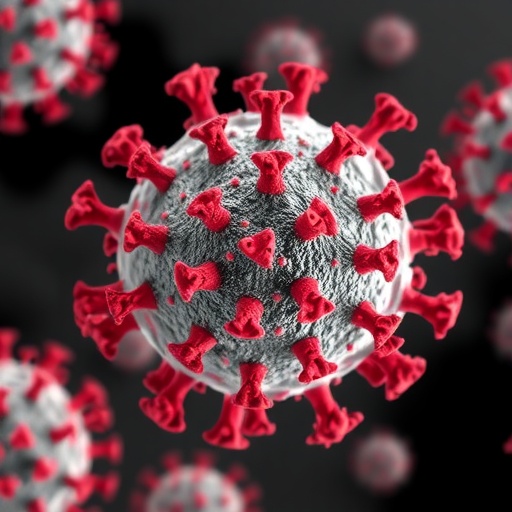
In a groundbreaking study poised to redefine our understanding of Lassa virus biology, researchers have unveiled an unprecedented sequence-to-structure catalogue that meticulously maps the population-level biophysical properties of this deadly pathogen’s glycoprotein. The Lassa virus, an arenavirus responsible for severe hemorrhagic fevers predominantly in West Africa, has long evaded comprehensive structural characterization at the population scale. This new research, published in npj Viruses, leverages cutting-edge computational and experimental approaches to paint a detailed portrait of the virus’s nuanced molecular architecture, providing valuable insights that could accelerate therapeutic and vaccine development.
At the heart of viral infectivity and immune evasion lies the glycoprotein complex of Lassa virus. This protein facilitates entry into host cells and is the principal target for neutralizing antibodies. However, the diversity of glycoprotein sequences circulating within virus populations poses a significant challenge to vaccine design. The team led by Daodu and colleagues undertook a herculean effort to assemble and analyze a comprehensive repertoire of glycoprotein sequence variants, correlating them with corresponding structural and biophysical traits. Their work goes beyond traditional static snapshots, offering a dynamic view of how sequence variability translates into structural diversity.
The researchers employed next-generation sequencing datasets derived from multiple Lassa virus isolates across endemic regions, revealing a vast and complex population structure at the sequence level. From these data, they applied state-of-the-art machine learning algorithms to predict three-dimensional structures of thousands of glycoprotein variants. This integrative methodology allowed them to capture subtleties in protein folding, stability, and conformational flexibility that were previously inaccessible using conventional approaches.
One of the most striking aspects of this study is its focus on biophysical characterization at the population scale. By analyzing predicted structures through computational biophysics frameworks, the team quantified parameters such as surface electrostatics, hydrophobicity patterns, and the propensity for conformational rearrangements. These biophysical fingerprints shed light on potential mechanisms whereby Lassa virus adapts to immune pressures and host environments, unveiling a landscape of structure-function relationships vital to viral survival and pathogenesis.
The generated glycoprotein structure catalogue serves as a dynamic repository encompassing diverse Lassa virus variants, providing a foundational resource for rational design of broadly effective interventions. Importantly, the catalogue reveals hotspots of structural conservation interspersed with mutable regions that may underlie immune escape. Such information is invaluable for focusing antibody and small-molecule binding studies on the most vulnerable and universally preserved epitopes.
Crucially, the study integrates population genetics frameworks to explore how evolutionary forces shape the observed biophysical diversity. By combining sequence evolution metrics with structural constraints, the authors show that selective pressures act not only at the amino acid sequence level but also on higher-order structural features. This multi-dimensional perspective provides new clarity on the evolutionary pathways that Lassa virus exploits to maintain infectivity while diversifying antigenically.
The implications of this research extend beyond Lassa virus, highlighting a generalizable framework for translating viral sequence data into actionable structural knowledge. Given the ongoing threat posed by emergent zoonotic viruses, such integrative approaches are essential for preemptive vaccine and antiviral development. The methodology exemplifies how synergy between computational modeling, sequencing technologies, and biophysical analysis can revolutionize virus surveillance and countermeasure design.
Moreover, the authors demonstrate the utility of their catalogue by identifying glycoprotein variants that exhibit enhanced stability or altered receptor-binding properties, which have potential implications for virulence and transmission dynamics. These findings underscore the complex interplay between structural adaptation and viral fitness, emphasizing the importance of structural virology in deciphering pathogen behavior in natural populations.
The article meticulously details methodological advancements, including novel deep learning architectures trained on comprehensive structural datasets and innovative biophysical descriptors tailored to viral glycoproteins. This technical prowess enables high-throughput and accurate predictions, overcoming long-standing barriers in structural virology.
In addition to computational predictions, the study reports validation of selected glycoprotein models through cross-referencing with available cryo-electron microscopy (cryo-EM) and X-ray crystallography data. This triangulation fortifies confidence in the predictive framework and demonstrates its applicability to experimentally unresolved variants, bridging gaps in structural data coverage.
The cataloguing effort also surfaces potential targets for therapeutic intervention beyond antibody binding sites. By mapping sites susceptible to conformational modulation and stabilizing mutations, the work opens avenues for design of small-molecule inhibitors that disrupt the glycoprotein’s function. Such strategies are particularly pertinent given the scarcity of effective drugs against hemorrhagic fever viruses.
Another notable contribution is the comprehensive assessment of glycans decorating the Lassa virus glycoprotein. Glycosylation profoundly influences immune recognition and viral entry, and the authors provide an integrated analysis of how sequence variation impacts glycan presentation and dynamics. This deeply informs vaccine antigen design, where glycan shielding can complicate elicitation of neutralizing responses.
Contextualizing their findings within the broader arenavirus family, the authors discuss evolutionary parallels and divergences that inform host adaptation strategies. The comparative framework solidifies the relevance of their structural catalogue for understanding arenavirus biology at large, including related human pathogens.
The study also makes significant strides in democratizing access to this critical resource. The authors have launched an open-access, interactive database allowing researchers worldwide to explore glycoprotein variants by sequence, structure, and biophysical attributes. This platform promises to catalyze collaborative efforts to combat Lassa fever through shared knowledge and predictive insights.
Importantly, this pioneering research underscores how precision viral structural biology can enhance our epidemiological awareness and pandemic preparedness. By linking molecular properties to population-level dynamics, it brings us closer to predictive models of viral evolution and spread, resonating deeply with global health priorities.
In sum, the work of Daodu et al. marks a transformative leap in sequence-to-structure analysis of Lassa virus, offering an invaluable toolset to decode viral diversity and inform next-generation diagnostics, therapeutics, and vaccines. As viral threats continue to evolve, such integrative and comprehensive approaches illuminate pathways to sustainable control of endemic and emergent viral pathogens.
Cite Scienmag News
Kristina Jarvis. (May 14, 2026). Lassa Virus Biophysics and Glycoprotein Structure Insights. Scienmag. https://scienmag.com/lassa-virus-biophysics-and-glycoprotein-structure-insights/
Kristina Jarvis. "Lassa Virus Biophysics and Glycoprotein Structure Insights." Scienmag, 14 May 2026, https://scienmag.com/lassa-virus-biophysics-and-glycoprotein-structure-insights/. Accessed 7 September 2026.
Kristina Jarvis. "Lassa Virus Biophysics and Glycoprotein Structure Insights." Scienmag. May 14, 2026. https://scienmag.com/lassa-virus-biophysics-and-glycoprotein-structure-insights/


