


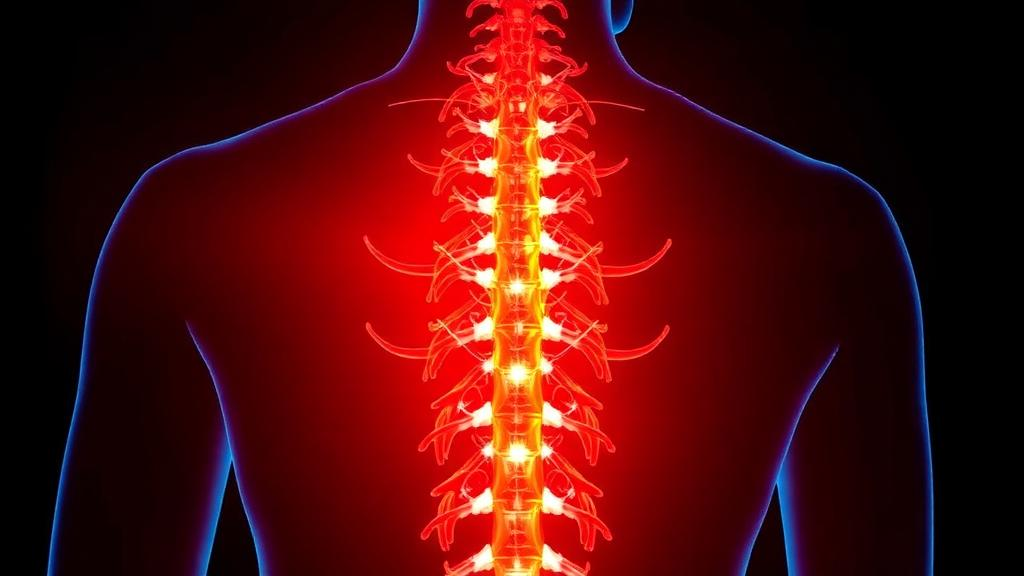
Chordomas are among the rarest and most stubborn tumors in medicine. Arising from embryonic remnants of the notochord, the structure that helps shape the developing spine, these slow-growing malignancies account for only 1 to 4 percent of all primary bone tumors, striking roughly 0.08 people per 100,000 each year, most often men between 50 and 60 years of age. Despite their deceptively low-grade appearance under the microscope, chordomas are locally aggressive, relentlessly invading bone and pressing against the spinal cord. Even after aggressive surgical resection followed by adjuvant radiotherapy, local recurrence occurs in more than half of patients. Once maximal surgery and radiation have been exhausted, clinicians have historically had very little left to offer. A new study from The University of Texas MD Anderson Cancer Center, published in the Journal of Neuro-Oncology, suggests that a minimally invasive laser technique already proven against spinal metastases may now extend that lifeline to chordoma patients.
The technique, known as spinal laser interstitial thermal therapy, or sLITT, involves threading thin laser fibers through a small percutaneous channel directly into a tumor, then destroying it from the inside with precisely controlled heat. Real-time magnetic resonance thermography tracks temperature continuously during the procedure, and an Arrhenius damage model estimates tissue destruction on the treatment workstation as a color-coded overlay on anatomical images. Up to six temperature-monitoring points are placed at the interface between the epidural tumor and the dura mater, the protective membrane covering the spinal cord. When the interface approaches a safety threshold of approximately 50 degrees Celsius, the system automatically shuts the laser off, protecting the cord and nerve roots from thermal injury.
One of the most striking technical challenges the team had to solve involves breathing itself. Respiratory motion degrades the reliability of the thermal map, so ablations are delivered in cycles under ventilatory arrest. Patients are preoxygenated to 100 percent oxygen saturation, each ablation cycle is capped at 100 seconds, and ventilation resumes between cycles. If oxygen saturation falls below 94 percent or the dura-interface temperature threshold is reached, the procedure halts immediately. Each laser fiber produces a zone of thermal damage extending roughly 5 millimeters radially, and additional access cannulas are placed in tandem when greater coverage along the spine is needed. It is a delicate choreography of neurosurgery, physics, and anesthesiology performed inside an intraoperative MRI suite.
The new report, led by Sumeeth V. Jonathan and senior author Claudio E. Tatsui, describes the largest clinical experience with sLITT for chordoma to date: four patients treated across five procedures between January 2016 and November 2025. The tumors spanned the full anatomic range of the disease, including metastatic foci from primary sacral, clival, and cervical chordomas, plus one primary thoracic lesion. Four procedures served as salvage therapy after prior surgery, radiotherapy, or systemic treatment had failed, while one patient received sLITT as primary treatment specifically to avoid the morbidity of open surgery. Median time from diagnosis to LITT was 19.1 months, and all patients entered treatment with excellent functional status, with Karnofsky Performance Status scores of 90 to 100.
Procedurally, the team used a median of four laser fibers and 16 ablations per case, delivering power between 12 and 15 watts. Median case duration was 352.5 minutes, and patients went home after a median hospital stay of just two days. Postoperative stereotactic radiosurgery, a highly focused form of radiation, was administered after all but one procedure, at a median of 7.5 days after LITT. Only one complication occurred: a transient episode of proximal arm radiculopathy that resolved completely with a short course of steroids by the one-month follow-up. There was no procedure-related mortality and no other perioperative complications.
The oncologic results were encouraging. Every patient showed volumetric tumor shrinkage on the earliest postoperative MRI, obtained at a median of 4.2 months, with a mean volume reduction of 25.7 percent. More importantly, by the conventional endpoint of freedom from local progression, meaning no radiographic growth and no further intervention at the treated site, no treated lesion progressed or required additional treatment during available follow-up, which extended to a median of 16.8 months and reached 48.1 months in the longest-followed case. Median overall survival from LITT was 23.0 months. Two patients had died by last follow-up, typically from disease progressing elsewhere in the body, while two remained alive.
A systematic review of the literature performed by the authors found only four previously published case reports of LITT for chordoma, three of which described complete thermal ablation with radiographic response. Those reports used remarkably varied approaches, including endoscopic endonasal, percutaneous translaminar, and transcranial catheter placement, reflecting the anatomic diversity of chordoma across the skull base and spine. No major complications were reported in any of them. The new series more than doubles the aggregate published experience and is the first to report volumetric outcomes and local control systematically across multiple patients.
Two biological questions have long shadowed the idea of laser-ablating chordomas. First, the tumor’s characteristic lipid-rich physaliferous cells were hypothesized to conduct heat poorly compared with other ablated tumor types, potentially limiting ablation size. Yet intraoperative thermography in prior work demonstrated spherical ablation zones of 14 to 16 millimeters in axial diameter, comparable to those achieved in other histologies, suggesting the theoretical concern is not clinically significant. Second, because chordomas are notorious for seeding tumor along biopsy and surgical tracts, researchers worried the percutaneous laser trajectory could do the same. That risk was mitigated with an outer access cannula that isolates the tract from direct tumor contact, and no tract seeding has been observed on follow-up imaging.
The authors are careful about what these data can and cannot show. Because radiosurgery followed four of the five procedures, the independent contribution of LITT cannot be separated from that of radiation in this retrospective design. Still, several observations hint that the laser is doing real work: the one procedure not followed by radiosurgery nonetheless showed volumetric reduction, and shrinkage appeared on scans as early as 2.8 months, a timeframe consistent with the immediate ablative effect of heat rather than the slower radiobiological response to radiation. Prior large sLITT series in metastatic disease, including one of 129 patients treated across 144 thoracic segments, found that patients treated with LITT alone achieved one-year local control of 83.4 percent, statistically similar to those who also received radiotherapy.
The researchers position sLITT as a complement to, not a replacement for, established therapies. Repeat resection remains the most definitive local treatment but carries high complication rates in previously irradiated fields, and reirradiation is constrained by cumulative dose to the spinal cord and other organs at risk. The realistic niche for sLITT is narrow but meaningful: local tumor reduction and decompression in patients whose lesions sit in previously treated fields, who need to resume systemic therapy quickly, or for whom open surgery is too risky. Intriguingly, the team also raises a forward-looking hypothesis. Chordoma harbors an immune-excluded microenvironment in which stromal barriers wall off effector immune cells, and LITT-induced hyperthermia has been shown in other tumors to release damage-associated molecular patterns and transiently open the blood-brain barrier, potentially converting immunologically cold tumors into hot ones. Whether laser ablation could help unlock chordoma’s defenses against immunotherapy remains untested, but it offers one more reason this small proof-of-concept study may mark the beginning of a much larger story.
Subject of Research: MRI-guided spinal laser interstitial thermal therapy as a minimally invasive treatment for chordoma
Article Title: Spinal laser interstitial thermal therapy for treatment of chordoma: single-center experience and literature review
Article References: Jonathan, S. V., Chen, J. W., Wu, K., Flores, A. R., Ghia, A. J., Kimchi, G., North, R. Y., Alvarez-Breckenridge, C. A., Rhines, L. D., & Tatsui, C. E. (2026). Spinal laser interstitial thermal therapy for treatment of chordoma: single-center experience and literature review. Journal of Neuro-Oncology, 179(2), Article 59. https://doi.org/10.1007/s11060-026-05764-4
Image Credits: AI Generated
DOI: 10.1007/s11060-026-05764-4
Keywords: chordoma, laser interstitial thermal therapy, LITT, spinal tumor, MRI thermometry, stereotactic radiosurgery, neurosurgery, MD Anderson, salvage therapy, thermal ablation, tumor microenvironment, Journal of Neuro-Oncology
Cite Scienmag News
Nathaniel Bowman. (October 4, 2026). Laser Therapy Offers New Hope for Rare Spinal Tumors When Surgery Runs Out of Options. Scienmag. https://scienmag.com/laser-therapy-offers-new-hope-for-rare-spinal-tumors-when-surgery-runs-out-of-options/
Nathaniel Bowman. "Laser Therapy Offers New Hope for Rare Spinal Tumors When Surgery Runs Out of Options." Scienmag, 4 October 2026, https://scienmag.com/laser-therapy-offers-new-hope-for-rare-spinal-tumors-when-surgery-runs-out-of-options/. Accessed 4 October 2026.
Nathaniel Bowman. "Laser Therapy Offers New Hope for Rare Spinal Tumors When Surgery Runs Out of Options." Scienmag. October 4, 2026. https://scienmag.com/laser-therapy-offers-new-hope-for-rare-spinal-tumors-when-surgery-runs-out-of-options/


