


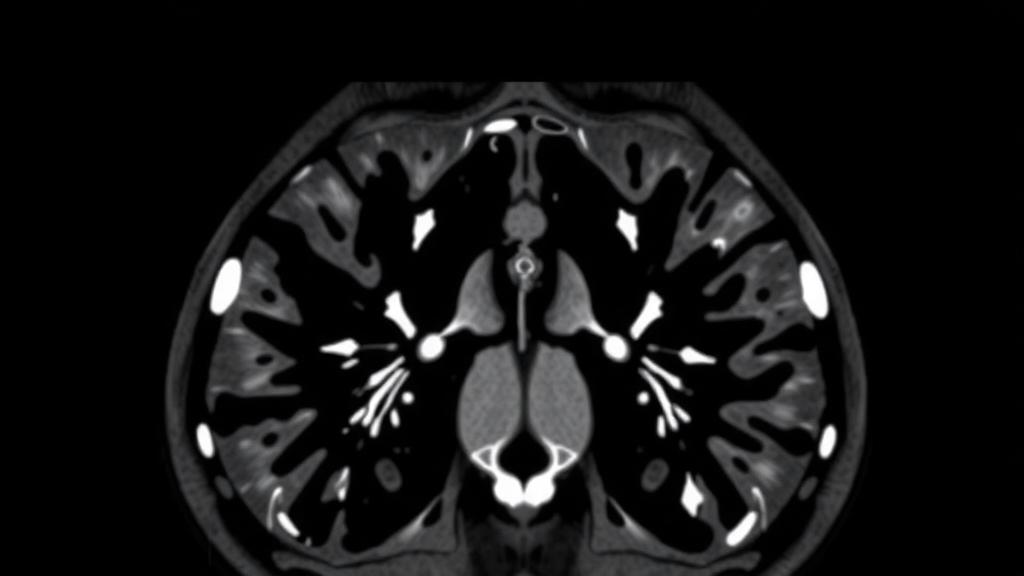
Cone-beam computed tomography, or CBCT, has become one of the most widely deployed imaging technologies in modern medicine, prized for its high spatial resolution and comparatively low radiation dose. From dental clinics and operating rooms to radiotherapy planning suites, the compact rotating gantries of CBCT systems deliver three-dimensional images at a fraction of the exposure associated with conventional multi-detector CT. Yet the technology carries a persistent weakness that has frustrated physicists and radiologists for years: the detectors simply cannot capture the entire X-ray field passing through a patient. When the imaged object extends beyond the detector’s field of view, the projection data are said to be truncated, and the resulting reconstructions are marred by severe truncation artifacts—bright cupping at the edges, distorted intensities, and streaks that can obscure clinically important anatomy.
A research team from the Beijing Institute of Technology and Beijing WeMed Medical Technology has now proposed an unusually elegant solution, published in BMC Medical Imaging. Rather than trying to patch up corrupted images after reconstruction, the researchers attack the problem at its source, in the raw projection data itself. Their tool of choice is a conditional generative diffusion model, or CGDM, a class of artificial intelligence that has already transformed image synthesis in other domains. By training the model to complete the missing portions of truncated X-ray projections, the team shows that the downstream reconstructions become dramatically cleaner, with measurable gains in both fidelity and diagnostic visibility.
To understand why truncation is so damaging, it helps to consider the mathematics of image reconstruction. Most CBCT systems rely on filtered backprojection, or FBP, an algorithm that assumes every X-ray line through the object has been measured. When a patient’s shoulders, for example, extend past the edges of a flat panel detector, the projections of those regions are simply absent. FBP does not tolerate such gaps gracefully. The missing data violate the assumptions of the reconstruction, producing intensity gradients that pile up near the boundary of the field of view and propagate inward as shading and streaking. Structures near the periphery can be shifted in density, and subtle low-contrast lesions may become impossible to distinguish from the artifact background.
Traditional remedies have been largely mechanical. The most common approach, implemented in the widely used Reconstruction Toolkit, is padding: the truncated projection is extended with carefully chosen synthetic values, often mirrored or smoothly decayed, so that the reconstruction algorithm receives a nominally complete dataset. Padding reduces the worst of the cupping, but it is fundamentally a guess. The padded values carry no real information about the patient’s anatomy outside the field of view, so residual artifacts remain, particularly in cases where the truncated anatomy is dense or structurally complex.
The new study replaces that guess with a learned one. Conditional generative diffusion models work by learning to reverse a gradual noising process: during training, the model sees data at progressively higher noise levels and learns to denoise each step. At generation time, starting from pure noise, the model can synthesize samples that follow the intricate statistical distribution of the training data. Crucially, the conditioning mechanism allows the researchers to constrain the generation—the model does not invent arbitrary projections, but completes the specific truncated projection in hand, filling in the missing detector regions with realistic, anatomically plausible values that are consistent with the measured data.
The quantitative results are striking. Compared against the established RTK padding method at the projection level, the diffusion-based completion achieved an improvement of 12 decibels in peak signal-to-noise ratio, or PSNR, and a gain of 0.15 in structural similarity index, or SSIM. For context, a 12 dB PSNR improvement represents a very large reduction in error energy, and SSIM gains of that magnitude indicate substantially better preservation of structural information. These are not marginal refinements but a step change in how faithfully the completed projections match the original, untruncated data.
The benefits carry through to the final three-dimensional images. In the reconstructed volumes, the proposed method delivered an average increase of 9 dB in PSNR and 0.10 in SSIM relative to the reference approach. Just as important for clinical practice, the researchers report visibly enhanced image uniformity and improved visibility of low-contrast structures—the soft-tissue distinctions that often determine whether a lesion is detected or missed. The team also evaluated region-of-interest reconstruction, a scenario of particular practical relevance, and found that the diffusion approach achieved statistically significant advantages over generative adversarial network, or GAN, based methods in both PSNR and SSIM, while fully preserving critical, diagnostically relevant features.
The comparison with GANs is worth pausing on, because it speaks to a broader shift in medical AI. GANs were long the dominant architecture for image synthesis and completion, but they are notorious for hallucinating fine details and for unstable training. Diffusion models, by contrast, tend to produce more faithful distributions and are easier to train stably. In a diagnostic context, where a fabricated structure could mislead a clinician, the ability of a diffusion model to stay anchored to the conditioned, measured data is a meaningful safety advantage. The study’s finding that diagnostically relevant features were fully preserved suggests the method errs on the side of fidelity rather than invention.
The implications extend across the many settings where CBCT is used. In dentistry, where the shoulders and skull routinely exceed the detector’s field of view, truncation artifacts complicate the assessment of structures near the image periphery. In image-guided radiotherapy and interventional procedures, where CBCT is acquired on treatment machines to verify patient positioning, artifacts can degrade the accuracy of dose calculations and anatomical registration. A software-only correction that runs on existing hardware—no detector upgrades, no longer scans, no additional radiation dose—could improve image quality across installed systems at minimal cost. Because the method operates on projection data before reconstruction, it is compatible with standard FBP pipelines, easing integration into commercial workflows.
As with any deep learning approach in medicine, questions of generalization and validation remain. The study was conducted retrospectively, with ethics approval from the Ethics Committee of Xuanwu Hospital, Capital Medical University, and the published version is an early-release, peer-reviewed accepted manuscript subject to final edits. Broader clinical adoption will depend on testing across diverse patient populations, scanner geometries, and anatomical sites, and on ensuring that the model’s generated projections remain reliable for anatomy far outside its training distribution. Still, the work marks a compelling demonstration that generative diffusion models can solve a genuine physics problem in medical imaging—not by generating pretty pictures, but by restoring missing measurements with enough fidelity that the underlying reconstruction mathematics works the way it was always supposed to. If the results hold up at scale, the bright, cupped edges of yesterday’s CBCT scans may soon become a thing of the past.
Subject of Research: Reduction of truncation artifacts in cone-beam computed tomography using conditional generative diffusion models
Article Title: Truncation artifact reduction in cone-beam computed tomography scans using conditional generative diffusion models
Article References: Xie, J., Li, S., Xing, E., Wang, L., Jia, X., Liu, C., & Chen, D. (2026). Truncation artifact reduction in cone-beam computed tomography scans using conditional generative diffusion models. BMC Medical Imaging. https://doi.org/10.1186/s12880-026-02818-x
Image Credits: AI Generated
DOI: 10.1186/s12880-026-02818-x
Keywords: cone-beam computed tomography, truncation artifacts, diffusion models, medical imaging, image reconstruction, generative AI, PSNR, SSIM, filtered backprojection, GANs, radiation dose, BMC Medical Imaging
Cite Scienmag News
Ophelia Keating. (October 4, 2026). AI Diffusion Models Erase Truncation Artifacts from Cone-Beam CT Scans. Scienmag. https://scienmag.com/ai-diffusion-models-erase-truncation-artifacts-from-cone-beam-ct-scans/
Ophelia Keating. "AI Diffusion Models Erase Truncation Artifacts from Cone-Beam CT Scans." Scienmag, 4 October 2026, https://scienmag.com/ai-diffusion-models-erase-truncation-artifacts-from-cone-beam-ct-scans/. Accessed 4 October 2026.
Ophelia Keating. "AI Diffusion Models Erase Truncation Artifacts from Cone-Beam CT Scans." Scienmag. October 4, 2026. https://scienmag.com/ai-diffusion-models-erase-truncation-artifacts-from-cone-beam-ct-scans/


