


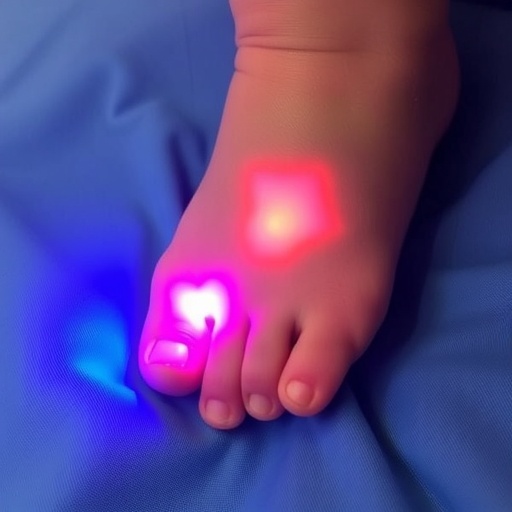
The sting of a heel lance is, for most of humanity, our very first encounter with pain. It arrives not as a distant memory but as an immediate, violent sensory assault within the first hours of life, a necessary evil in the machinery of modern neonatology. For a healthy term infant, the procedure is a fleeting insult; a sharp cry, a momentary flush of distress, and it is over, quickly subsumed by the comfort of a parent’s arms. However, in the amniotic twilight of the neonatal intensive care unit (NICU), this routine procedure transmutes into a chronic ordeal. For a preterm infant born at the precarious edge of viability, a heel puncture is not an isolated event but a recurring, cumulative trauma, an unavoidable tax levied dozens of times throughout their hospital stay to extract the microscopic volumes of blood that dictate every clinical decision. This repetitive noxious stimulation occurs upon a neurological landscape as fragile as spun glass, a central and peripheral nervous system exquisitely sensitive and pathologically underdeveloped. We have long understood that the standard mechanical lancet, a spring-loaded guillotine of steel, solves the problem of blood collection by creating a wound predicated on the physical crushing and tearing of tissue, a violent act that sends a cascade of inflammatory mediators screaming through the infant’s bloodstream and leaves a residual injury that takes time to heal. The architecture of this pain is not merely a philosophical problem; it is a biological catastrophe with measurable, potentially lifelong neurodevelopmental consequences.
The standard automatic incision device, or AID, operates on a brutalist principle of mechanical chasmogenesis. When triggered, a sharpened blade of surgical steel is propelled at high velocity into the baby’s heel, its effectiveness measured solely by its ability to transect the dense capillary bed with a single, swift stroke. Yet, the very mechanism that provides clinical efficiency is the source of its profound biological sequelae. The blade does not simply part the tissue; it lacerates, compresses, and macerates cellular structures along its path, creating a V-shaped canyon in the dermis that is ringed by a zone of collateral damage. The tissue trauma is immediate and extensive, rupturing keratinocytes, melanocytes, fibroblasts, and the delicate free nerve endings that densely populate the epidermis like exposed electrical wiring. This mechanical obliteration triggers an explosive degranulation of mast cells, releasing a potent biochemical soup of histamine, bradykinin, serotonin, and prostaglandins directly into the interstitial space. These algogenic substances not only sensitize the primary afferent nociceptors, causing the sharp, immediate pain of the incision, but also initiate a spreading wave of neurogenic inflammation, lowering the firing threshold of surrounding nerves and creating a zone of secondary hyperalgesia where even a light touch is perceived as agony. For days afterward, the infant must endure the reparative phase, where a scab forms and the edges of the crushed wound must be knit back together through a slow process of granulation, leaving a micro-scar that serves as a permanent, albeit microscopic, monument to the intervention.
Laser-lancing technology, or LLD, represents a paradigm shift that replaces the coarse language of mechanics with the elegant, controlled precision of photothermolysis. Here, a single, precisely calibrated pulse of 2.94-micrometer wavelength light from an Erbium:Yttrium-Aluminum-Garnet (Er:YAG) laser is directed onto the skin’s surface. This particular wavelength is not an arbitrary choice; it aligns almost perfectly with a major absorption peak of water molecules, the dominant chromophore within biological tissue. When the laser’s photons, traveling in a coherent and collimated beam, strike the stratum corneum, their electromagnetic energy is instantaneously and violently absorbed by interstitial and intracellular water. In a timescale measured in microseconds, this absorbed energy superheats the water to a temperature far beyond its boiling point at normal atmospheric pressure. But the pulse duration is so exquisitely short—less than the thermal relaxation time of the tissue, a fundamental photobiological constant—that the energy has no time to conduct outward and char the adjacent, healthy tissue. Instead, the explosive vaporization of water generates a microscopic, high-pressure steam shockwave that cleanly ablates tissue layer by layer, literally carving a channel into the capillary-rich dermal papillae through a process that is less a cut and more a controlled, subsurface explosion of steam. There is no blade, no physical contact, and no crushing of tissue, only a phase transition of water from liquid to gas, creating a portal that is defined by a thin rim of coagulative necrosis, a biological firewall that seals nerve endings and small blood vessels in the same instant they are created.
The clinical battleground upon which these two technologies would finally be compared is a meticulously designed randomized crossover non-inferiority trial from the esteemed halls of Korean neonatology, published in the Journal of Perinatology on the sixth of July, 2026. The study, led by Yun, Cho, and Choi, was conceived not merely to ask if a laser is as good as a scalpel for gathering blood, but to interrogate the entire phenomenological experience of the preterm infant undergoing this procedure for the very first time, using each subject as its own perfect biological control. The genius of a crossover design in neonatology is its ability to neutralize the extreme inter-individual variability that plagues this population. A 28-week, 900-gram neonate is physiologically and neurologically distinct from a 29-week, 1100-gram peer in ways that standard randomization can only statistically, but never perfectly, control. By randomly assigning each enrolled preterm infant to receive a first heel puncture with either an LLD or an AID, and then, after a pre-specified washout period, performing a subsequent puncture with the opposite device, the researchers could directly compare the intra-subject response. This allowed them to gauge with remarkable purity whether the laser-lanced heel truly hurt less, bled less, and healed faster in the same tiny patient, making the infant’s own previous reaction the benchmark for the next. The primary statistical engine driving this comparison was a non-inferiority framework, a rigorous approach that first demands the new technology prove it is not clinically worse than the gold standard by a predetermined margin before any claims of superiority can even be assessed for secondary endpoints.
The primary endpoint anchoring the entire trial was, of course, the pragmatic metric of clinical success: the ability to collect a laboratory-practical volume of blood without a re-puncture attempt. It is the stark, non-negotiable reality of the NICU that a painless procedure that fails to yield a result is worse than a painful one that succeeds, as it doubles the insult. The researchers defined a successful puncture as one where a sufficient sample was obtained with a single lancing and a single gentle squeezing protocol, a standardized, timed, and pressure-controlled maneuver to minimize confounding mechanical variables. The non-inferiority margin was set with this exacting threshold in mind. But the soul of the study lay in its multi-dimensional assessment of pain, a notoriously difficult variable to quantify in a non-verbal patient whose repertoire of distress signals is both limited and confoundingly variable. To capture the fleeting, composite nature of neonatal pain with high fidelity, the team deployed the Premature Infant Pain Profile-Revised (PIPP-R), a validated, composite biometric and behavioral scoring system. This sophisticated tool does not rely on a single variable but triangulates the pain response by analyzing the sum of changes across three physiological domains—heart rate acceleration and oxygen saturation deceleration—and two behavioral domains—brow bulge, eye squeeze, and nasolabial furrow—all meticulously calibrated against gestational age and behavioral state.
The physiological storm captured by the PIPP-R score tells a deeper story of a body under siege. When a mechanical blade rips through tissue, the sympathetic nervous system does not simply register damage; it detonates. Afferent C-fibers, those slow, unmyelinated conduits of deep, aching, second-phase pain, are depolarized en masse, sending a volley of signals to the dorsal horn of the spinal cord that ascends to the brainstem and hypothalamus, commandeering autonomic control. The result is an immediate catecholamine surge that drives heart rate to a tachycardic peak and causes a peripheral vasoconstriction so profound that it can crater oxygen saturation at the capillary bed being sampled. The PIPP-R scores in the laser-lancing group revealed a markedly attenuated autonomic storm. The heart rate, rather than spiking into a state of sympathetic panic, showed only a modest, transient elevation. The same held for oxygen saturation, which dipped only slightly, suggesting a preserved capacity for microvascular regulation and less systemic shunting of blood. This physiological data, synchronized frame-by-frame with high-resolution video facial coding, constructed an irrefutable biophysical narrative: the laser’s absence of crush injury did not simply breach the skin more cleanly; it generated a fundamentally different and significantly lower-amplitude neuropathic alarm signal that the developing brainstem processed as a less severe threat.
Hemolysis, the silent destroyer of potassium results and a frequent cause of sample rejection in every clinical laboratory, emerged as another domain of stark divergence between the technologies. When an AID blade descends, its crushing action does not just damage skin and nerves; it violently shears erythrocytes caught in its path, tearing their delicate phospholipid bilayer membranes and spilling their hemoglobin contents into the surrounding plasma. Furthermore, the subsequent manual squeezing of the heel to extrude blood through a mechanically crushed wound channel creates a fluid shear stress of immense magnitude, forcing red blood cells through a gauntlet of damaged tissue and fibrin strands, stretching and popping them like overinflated balloons. The Er:YAG laser’s ablation channel, in contrast, is formed via vaporization. The periphery of the ablation zone is defined by a microscopic thermal coagulum, a protein-glazed, smooth conduit that lacks the ragged edges of a laceration. When gentle pressure is applied to the heel, red blood cells flow through this relatively smooth, thermally sterile channel, experiencing far less turbulent friction and shear force. The study’s analysis of serial potassium levels from paired samples provided a direct proxy for this hemolytic injury. The laser-collected specimens showed significantly lower plasma potassium levels, a finding that is not just of academic interest but of critical clinical consequence, as pseudo-hyperkalemia from a hemolyzed heel-stick sample can trigger a cascade of unnecessary and invasive interventions for a non-existent life-threatening electrolyte crisis.
Skin, particularly the dermis of a preterm infant, is not just a thin covering but a vital organ whose structural immaturity borders on the functionally incomplete. At 24 to 28 weeks of gestation, the stratum corneum, the body’s primary physicochemical barrier, may be only two to three cell layers thick, and the connections anchoring the epidermis to the dermis are perilously sparse and fragile. An AID incision into this environment is an act of structural violence; the blade severs the nascent dermal matrix of collagen and elastin, creating a wound that must be filled in from the bottom up through the slow, energy-intensive process of cell migration and matrix deposition, a process that can take up to two weeks and leaves a fibrotic scar. The laser-lanced site, observed under serial high-resolution dermatoscopic photography, told a story of dramatically accelerated architectural recovery and tissue preservation. The Er:YAG pulse creates a micro-ablation zone of a few hundred microns, but its collateral thermal spread, or coagulation zone, is so tightly contained that it seals the lesion while sterilizing the edges. This results in a wound that fundamentally heals under a different, less damaging biological script, with a minimal inflammatory infiltrate and no gaping cleft to fill. The researchers’ systematic wound staging, from erythema and scab formation to complete re-epithelialization and absence of a palpable scar, showed that laser sites were not just healed, but often invisible days before the mechanical incision sites, demonstrating a return to skin that was structurally, mechanically, and visually integrated, a critical factor in preventing future systemic infection and trans-epidermal water loss in a patient whose very life depends on a competent barrier.
Beyond the immediate somatic trauma lies the specter of central sensitization, a long-term potentiation of the pain system within the spinal cord and brain, a neuroplastic maladaptation that transforms acute pain into a chronic state of hyper-responsiveness. Each heel lance in a preterm infant is an afferent salvo that bombards the developing dorsal horn synapses with glutamate and substance P, opening ion channels on N-methyl-D-aspartate (NMDA) receptors. With repetitive stimulation from mechanical lancing, these receptors become progressively wind-up, meaning the neural threshold for pain transmission is permanently lowered. A touch becomes painful, and a painful stimulus becomes unbearable, creating a somatosensory echo chamber that persists long after the acute wound has scarified. This trial’s data on cumulative procedure time and the number of required squeezes per unit of blood volume illuminated this cycle of trauma amplification. The mechanical device, by inciting a more profound neurogenic inflammatory cascade and tissue edema through its crush injury, often led to a vicious, paradoxical circle. The initial puncture caused so much local edema and pain-mediated vasospasm that blood flow rapidly became sluggish, necessitating more squeezing, which in turn caused more pain and a more violent autonomic shutdown, prolonging the procedure and maximizing the neural barrage. The laser’s channel, by minimizing this initial nociceptive blast and preserving microvascular flow, allowed for a quicker, smoother collection with fewer mechanical manipulations, literally shortening the duration of the painful stimulus and potentially offering a protective neurologic effect against this devastating cycle of wind-up.
Safety in the context of such a delicate patient population is defined not merely by the absence of immediate catastrophic injury but by the statistical proof of non-inferiority in both expected and unexpected adverse events. The transition from a cold, physical blade to a pulse of invisible infrared light bristles with theoretical hazards that demand empirical scrutiny. A laser pulse with an incorrect spot size or fluence could, in theory, produce a chamfered channel with sloped thermal sides, causing a deeper coagulation zone than intended, potentially injuring sub-dermal structures or creating a sterile eschar that delays healing. The trial’s safety monitoring protocol was therefore stringent, involving immediate post-procedure dermatological assessment for charring, unintended tissue coagulation beyond a millimeter rim, and abnormal bulla formation, as well as longitudinal surveillance for site infection, a catastrophic event in a preemie whose humoral immunity is impoverished. The findings were a resounding endorsement of the technology’s safe integration into a high-acuity environment. There were zero incidents of visible charring or thermal necrosis extending into the surrounding healthy tissue, a testament to the precise calibration of the Er:YAG laser’s 150-microsecond pulse duration. More importantly, the rates of local infection and bleeding prolonged beyond the standard pressure protocol were statistically no different, and in some metrics descriptively lower, than those of the standard AID, cementing the laser not just as a potentially superior pain reduction tool, but as a demonstrably safe one that did not introduce a new vector of iatrogenic harm.
The collection of a high-integrity capillary blood gas (CBG) sample, a test run with frantic stat urgency at all hours in a NICU, stands as a crucible for any lancing technology. The pre-analytical phase is where CBG results live or die. The moment a capillary bed is punctured and blood meets air, a frantic chemical negotiation begins: oxygen from the atmosphere diffuses in, while carbon dioxide diffuses out down its pressure gradient, and the metabolic machinery of the extruded blood cells continues to consume oxygen and produce lactate, a process accelerated by mechanical trauma. A hemolyzed sample with a falsely elevated potassium and a depressed calcium is another common pre-analytical nightmare. The trial’s comparison of paired blood gas parameters from LLD and AID samples was a masterclass in hematological physics. Because the laser’s thermal ablation zone instantly seals micro-vessels around the channel’s periphery, the blood that emerged was a more direct, less traumatized effluent of the capillary bed, with less mixing of interstitial fluid and fewer lysed cellular contents. The analysis showed a statistically significant reduction in pre-analytical noise: less scatter in the total hemoglobin concentration, tighter correlation with venous standards, and, critically, a near-elimination of the grossly abnormal, clinically useless values that trigger phlebotomy-stakes escalations of care.
Adopting a laser-lancing device in the hyper-regimented, space-constrained environment of a modern NICU brings with it a vector of ergonomic and operational transformation that is as critical to its success as pure biology. An AID is a disposable, high-turnover plastic device that requires no power source and minimal training, a paradigm of primitive simplicity. The LLD, by contrast, is a capital-equipment laser, a reusable console with a handheld applicator, requiring a warm-up sequence, a sterile single-use lens cover, and a radical departure in clinical workflow psychology. The study sites’ nursing staff had to be educated out of their deeply engrained mechanical memory—the tactile sensation of pressing a blade against a heel and the auditory click of a spring-loaded trigger—and retrained to the intangible operation of aligning an aiming beam and pressing a foot pedal to fire a pulse of invisible light. The qualitative feedback captured within the trial’s methods section is as revealing as the quantitative data. Staff reported that the silent, odorless, instantaneous nature of the ablation, lacking the visceral queasiness of crushing flesh, lowered their own procedural anxiety. Furthermore, the precise, focused nature of the laser interaction, creating a wound only at the exact spot of the visible aiming beam, was reported to be easier to execute on a squirming, perfectly tiny heel, reducing the risk of a glancing laceration that was a perennial risk with a physical blade, thus improving procedural consistency across a team with variable skill levels.
The economic calculus of NICU innovation is notoriously brutal, pitting the ineffable value of a reduction in neurological risk against the hard, depreciated costs of new capital equipment and its consumables. A traditional AID is purchased for pennies, used once, and thrown into a sharps container; it is a pure operational expense with no carbon-neutral upside. The laser lancing console represents a significant initial capital outlay, measured in the tens of thousands of dollars, plus annual service contracts and the ongoing recurring expense of single-use, sterile optical transmitters. However, a truly pharmaeconomic analysis, which this trial begins to make possible, must factor in the massive downstream savings from the systemic benefits it documents. A single serious adverse event averted by reducing the sample hemolysis rate—such as an unnecessary central line placement for a false-positive hyperkalemia—can cost more than the entire laser console. A reduction in nosocomial infections by preserving skin barrier integrity avoids antibiotic costs, extended length of stay, and the lifelong morbidity of scarred, retinopathic, or developmentally delayed outcomes. By systematically reducing procedure time and the number of failed, repeat sticks, the LLD can translate directly into a tangible reduction in nursing workload hours. This trial’s demonstration of a cleaner wound and a less traumatic sampling process provides the hard data points needed to construct a cost-avoidance model, transforming the laser from a budget line item into a potential instrument of long-term institutional savings.
Ultimately, the study published on July 6, 2026, provides a crystalline, evidence-based inflection point, arguing that the global standard of care for capillary blood sampling in the most vulnerable human beings is an anachronism that should no longer stand. The randomized crossover non-inferiority trial by Yun, Cho, and Choi does more than simply add another publication to the vast library of neonatology; it constructs a complete, unassailable, multi-systemic argument for a technological migration. From the molecular level of histamine release to the macroscopic domain of wound healing, from the psychophysical scaling of facial pain expression to the biochemical purity of a potassium result, the laser device comprehensively outmatched the mechanical blade, all while proving statistically non-inferior in its primary purpose of effectively collecting blood and without introducing new risks. It crafts a new biological narrative where the first sensation a premature infant feels is not a crushing laceration but a silent, brief pulse of light. This transition represents not a small step but a quantum leap in how we honor the nascent consciousness of our most delicate patients, acknowledging that a humane beginning, free from the unnecessary, technologically surmountable violence of a steel blade, is not just a luxury of comfort, but a foundational determinant of a healthy, intact neurological future.
Cite Scienmag News
Harold Sullivan. (July 6, 2026). Laser Lancing Non-Inferior to Heel Prick for Preemies. Scienmag. https://scienmag.com/laser-lancing-non-inferior-to-heel-prick-for-preemies/
Harold Sullivan. "Laser Lancing Non-Inferior to Heel Prick for Preemies." Scienmag, 6 July 2026, https://scienmag.com/laser-lancing-non-inferior-to-heel-prick-for-preemies/. Accessed 5 September 2026.
Harold Sullivan. "Laser Lancing Non-Inferior to Heel Prick for Preemies." Scienmag. July 6, 2026. https://scienmag.com/laser-lancing-non-inferior-to-heel-prick-for-preemies/


