

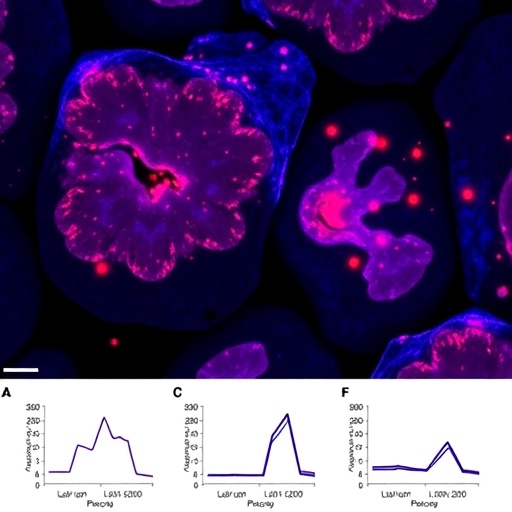
In the intricate landscape of cancer research, the relentless pursuit of understanding metastatic mechanisms has garnered significant attention. Recent findings published in the Journal of Translational Medicine illuminate a novel player in the field of ovarian cancer—LAPTM5, which has been shown to facilitate omental metastasis in high-grade serous ovarian cancer (HGSOC). This work, spearheaded by Gao et al., elucidates compelling links between LAPTM5, TGF-β/Smad signaling, and the malignant transformation of epithelial cells, reshaping our understanding of tumor biology and potential therapeutic targets.
High-grade serous ovarian cancer is a particularly aggressive form of the disease, often diagnosed at advanced stages, resulting in bleak prognoses for patients. Characterized by its propensity for metastasis, especially to the omentum—a fatty tissue that drapes over the abdominal organs—this subtype of ovarian cancer poses significant treatment challenges. Gao et al. have delved into the molecular underpinnings of this form of cancer, focusing on how LAPTM5 contributes to this metastatic progression.
The study outlines how LAPTM5 enhances the capacity of cancer cells to undergo epithelial-mesenchymal transition (EMT), a crucial process where epithelial cells lose their adhesive properties and gain migratory abilities. This transition is pivotal in the context of metastasis, allowing cells to invade surrounding tissues and eventually disseminate throughout the body. The role of the TGF-β/Smad signaling pathway in regulating EMT is well-established; however, Gao and colleagues provide new insights into the upstream activator, LAPTM5, which appears to interact with this pathway to orchestrate complex cellular responses.
The researchers utilized both in vitro and in vivo models to dissect the functionalities of LAPTM5. Their compelling data reveal that knocking down LAPTM5 expression leads to a significant reduction in migratory capabilities of HGSOC cells. This finding suggests that targeting LAPTM5 may hinder the invasive behavior of these cancerous cells, presenting a potential avenue for therapeutic intervention.
In addition to shedding light on how LAPTM5 facilitates EMT, the study also explores the downstream effects of this signaling cascade. The TGF-β/Smad pathway, when activated, promotes the expression of several key factors involved in cell motility and invasion. It appears that LAPTM5 acts as a molecular switch, heightening the responsiveness of ovarian cancer cells to TGF-β signaling. This enhanced plasticity might serve as a double-edged sword—while it allows the cancer cells to invade new territories, it also could make them more adaptable to therapeutic pressures, contributing to treatment resistance.
Furthermore, the intricate relationship between LAPTM5 and the tumor microenvironment cannot be overlooked. The research indicates that the expression levels of LAPTM5 correlate with fibroblast activation and the secretion of various cytokines, creating a rich milieu that fosters metastatic spread. This interaction emphasizes the importance of not viewing cancer cells in isolation but rather in the context of their surrounding environment, which greatly influences their behavior.
The implications of these findings extend beyond understanding the biology of HGSOC; they highlight the need for developing targeted therapies that could inhibit LAPTM5 or disrupt its interaction with the TGF-β/Smad pathway. Such innovative strategies could potentially halt or even reverse the metastatic spread of ovarian cancer, offering hope to patients facing this dire diagnosis.
Moreover, the employment of novel inhibitors specifically targeting LAPTM5 presents an exciting frontier in the management of high-grade serous ovarian cancer. As the field moves towards more personalized treatment approaches, exploits in genetic and molecular profiling could offer insights into who might benefit most from such therapies. The study by Gao et al. serves as a clarion call to focus research efforts on less conventional targets in the ongoing battle against cancer.
In conclusion, the intricate dance between LAPTM5 and TGF-β/Smad-mediated signaling pathways opens new avenues for exploration in ovarian cancer research. By unveiling the mechanisms through which LAPTM5 drives omental metastasis, Gao et al. lay the groundwork for future studies aiming to design interventions that can stifle the spread of this malignancy. As researchers continue to unravel the complexities of ovarian cancer, it is hopeful that these advancements will lead to breakthrough therapies that could markedly improve patient outcomes.
There remains much to learn, and as we progress in this field, collaborative efforts among researchers, clinicians, and pharmaceutical developers will play a vital role in translating these findings into clinical practice. The emergence of LAPTM5 as a central player in cancer metastasis underscores the urgency of novel therapeutic strategies in combating high-grade serous ovarian cancer, potentially changing the narrative for women affected by this formidable adversary.
Subject of Research: Ovarian Cancer Metastasis
Article Title: LAPTM5 drives omental metastasis in high-grade serous ovarian cancer via TGF-β/Smad-mediated epithelial plasticity
Article References:
Gao, Y., Li, J., Han, X. et al. LAPTM5 drives omental metastasis in high-grade serous ovarian cancer via TGF-β/Smad-mediated epithelial plasticity. J Transl Med 23, 1431 (2025). https://doi.org/10.1186/s12967-025-07319-z
Image Credits: AI Generated
DOI: https://doi.org/10.1186/s12967-025-07319-z
Keywords: Ovarian Cancer, LAPTM5, Metastasis, TGF-β, EMT, High-Grade Serous Ovarian Cancer.


