


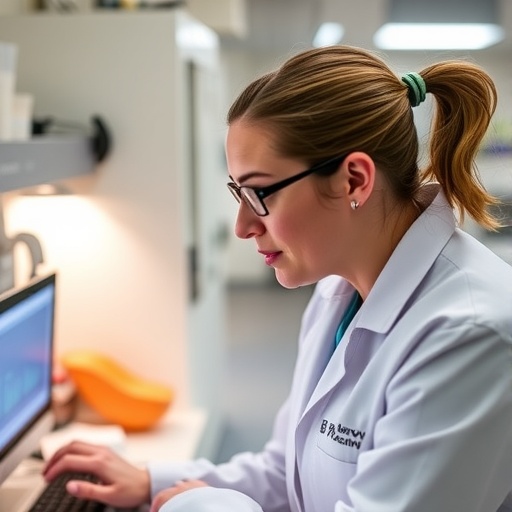
The Barrow Neurological Institute has significantly expanded its Barrow Neuro Analytics Center, nearly doubling the facility’s size to encompass more than 18,000 square feet. This expansion consolidates multiple cutting-edge research programs within a single, purpose-built environment situated at Park Central in the Phoenix Medical Quarter. The additional 8,317 square feet join the original 10,099 square-foot space, enabling a more integrated and collaborative approach to neuroscience research.
This development represents a strategic investment aimed at accelerating the pace of discovery in neurological disorders. Brad Racette, MD, FAAN, Chairman of Neurology and Senior Vice President at Barrow Neurological Institute, emphasizes that this expansion is pivotal for advancing the understanding of how environmental variables and healthcare accessibility affect neurological disease presentation and progression. Enhanced research capacity is expected to inform public health strategies and reduce disparities in neurological healthcare outcomes worldwide.
Since its inception in 2024, the Barrow Neuro Analytics Center has rapidly emerged as a leader in neuroinformatics, applying advanced data analytic techniques to complex neurological conditions. The center employs a multidisciplinary team of neuroscientists, data scientists, and clinicians who utilize sophisticated computational models, artificial intelligence, and machine learning algorithms to decode vast and heterogeneous data sets. These data originate from clinical trials, epidemiological studies, genomics, and environmental monitoring, providing unprecedented insights into disease mechanisms.
One of the center’s hallmark programs investigates Parkinson’s disease, a progressive neurodegenerative disorder. Researchers leverage AI-driven pattern recognition tools to identify early biomarkers and genetic factors that influence disease onset and progression. By correlating environmental toxin exposure data with patient health records, the team seeks to establish causative links and tailor individualized therapeutic interventions designed to slow neurodegeneration.
Alzheimer’s disease research at Barrow involves large-scale integration of neuroimaging data, cognitive assessments, and proteomic analyses to elucidate the pathological cascade from amyloid accumulation to synaptic dysfunction. The center’s data scientists employ deep learning frameworks capable of detecting subtle structural brain changes before clinical symptoms manifest, potentially enabling earlier diagnosis and more effective treatment regimens.
Stroke and amyotrophic lateral sclerosis (ALS) are other key areas of focus, with ongoing projects highlighting how social determinants of health and environmental stressors contribute to disease susceptibility and outcomes. The center’s relational databases combining geographic, socioeconomic, and clinical variables allow multifactorial risk modeling, which is vital for public health planning and resource allocation.
Brain cancer research at the center is particularly notable for its integration of genomic and environmental data. By applying neural networks and high-dimensional data visualization techniques, researchers can classify tumor subtypes with high accuracy and identify novel molecular targets for precision medicine. This integrative approach also aids in monitoring treatment responses and understanding resistance mechanisms.
The Barrow Neuro Analytics Center’s pioneering application of AI not only enhances scientific understanding but also informs environmental policy decisions at a global scale. The team’s work on environmental neurotoxicants has contributed to identifying hazardous exposures that disproportionately affect vulnerable populations, driving initiatives for regulatory change and improved public health protections.
Collaboration is central to the center’s mission, facilitating partnerships among academic institutions, healthcare providers, and technology companies. This interdisciplinary consortium fosters an ecosystem that supports rapid hypothesis testing, data sharing, and translational research, bridging the gap between laboratory discovery and clinical application.
By harnessing the power of big data and machine learning, the Barrow Neuro Analytics Center is positioning itself at the forefront of precision neurology. The data-focused research paradigm enables the development of predictive models for disease risk, progression, and therapeutic efficacy, which are essential for personalized interventions and improving patient outcomes.
The expanded facility includes state-of-the-art computational infrastructure, dedicated wet lab spaces, and collaborative work environments designed to enhance productivity and innovation. This strategic enhancement not only increases capacity but also promotes an integrative scientific culture essential for tackling the complex challenges posed by neurological disorders.
As Dr. Racette notes, the insights gained from research at the Barrow Neuro Analytics Center are crucial for untangling intractable neurological diseases and catalyzing new treatment paradigms. Findings generated at the center have the potential to transform clinical practice and reduce the global burden of neurological conditions through improved diagnostics, tailored therapies, and preventive strategies.
Ultimately, the Barrow Neuro Analytics Center stands as a beacon of innovation in neuroscience, uniquely positioned to shape the future of neurological research and healthcare. Its commitment to blending environmental, global neuroscience, and advanced AI research sets a new standard for scientific excellence with far-reaching implications for patient care and public health worldwide.
News Publication Date: 2024
Web References:
Keywords
Neuroscience, Neurological Disorders, Parkinson’s Disease, Alzheimer’s Disease, Stroke, ALS, Brain Cancer, Artificial Intelligence, Machine Learning, Environmental Neurotoxicology, Neuroinformatics, Precision Medicine, Data Analytics
Cite Scienmag News
Cassandra Pierce. (April 10, 2026). Barrow Neuro Analytics Center Expands Facility to Accelerate Neurological Research Programs. Scienmag. https://scienmag.com/barrow-neuro-analytics-center-expands-facility-to-accelerate-neurological-research-programs/
Cassandra Pierce. "Barrow Neuro Analytics Center Expands Facility to Accelerate Neurological Research Programs." Scienmag, 10 April 2026, https://scienmag.com/barrow-neuro-analytics-center-expands-facility-to-accelerate-neurological-research-programs/. Accessed 4 September 2026.
Cassandra Pierce. "Barrow Neuro Analytics Center Expands Facility to Accelerate Neurological Research Programs." Scienmag. April 10, 2026. https://scienmag.com/barrow-neuro-analytics-center-expands-facility-to-accelerate-neurological-research-programs/


