


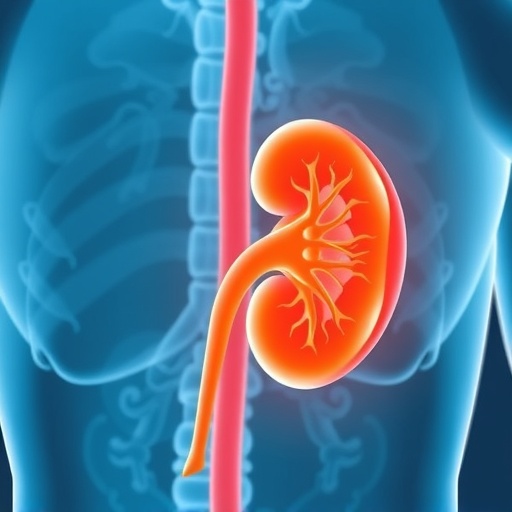
Chronic kidney disease (CKD) remains a pervasive and silent health threat in the United States, affecting approximately 15% of adults both in 2013 and 2023. While the overall prevalence stayed consistent over the past decade, new research reveals a troubling shift in the underlying causes, primarily driven by a rise in diabetes-related kidney damage.
Using a decade’s worth of data from the National Health and Nutrition Examination Survey (NHANES), researchers analyzed kidney function in over 25,000 adults through two key biomarkers: estimated glomerular filtration rate (eGFR) from blood samples and urine albumin-to-creatinine ratio, which signals protein leakage indicating kidney damage. Individuals with abnormal results on either test were classified as having CKD, allowing researchers to track trends across demographic and health condition subgroups.
Strikingly, the proportion of Americans with CKD linked to diabetes surged from 4.7% to 5.7%, a significant relative increase of nearly 30%, while cases unrelated to diabetes held steady. This uptrend persists even as newer kidney-protective treatments such as SGLT2 inhibitors and finerenone—an innovative nonsteroidal mineralocorticoid receptor antagonist—have entered clinical practice to curb disease progression.
“The static overall CKD rates despite therapeutic advances signal an urgent need for intensified public health strategies and deeper investigation into this growing diabetes-related burden,” says Ashish Verma, MBBS, assistant professor at Boston University’s School of Medicine and corresponding author of the study.
Further disparities emerged across social strata and race. The incidence gap between lower and higher educational groups widened, reinforcing the impact of socioeconomic factors on kidney health. Gender differences also appeared to shift, with CKD rates climbing among men but stabilizing among women. Black Americans persistently face the highest disease burden—close to one in five affected—and no progress was seen in reducing this racial disparity.
Experts emphasize the increasingly intertwined nature of CKD, diabetes, and cardiovascular disease, framing the syndrome as a complex cardiovascular-kidney-metabolic syndrome. “Approximately 25% of Americans with heart disease also suffer from CKD, revealing an alarming convergence of conditions that ‘no longer travel alone’, demanding integrated, multi-organ clinical management,” notes Sophie Claudel, MD, the study’s lead author.
The findings, published online in the New England Journal of Medicine, underscore that combating CKD requires addressing not only biological mechanisms but also social determinants of health. As diabetes-driven kidney disease escalates, strategizing around prevention and treatment across overlapping metabolic and cardiovascular disorders is critical to stem the tide of this silent epidemic.
Cite Scienmag News
Jerry Hayes. (July 8, 2026). Kidney Disease Rates Stable, Increasing Among Diabetes and Heart Patients in US. Scienmag. https://scienmag.com/kidney-disease-rates-stable-increasing-among-diabetes-and-heart-patients-in-us/
Jerry Hayes. "Kidney Disease Rates Stable, Increasing Among Diabetes and Heart Patients in US." Scienmag, 8 July 2026, https://scienmag.com/kidney-disease-rates-stable-increasing-among-diabetes-and-heart-patients-in-us/. Accessed 4 September 2026.
Jerry Hayes. "Kidney Disease Rates Stable, Increasing Among Diabetes and Heart Patients in US." Scienmag. July 8, 2026. https://scienmag.com/kidney-disease-rates-stable-increasing-among-diabetes-and-heart-patients-in-us/


