


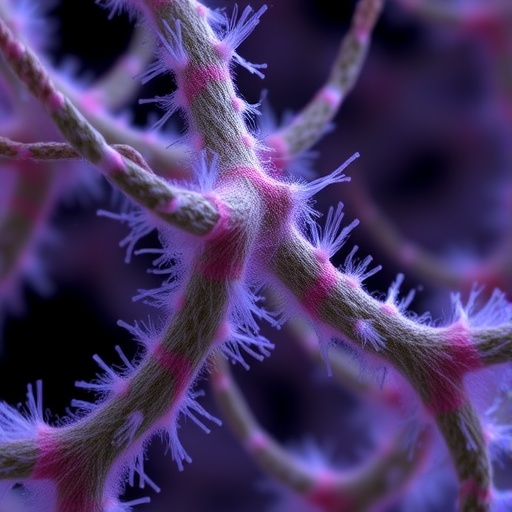
In the intricate realm of neural development, the formation and refinement of synaptic connections underpin the brain’s capacity for learning, memory, and cognition. A groundbreaking study published in Translational Psychiatry in 2026, led by Zhao XF and colleagues, sheds light on the nuanced roles of PlexinA2, PlexinA4, and neural cell adhesion molecule (NCAM) in sculpting the developing hippocampal mossy fibers. This research unveils the molecular choreography that governs the specificity and diversity of neuronal wiring in the hippocampus, a brain region central to memory formation and spatial navigation.
The hippocampal mossy fibers represent a unique set of axonal projections originating from the dentate gyrus granule cells and targeting CA3 pyramidal neurons. These mossy fiber pathways are renowned for their complex synaptic architecture and dynamic plasticity, contributing to the encoding and retrieval of episodic memories. Understanding the cellular and molecular mechanisms directing mossy fiber development is pivotal to unraveling how neural circuits mature and function in both health and disease.
Zhao and colleagues embarked on an exhaustive exploration of PlexinA2, PlexinA4, and NCAM, molecules previously implicated in axon guidance and synaptic formation, probing their spatially distinct roles within the hippocampal formation. Plexins, serving as receptors for Semaphorins, participate in repulsive and attractive guidance cues during neuronal pathfinding. Meanwhile, NCAM, a critical cell adhesion molecule, modulates neuronal migration, synaptic stabilization, and plasticity through homophilic and heterophilic interactions.
Using advanced molecular biology techniques alongside high-resolution imaging in rodent models, the study delineated how PlexinA2 and PlexinA4 exhibit compartmentalized expression patterns within hippocampal circuits during critical periods of postnatal development. The researchers discovered that PlexinA2 predominantly localizes to the proximal segments of mossy fibers, orchestrating initial axonal trajectory decisions and avoiding aberrant pathfinding. In contrast, PlexinA4 is enriched in distal mossy fiber terminals, where it fine-tunes synaptic targeting and maturation.
Remarkably, NCAM emerged as an indispensable mediator that facilitates target recognition and synaptic stabilization at mossy fiber terminals. By modulating cytoskeletal dynamics and intracellular signaling cascades, NCAM ensures the fidelity of synapse formation, thereby maintaining the integrity of hippocampal circuit connectivity. The interplay between these molecules highlights a sophisticated biological code governing the precise assembly of neuronal networks.
The findings also suggest that disruptions in the expression or function of PlexinA2, PlexinA4, and NCAM could perturb mossy fiber development, with potential ramifications for neuropsychiatric disorders such as schizophrenia, autism spectrum disorders, and epilepsy. Given the critical role of hippocampal circuits in cognitive and emotional regulation, aberrant wiring during development may underlie aspects of these conditions.
Beyond descriptive analyses, the study employed conditional knockout models to ablate the expression of each molecule selectively in hippocampal neurons. These genetic perturbations revealed distinct phenotypic consequences; deletion of PlexinA2 led to misguided mossy fiber trajectories and ectopic innervation, while PlexinA4 deficiency impaired synaptic maturity, resulting in attenuated neurotransmission efficacy. NCAM ablation culminated in weakened synaptic contacts and compromised neuronal network stability, underscoring its essential role in circuit consolidation.
Mechanistically, the researchers illuminated how Plexin-mediated Semaphorin signaling modulates Rho GTPase activity, governing actin cytoskeleton remodeling—a fundamental process for axon guidance and synaptic plasticity. Conversely, NCAM-driven adhesion initiates intracellular cascades involving fibroblast growth factor receptor signaling and downstream effectors critical for synaptic growth and plasticity.
Another paradigm-shifting aspect of the study lies in its revelation of location-specific functions for these molecules, moving beyond traditional binary views of guidance cues. PlexinA2 and PlexinA4 operate in a complementary, yet distinct manner along the mossy fiber axis, demonstrating how spatially restricted molecular expression patterns generate functional heterogeneity within a single neural pathway.
Moreover, single-cell transcriptomics provided an unprecedented view of the temporal dynamics of Plexin and NCAM expression in individual granule cells during postnatal development. The data affirm a tightly regulated developmental program orchestrating the sequential engagement of guidance and adhesion molecules, ensuring the stepwise assembly of precise synaptic connections.
These insights open avenues for targeted therapeutic interventions aimed at rectifying developmental miswiring. Manipulating Plexin or NCAM pathways could potentially restore proper circuit formation or plasticity in neurodevelopmental and neurodegenerative diseases. However, given the complex and location-specific roles of these molecules, therapeutic strategies will require exquisite specificity to avoid unintended synaptic disturbances.
In sum, the comprehensive work by Zhao et al. enriches our molecular understanding of hippocampal circuitry formation, highlighting the intricate balance between axon guidance and synaptic adhesion mechanisms. Their discovery sets a new standard in the field of neural development, emphasizing the importance of molecular diversity and spatial arrangement in the formation of functional brain networks.
As neuroscience advances toward decoding the principles of brain wiring, studies like this illuminate fundamental blueprints that can be harnessed for regenerative medicine and cognitive enhancement. The molecular specificity unveiled here offers a template to explore how distinct receptor-ligand systems synergize to achieve the remarkable precision of neural connectivity.
Future investigations inspired by this work may delve into how environmental factors or pathological conditions influence PlexinA2, PlexinA4, and NCAM expression and function. Understanding the plasticity and resilience of these pathways under stress or injury could inform neuroprotective strategies.
Ultimately, the delineation of diverse and location-specific roles of PlexinA2, PlexinA4, and NCAM stands as a testament to the sophistication of developmental neurobiology. This study’s revelations enrich the narrative of brain assembly, offering profound insights that resonate across disciplines from molecular neuroscience to clinical psychiatry.
Cite Scienmag News
Glenn Wilkins. (February 12, 2026). Key Roles of PlexinA2, PlexinA4, NCAM in Mossy Fibers. Scienmag. https://scienmag.com/key-roles-of-plexina2-plexina4-ncam-in-mossy-fibers/
Glenn Wilkins. "Key Roles of PlexinA2, PlexinA4, NCAM in Mossy Fibers." Scienmag, 12 February 2026, https://scienmag.com/key-roles-of-plexina2-plexina4-ncam-in-mossy-fibers/. Accessed 3 September 2026.
Glenn Wilkins. "Key Roles of PlexinA2, PlexinA4, NCAM in Mossy Fibers." Scienmag. February 12, 2026. https://scienmag.com/key-roles-of-plexina2-plexina4-ncam-in-mossy-fibers/


