


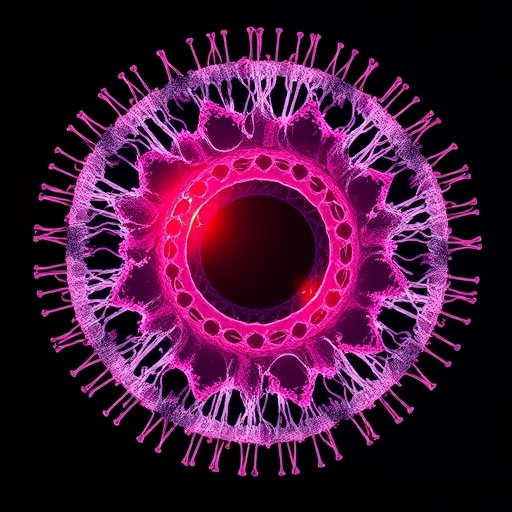
The centriole, a pivotal organelle in eukaryotic cells, epitomizes the intricate orchestration of cellular structures through its well-defined 9-fold symmetrical architecture. This microtubule-centric entity is not merely an aesthetic element but integral to a multitude of fundamental processes in the life of a cell, including polarization, signaling pathways, and cellular motility. The investigation into the centriole’s functional capacity has surged over recent years, shedding light on its essential role in maintaining cellular integrity and communication.
For much of the last two decades, researchers have embarked on a quest to elucidate the complex molecular architecture of the centriole and decipher the assembly principles that govern its biogenesis. This effort has been driven by advancements in imaging technologies and molecular biology techniques, enabling scientists to visualize and analyze centriole formation in unprecedented detail. These discoveries have propelled centriole biogenesis into a new era of understanding, transforming it from a mere structural curiosity into a subject of intense scientific inquiry.
Initially identified over a century ago, centrioles were long viewed simply as structural components of the cell. However, it has become increasingly evident that they are central to numerous cellular processes beyond their role in microtubule organization. Their involvement in the formation of the mitotic spindle during cell division underscores their importance in ensuring accurate chromosome segregation. This landmark function has been a focal point in cancer research, as errors in centriole duplication and function can lead to aneuploidy, a hallmark of many cancers.
Recent studies highlight the role of various molecular players in centriole assembly and maintenance. Proteins such as SAS-6, CPAP, and PPC have been implicated in the scaffolding and assembly processes that define centriole structure. These proteins cooperate to build the unique, cylindrical shape of centrioles and facilitate the intricate processes of their duplication and segregation during the cell cycle. This collaborative assembly process underscores the complex interactions that are essential for centriole integrity.
Another significant insight pertains to the mechanisms governing the initiation of centriole assembly. The process begins with the recruitment of specialized proteins to the basal body of the centriole, marking the site of new centriole formation. These proteins organize themselves into a template that provides a foundation for the subsequent assembly of new microtubule structures. Advanced imaging techniques, including super-resolution microscopy, have allowed researchers to observe these early stages in real-time, significantly enhancing our understanding of how confusion in these initial steps can lead to functional deficits.
Moreover, recent investigations into the centriolar microenvironment have unveiled a sophisticated regulatory network that modulates centriole assembly. In human cells, signals from various cellular pathways interact with the centriole, influencing its formation and function. For instance, signaling molecules such as cyclin-dependent kinases have been shown to directly impact the timing of centriole duplication, ensuring that cells only produce new centrioles when necessary. This finely tuned regulation is crucial for maintaining cellular homeostasis and preventing the onset of diseases such as cancer.
The critical constituents of centriole architecture also encompass a range of other proteins and structural components that facilitate functionality beyond microtubule organization. Centrioles are known to participate in signaling pathways that influence cellular fate decisions. Understanding how the centriole impacts cell signaling has opened up new avenues for therapeutic interventions, particularly in cancer biology, where aberrant signaling cascades are prevalent.
The culmination of these advancements illustrates how the centriole serves not just as a structural scaffold but as a vital participant in cellular signaling networks. Its ability to integrate structural and signaling functions positions it as a key player in the regulation of cellular behavior. Thus, insights into centriole biogenesis hold promise for novel therapeutic approaches that leverage these pathways to counteract cellular dysfunction.
As we stand on the brink of a new era of research into the centriole, several questions remain unanswered. For example, the specific interactions between centriolar proteins and their cellular environments warrant further exploration. Additionally, understanding the evolutionary aspects of centriole functionality may provide clues to the organelle’s atypical behaviors in various organisms. The evolutionary conservation of centriolar structure hints at an essential role that transcends individual species, making it an area ripe for further investigation.
The future of centriole research is poised for exciting discoveries that will likely influence our understanding of fundamental biology. As advanced imaging and genetic techniques continue to evolve, we can expect to unravel more intricacies of centriole function, ultimately contributing to broader insights into cell biology.
In summary, the centriole’s role in cellular processes exemplifies the confluence of structure, function, and regulation. Its complex architecture and the sophisticated interplay of molecular constituents reflect the stunning evolution of cellular mechanisms over billions of years. As we continue to peel back the layers of centriolar biology, we open pathways to novel cancer treatments, regenerative medicine, and a more profound appreciation of cellular magnificence.
In conclusion, the evolution of our understanding of the centriole exemplifies the dynamic nature of biological inquiry. From a historical perspective, the transition from viewing centrioles as mere structural entities to recognizing them as pivotal players in crucial cellular processes reflects a broader shift in scientific paradigms. This transformation is powered by groundbreaking research that intersects various disciplines, capturing the imagination of a new generation of scientists eager to explore the complexities of life at the cellular level.
Understanding the intricate details of centriole biogenesis is only the tip of the iceberg. As researchers continue to decode the molecular language of centriole assembly and functionality, we anticipate a wealth of insights that will elevate our understanding of cell biology and its implications for human health. The journey of centrioles from cellular curiosity to crucial research focal points encapsulates the essence of scientific discovery: ever-evolving and eternally fascinating.
Gönczy, P. Critical constituents and assembly principles of centriole biogenesis in human cells.Nat Rev Mol Cell Biol (2025). https://doi.org/10.1038/s41580-025-00921-5
Cite Scienmag News
Drew Townsend. (November 27, 2025). Key Factors in Human Centriole Biogenesis Uncovered. Scienmag. https://scienmag.com/key-factors-in-human-centriole-biogenesis-uncovered/
Drew Townsend. "Key Factors in Human Centriole Biogenesis Uncovered." Scienmag, 27 November 2025, https://scienmag.com/key-factors-in-human-centriole-biogenesis-uncovered/. Accessed 4 September 2026.
Drew Townsend. "Key Factors in Human Centriole Biogenesis Uncovered." Scienmag. November 27, 2025. https://scienmag.com/key-factors-in-human-centriole-biogenesis-uncovered/


