


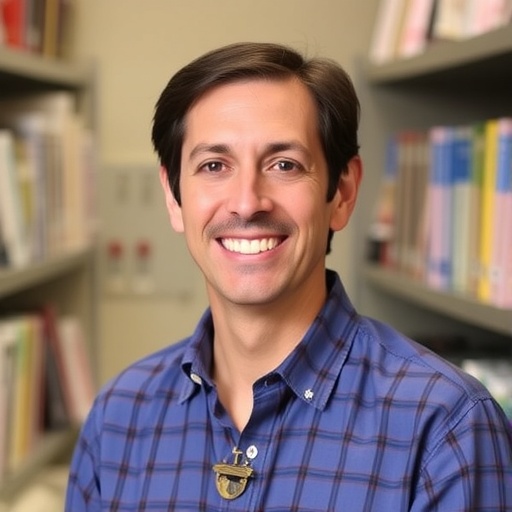
Joanna Wardwell-Ozgo, an assistant professor at Kennesaw State University specializing in molecular and cellular biology, is pioneering a novel approach to understanding cancer by investigating the earliest cellular events triggered by hormone signaling pathways. This groundbreaking research is fueled by a substantial $720,000 grant from the National Institutes of Health, aimed at uncovering the nuanced mechanisms by which hormones influence cellular behavior and tissue development, with a particular focus on cancer origins. In parallel, this initiative promises to elevate undergraduate research opportunities within KSU’s College of Science and Mathematics, creating a vibrant nexus for discovery and education.
At the heart of Wardwell-Ozgo’s inquiry lies a fundamental biological enigma: how does a singular hormonal signal produce diverse outcomes in different tissues? Hormones exert their effects by binding to receptor proteins that activate intracellular pathways, yet the downstream consequences can vary dramatically depending on cell type and developmental context. For instance, during puberty, the same hormone can simultaneously stimulate growth in one tissue, induce programmed cell death in another, or trigger cellular transformation elsewhere. Such divergent responses suggest a complex regulatory network finely tuned by contextual factors, which Wardwell-Ozgo aims to elucidate through rigorous investigation.
Her lab employs advanced molecular biology techniques to dissect hormone receptor interactions and the subsequent intracellular signaling cascades. By focusing on the earliest developmental stages, where cells are particularly plastic and responsive, Wardwell-Ozgo hopes to identify critical points where these pathways diverge or malfunction. These insights are crucial because aberrations in hormone signaling are implicated in the initiation and progression of various cancers. Understanding these processes at a mechanistic level could pave the way for novel therapeutic strategies that target early disease events, potentially improving patient outcomes significantly.
Wardwell-Ozgo’s journey into this research domain began with her doctoral studies at Baylor College of Medicine, followed by an intensive postdoctoral fellowship at Emory University College of Medicine. It was during her tenure at Emory that she recognized the vast knowledge gaps in how hormones guide cellular growth and differentiation. This realization shaped her scientific trajectory, inspiring her to pursue questions about developmental biology that underlie pathological conditions such as cancer. Her research highlights an often-overlooked aspect: that to fully grasp disease mechanisms, scientists must first decode the normal developmental programs that go awry.
A unique aspect of Wardwell-Ozgo’s project is its commitment to undergraduate involvement, which reflects her own transformation as a young scientist. Initially convinced that a career in science necessarily meant becoming a medical doctor, her undergraduate research experiences opened new horizons. They revealed a dynamic world where curiosity drives experimentation, and where students can contribute to the generation of novel knowledge. Now, as a professor, she is dedicated to providing similar research opportunities to KSU undergraduates, mentoring them to become the next generation of scientific innovators.
The grant’s dual focus on fundamental research and educational enrichment exemplifies an integrative model of science, where discovery and training go hand in hand. Through meticulous experimental design, Wardwell-Ozgo’s team utilizes cell culture systems and animal models to simulate hormone-receptor dynamics and their outcomes in vivo. Employing techniques such as fluorescence imaging, chromatin immunoprecipitation, and gene expression profiling, they map the signaling pathways activated by hormone-bound receptors and identify molecular switches that determine cell fate.
Hormonal signaling pathways are notoriously complex due to their pleiotropic effects and intricate feedback mechanisms. Wardwell-Ozgo’s research confronts this complexity by examining how spatial and temporal variables influence cellular responses. This includes assessing how epigenetic modifications and co-regulatory proteins modulate receptor activity differently across tissue types. The goal is to construct a comprehensive map of hormone receptor functionality that accounts for tissue-specific nuances, which has been a significant challenge in endocrine biology.
The implications of this research extend beyond developmental biology and cancer. Hormones regulate a wide array of physiological processes, and disruptions in their signaling pathways are linked to numerous disorders, including metabolic diseases, reproductive dysfunctions, and autoimmune conditions. By enhancing our basic understanding of hormone action at the molecular level, Wardwell-Ozgo’s work may inform a broad spectrum of biomedical research and therapeutic development, emphasizing the interconnectedness of development, health, and disease.
Moreover, the educational impact of this project cannot be overstated. By embedding undergraduates in cutting-edge research, Wardwell-Ozgo fosters a rigorous academic environment that advances scientific literacy and critical thinking skills. These experiences often serve as a catalyst for students to pursue advanced studies and careers in biomedical research, addressing the national imperative to cultivate skilled scientists and innovators. This grassroots investment in science education aligns with the NIH’s broader goals of promoting workforce development and diversifying the pipeline of researchers.
The research initiative embodies a strategic approach to cancer biology by stepping back to the incipient molecular signals that may set the stage for oncogenesis. By elucidating how hormone receptor signaling can contribute to cellular misregulation and tumorigenesis, the study holds promise for identifying early biomarkers of cancer risk. Such biomarkers are invaluable in clinical settings for early detection and intervention, significantly improving prognosis. Thus, Wardwell-Ozgo’s work sits at the confluence of fundamental biology and translational potential, a hallmark of impactful biomedical research.
In sum, Joanna Wardwell-Ozgo’s research program represents a visionary endeavor to decode hormonal control mechanisms with implications for cancer etiology and treatment. Supported by a substantial NIH grant, this work situates Kennesaw State University at the forefront of developmental and cellular biology research, while simultaneously nurturing the next generation of scientific talent. Through her rigorous scientific inquiry and passionate mentorship, Wardwell-Ozgo fosters a deeper understanding of the molecular events that orchestrate life and disease, inspiring hope for novel insights into cancer prevention and therapy.
News Publication Date: Not specified
Web References:
– Kennesaw State University Molecular and Cellular Biology Program: https://www.kennesaw.edu/csm/academics/molecular-cellular-biology/
– Kennesaw State University College of Science and Mathematics: https://www.kennesaw.edu/csm/index.php
– National Institutes of Health: https://www.nih.gov/
Cite Scienmag News
Nathaniel Bowman. (October 8, 2025). Kennesaw State Professor Awarded Grant to Investigate the Origins of Cancer. Scienmag. https://scienmag.com/kennesaw-state-professor-awarded-grant-to-investigate-the-origins-of-cancer/
Nathaniel Bowman. "Kennesaw State Professor Awarded Grant to Investigate the Origins of Cancer." Scienmag, 8 October 2025, https://scienmag.com/kennesaw-state-professor-awarded-grant-to-investigate-the-origins-of-cancer/. Accessed 4 September 2026.
Nathaniel Bowman. "Kennesaw State Professor Awarded Grant to Investigate the Origins of Cancer." Scienmag. October 8, 2025. https://scienmag.com/kennesaw-state-professor-awarded-grant-to-investigate-the-origins-of-cancer/


