

Tuesday, October 20, 2026
Science
No Result
View All Result
  • Login
  • HOME
  • SCIENCE NEWS
  • CONTACT US
  • HOME
  • SCIENCE NEWS
  • CONTACT US
No Result
View All Result
Scienmag
No Result
View All Result
Home Science News Medicine

Kazakhstan’s registered syphilis incidence fell 21.9% from 2022 to 2025, surveillance study reports

October 20, 2026
in Medicine
Phoebe Ingram
By Phoebe Ingram Scienmag Editorial Profile - Epidemiology
Reading Time: 2 mins read
0
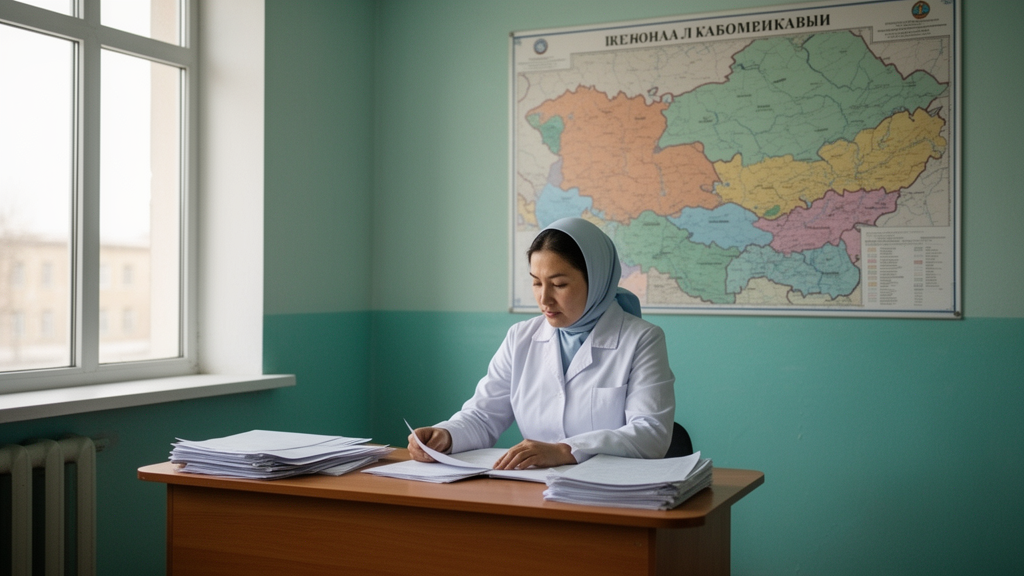
Kazakhstan’s Syphilis Cases Fall 22 Percent but Regions Tell Uneven Stories

Kazakhstan's Syphilis Cases Fall 22 Percent but Regions Tell Uneven Stories

65
SHARES
587
VIEWS
Share on FacebookShare on Twitter
ADVERTISEMENT

Registered crude syphilis incidence in Kazakhstan declined from 10.5 cases per 100,000 population in 2022, representing 2,055 cases, to 8.2 per 100,000 in 2025, representing 1,678 cases, according to a national retrospective surveillance study. The reported reduction was 21.9% across the four-year period, with annual declines of 12.4% in 2023, 7.6% in 2024 and 3.5% in 2025. The study, described in the article abstract, used official national statistical collections issued by Kazakhstan’s Ministry of Health.

It was a retrospective, nationwide descriptive ecological study of registered syphilis incidence and its regional, demographic, clinical, maternal and congenital distributions. National crude incidence was assessed for 2022–2025. Because an administrative reform in 2022 created the Abai, Ulytau and Zhetysu regions and changed the boundaries of their parent regions, the researchers used all 20 administrative units for directly comparable regional analyses covering 2023–2025.

Regional variation remained substantial in 2025, when registered incidence ranged from 2.7 to 17.7 cases per 100,000 population. The study’s Friedman test for repeated measures did not detect an overall difference in regional incidence across 2023–2025 (chi-square = 1.85, p = 0.397). Descriptive regional-to-national incidence rate ratios in 2025 ranged from 2.16 in Karaganda to 0.33 in Kyzylorda.

Between 2023 and 2025, the largest reported increase in regional incidence occurred in East Kazakhstan, at 113.5%, while Kyzylorda recorded the largest decrease, at 79.4%. These figures describe reported surveillance patterns and do not by themselves establish changes in transmission. The abstract reports a 39.8% decrease in syphilis cases among pregnant women and a 72.7% decrease in congenital syphilis cases from the 2023 peak.

The congenital syphilis case rate expressed per 100,000 live births fell from 2.84 in 2023 to 0.90 in 2025. Maternal and congenital indicators were summarized descriptively from annual administrative Form 12-STI aggregates, with the maternal and congenital measures also calculated per 100,000 live births. The authors concluded that Kazakhstan’s registered crude syphilis incidence declined during 2022–2025, while regional heterogeneity and persistent congenital cases remained.

They identified an important boundary to the interpretation: the outcome was registered surveillance incidence, so the observed decline may partly reflect differences in testing and reporting rather than transmission alone.

Subject of Research: National registered syphilis incidence and regional, maternal, and congenital patterns in Kazakhstan, 2022–2025

Article Title: Epidemiology of syphilis at the national level in Kazakhstan, 2022–2025

Article References: Syrym, N., Abdykalyk, A., Yespembetov, B., Islamov, Y., Bayev, A., Zherebtsova, L., Alpysbayeva, S., Sarmykova, M., Abdimukhtar, A., Tileukhanov, K., Toleukhan, A., Anarbekova, A., Serikbay, Y., Yerzhigit, B., Kaldyrkaev, A., & Shestakov, A. (2026). Epidemiology of syphilis at the national level in Kazakhstan, 2022–2025. BMC Public Health. https://doi.org/10.1186/s12889-026-29798-5

Image Credits: AI Generated

DOI: 10.1186/s12889-026-29798-5

Keywords: Kazakhstan, syphilis, surveillance, registered incidence, regional variation, pregnant women, congenital syphilis, public health, epidemiology, national, level, scientific research

Cite Scienmag News

Phoebe Ingram. (October 20, 2026). Kazakhstan’s registered syphilis incidence fell 21.9% from 2022 to 2025, surveillance study reports. Scienmag. https://scienmag.com/kazakhstans-registered-syphilis-incidence-fell-21-9-from-2022-to-2025-surveillance-study-reports/


Phoebe Ingram. "Kazakhstan’s registered syphilis incidence fell 21.9% from 2022 to 2025, surveillance study reports." Scienmag, 20 October 2026, https://scienmag.com/kazakhstans-registered-syphilis-incidence-fell-21-9-from-2022-to-2025-surveillance-study-reports/. Accessed 20 October 2026.

Phoebe Ingram. "Kazakhstan’s registered syphilis incidence fell 21.9% from 2022 to 2025, surveillance study reports." Scienmag. October 20, 2026. https://scienmag.com/kazakhstans-registered-syphilis-incidence-fell-21-9-from-2022-to-2025-surveillance-study-reports/

Tags: congenital syphilisdisease surveillance and epidemiological analysisepidemiologyepidemiology of sexually transmitted infectionsimpact of administrative boundary changes on disease reportingKazakhstanlevelmaternal and congenital syphilisnationalnational surveillance studypregnant womenPublic healthpublic health interventions for STD controlpublic health progress in Kazakhstanregional disparities in infectious diseaseregional variationregional variation in syphilis ratesregistered incidenceScientific ResearchsurveillancesyphilisSyphilis incidence decline in Kazakhstansyphilis trends over 2022-2025
Share26Tweet16
Previous Post

Agronomic performance and leaf-morphological evaluation of basil (Ocimum basilicum L.) germplasm under the environmental conditions of Adana

Next Post

Kinetic model reproduces Sri Lanka dengue patterns after adding climate and social factors

Related Posts

Pay, Pain and Peace of Mind: What Keeps Critical Care Nurses on the Job in Saudi Arabia
Medicine

Cross-sectional study links job satisfaction with turnover intention and well-being among Saudi and non-Saudi critical care and emergency nurses

October 20, 2026
Kinetic Model Weaves Climate and Society to Track Dengue in Sri Lanka
Medicine

Kinetic model reproduces Sri Lanka dengue patterns after adding climate and social factors

October 20, 2026
Blood Tests at Work May Cut Costs, But Only With Real Follow-Up Care
Medicine

Systematic review links workplace blood screening economics to structured follow-up, with limited evidence on productivity

October 20, 2026
Transcranial Doppler supports pediatric brain death but can miss persistent flow
Medicine

Transcranial Doppler supports pediatric brain death but can miss persistent flow

October 20, 2026
Active Rewarming Fails to Improve Survival in Hypothermic Sepsis, Study Finds
Medicine

Multicenter cohort links temperature recovery trajectories, not active rewarming, with outcomes in hypothermic sepsis

October 20, 2026
Qualitative study finds conditional openness to donor milk among postnatal mothers
Medicine

Qualitative study finds conditional openness to donor milk among postnatal mothers

October 20, 2026
Next Post
Kinetic Model Weaves Climate and Society to Track Dengue in Sri Lanka

Kinetic model reproduces Sri Lanka dengue patterns after adding climate and social factors

  • Mothers who receive childcare support from maternal grandparents show more optimized

    Mothers who receive childcare support from maternal grandparents show more parental warmth, finds NTU Singapore study

    27656 shares
    Share 11059 Tweet 6912
  • University of Seville Breaks 120-Year-Old Mystery, Revises a Key Einstein Concept

    1061 shares
    Share 424 Tweet 265
  • Bee body mass, pathogens and local climate influence heat tolerance

    682 shares
    Share 273 Tweet 171
  • Researchers record first-ever images and data of a shark experiencing a boat strike

    546 shares
    Share 218 Tweet 137
  • Groundbreaking Clinical Trial Reveals Lubiprostone Enhances Kidney Function

    531 shares
    Share 212 Tweet 133
Science

Embark on a thrilling journey of discovery with Scienmag.com—your ultimate source for cutting-edge breakthroughs. Immerse yourself in a world where curiosity knows no limits and tomorrow’s possibilities become today’s reality!

RECENT NEWS

  • Cross-sectional study links job satisfaction with turnover intention and well-being among Saudi and non-Saudi critical care and emergency nurses
  • Kinetic model reproduces Sri Lanka dengue patterns after adding climate and social factors
  • Kazakhstan’s registered syphilis incidence fell 21.9% from 2022 to 2025, surveillance study reports
  • Agronomic performance and leaf-morphological evaluation of basil (Ocimum basilicum L.) germplasm under the environmental conditions of Adana

Categories

  • Agriculture
  • Anthropology
  • Archaeology
  • Athmospheric
  • Biology
  • Biotechnology
  • Blog
  • Bussines
  • Cancer
  • Chemistry
  • Climate
  • Earth Science
  • Editorial Policy
  • Marine
  • Mathematics
  • Medicine
  • Pediatry
  • Policy
  • Psychology & Psychiatry
  • Science Education
  • Science News
  • Social Science
  • Space
  • Technology and Engineering

Subscribe to Blog via Email

Enter your email address to subscribe to this blog and receive notifications of new posts by email.

Join 5,150 other subscribers

© 2025 Scienmag - Science Magazine

Welcome Back!

Login to your account below

Forgotten Password?

Retrieve your password

Please enter your username or email address to reset your password.

Log In
No Result
View All Result
  • HOME
  • SCIENCE NEWS
  • CONTACT US

© 2025 Scienmag - Science Magazine

Discover more from Science

Subscribe now to keep reading and get access to the full archive.

Continue reading