

Tuesday, October 20, 2026
Science
No Result
View All Result
  • Login
  • HOME
  • SCIENCE NEWS
  • CONTACT US
  • HOME
  • SCIENCE NEWS
  • CONTACT US
No Result
View All Result
Scienmag
No Result
View All Result
Home Science News Medicine

KARI dataset opens multimodal Alzheimer imaging resource for 1,645 adults

October 20, 2026
in Medicine
Cassandra Pierce
By Cassandra Pierce Scienmag Editorial Profile - Systems Neuroscience
Reading Time: 3 mins read
0
KARI dataset opens multimodal Alzheimer imaging resource for 1,645 adults

KARI dataset opens multimodal Alzheimer imaging resource for 1,645 adults

65
SHARES
587
VIEWS
Share on FacebookShare on Twitter
ADVERTISEMENT

The Knight Alzheimer Research Imaging dataset, or KARI, provides an extensive collection of brain-imaging, clinical and biological data from 1,645 participants aged 42 to 97 across 6,217 imaging acquisitions. Established by the Washington University Knight Alzheimer Disease Research Center, the resource covers the Alzheimer disease spectrum from healthy aging through preclinical disease to symptomatic illness. Its authors describe KARI as a research dataset intended to support investigation of Alzheimer disease’s prolonged preclinical phase, early detection, disease trajectories and intervention research.

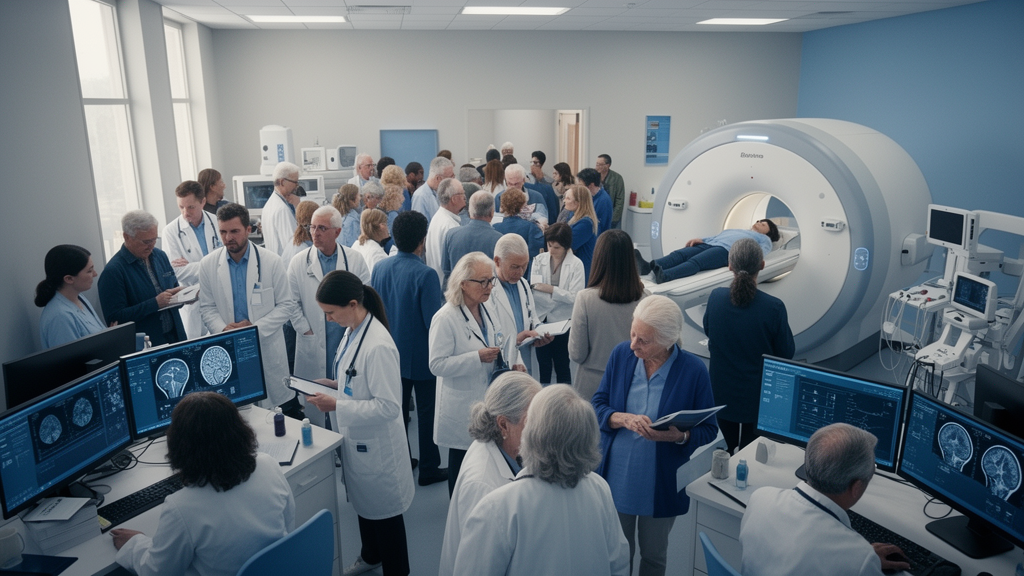
The imaging collection combines structural and functional magnetic resonance imaging with positron emission tomography using tracers for amyloid and tau pathology. Structural and functional MRI provide complementary views of the brain, while the PET scans target two pathological features associated with Alzheimer disease. The cohort also includes clinical, cognitive, genetic and biomarker data, allowing investigators to examine imaging measures alongside other participant-level information. The source does not present the dataset as a single test or diagnostic procedure; it is a collection designed to address questions that require multiple kinds of data.

A major feature of KARI is its longitudinal scope. Participants undergo extensive imaging over time, providing repeated acquisitions rather than a one-time snapshot of the cohort. That structure is intended to help researchers investigate how different measurements relate within individuals and how imaging and biomarker findings may evolve across the disease spectrum. The 6,217 acquisitions encompass 1,645 participants spanning a 55-year age range, from ages 42 to 97, and include people representing healthy aging, preclinical Alzheimer disease and symptomatic disease.

Alongside raw imaging data, KARI provides quality-controlled processed outputs, including anatomical segmentations and biomarker quantification. These derivatives give researchers standardized outputs for the kind of measurements described in the resource, while the raw data preserve the opportunity to apply other analytical approaches. The dataset is also described as open access, with the stated aim of making the material available to the wider scientific community for work on pathophysiology, biomarker identification and therapeutic development. Access to a combined collection, however, does not itself demonstrate that any particular biomarker, diagnostic method or intervention will improve clinical outcomes.

KARI should therefore be understood as a data resource and an invitation to conduct further analyses, not as the report of a completed trial or a demonstrated clinical advance. Its value lies in the scale, multimodal design, longitudinal coverage and processed outputs, while interpretation of any resulting association will depend on the specific question, sample, analysis and limitations of the data used. By linking MRI, PET, clinical, cognitive, genetic and biomarker information across the Alzheimer disease spectrum, the Knight ADRC aims to give researchers a foundation for studies of early detection and disease progression. The resource does not by itself resolve those questions, but it makes them testable with a common and broadly accessible dataset.

Subject of Research: A multimodal neuroimaging and biomarker dataset spanning the Alzheimer disease spectrum

Article Title: Exploring healthy aging through preclinical Alzheimer disease in the Knight Alzheimer Research Imaging dataset

Article References: Hoagey, D. A., McKay, N. S., Joseph-Mathurin, N., Flores, S., Doering, S., Keefe, S. J., Tiemann Powles, S., Hornbeck, R. C., Smith, T. H., Scott, J., Chen, G., Massoumzadeh, P., LaMontagne, P. J., Wang, Q., Hassenstab, J., Ponisio, M. R., Denny, A., Balls-Berry, J. E., Snider, B. J., … Benzinger, T. L. S. (2026). Exploring healthy aging through preclinical Alzheimer disease in the Knight Alzheimer Research Imaging dataset. Nature Communications. https://doi.org/10.1038/s41467-026-78439-3

Image Credits: AI Generated

DOI: 10.1038/s41467-026-78439-3

Keywords: Alzheimer disease, brain imaging, MRI, PET, amyloid pathology, tau pathology, preclinical dementia, healthy aging, longitudinal imaging, biomarkers, Exploring, healthy

Cite Scienmag News

Cassandra Pierce. (October 20, 2026). KARI dataset opens multimodal Alzheimer imaging resource for 1,645 adults. Scienmag. https://scienmag.com/kari-dataset-opens-multimodal-alzheimer-imaging-resource-for-1645-adults/

Cassandra Pierce. "KARI dataset opens multimodal Alzheimer imaging resource for 1,645 adults." Scienmag, 20 October 2026, https://scienmag.com/kari-dataset-opens-multimodal-alzheimer-imaging-resource-for-1645-adults/. Accessed 20 October 2026.

Cassandra Pierce. "KARI dataset opens multimodal Alzheimer imaging resource for 1,645 adults." Scienmag. October 20, 2026. https://scienmag.com/kari-dataset-opens-multimodal-alzheimer-imaging-resource-for-1645-adults/


Tags: Alzheimer diseaseAlzheimer disease progression datasetAlzheimer's disease imaging datasetamyloid and tau pathology imagingamyloid pathologyBiomarkersbrain imagingclinical and genetic data in Alzheimer's researchearly detection of Alzheimer's diseaseExploringHealthyhealthy aginglongitudinal brain imaging studies in aginglongitudinal imaginglongitudinal neuroimaging studyMRImulti-source neuroimaging data for dementiamultimodal brain imaging for Alzheimer'sPETPET and MRI biomarkers for Alzheimerpreclinical Alzheimer's research resourcepreclinical dementiastructural and functional MRI in dementiatau pathology
Share26Tweet16
Previous Post

Euthyroid diabetes study finds no independent thyroid-nodule link

Next Post

Empowering rural communities through self-organized groups: insights from the pilot study findings

Related Posts

Euthyroid diabetes study finds no independent thyroid-nodule link
Medicine

Euthyroid diabetes study finds no independent thyroid-nodule link

October 20, 2026
Cross-Sectional Study Links Perceived Wage Gaps to Nurse Turnover Intention
Medicine

Cross-Sectional Study Links Perceived Wage Gaps to Nurse Turnover Intention

October 20, 2026
Three in Four Emergency Nurses Worldwide Face Workplace Violence, Meta-Analysis Finds
Medicine

Systematic review estimates 77.4% global prevalence of workplace violence against emergency nurses

October 20, 2026
When One Spouse Slips, the Other Follows: Shanghai Study Reveals Coupled Decline in Daily Function
Medicine

Spousal ADL changes linked in Shanghai cohort of 3,425 older couples

October 20, 2026
Rift Valley Fever Circulates Silently in Nigeria Between Outbreaks, Review Finds
Medicine

Scoping review finds evidence of endemic Rift Valley fever transmission in Nigeria

October 20, 2026
Why Your Family Doctor May Decide Whether You Ever Get a Kidney Transplant
Medicine

Observational study links primary-care shortage areas with lower preemptive kidney transplant access among waitlisted candidates

October 20, 2026
Next Post
Empowering rural communities through self-organized groups: insights from the pilot study findings

Empowering rural communities through self-organized groups: insights from the pilot study findings

  • Mothers who receive childcare support from maternal grandparents show more optimized

    Mothers who receive childcare support from maternal grandparents show more parental warmth, finds NTU Singapore study

    27656 shares
    Share 11059 Tweet 6912
  • University of Seville Breaks 120-Year-Old Mystery, Revises a Key Einstein Concept

    1061 shares
    Share 424 Tweet 265
  • Bee body mass, pathogens and local climate influence heat tolerance

    682 shares
    Share 273 Tweet 171
  • Researchers record first-ever images and data of a shark experiencing a boat strike

    546 shares
    Share 218 Tweet 137
  • Groundbreaking Clinical Trial Reveals Lubiprostone Enhances Kidney Function

    531 shares
    Share 212 Tweet 133
Science

Embark on a thrilling journey of discovery with Scienmag.com—your ultimate source for cutting-edge breakthroughs. Immerse yourself in a world where curiosity knows no limits and tomorrow’s possibilities become today’s reality!

RECENT NEWS

  • Empowering rural communities through self-organized groups: insights from the pilot study findings
  • KARI dataset opens multimodal Alzheimer imaging resource for 1,645 adults
  • Euthyroid diabetes study finds no independent thyroid-nodule link
  • Cross-Sectional Study Links Perceived Wage Gaps to Nurse Turnover Intention

Categories

  • Agriculture
  • Anthropology
  • Archaeology
  • Athmospheric
  • Biology
  • Biotechnology
  • Blog
  • Bussines
  • Cancer
  • Chemistry
  • Climate
  • Earth Science
  • Editorial Policy
  • Marine
  • Mathematics
  • Medicine
  • Pediatry
  • Policy
  • Psychology & Psychiatry
  • Science Education
  • Science News
  • Social Science
  • Space
  • Technology and Engineering

Subscribe to Blog via Email

Enter your email address to subscribe to this blog and receive notifications of new posts by email.

Join 5,150 other subscribers

© 2025 Scienmag - Science Magazine

Welcome Back!

Login to your account below

Forgotten Password?

Retrieve your password

Please enter your username or email address to reset your password.

Log In
No Result
View All Result
  • HOME
  • SCIENCE NEWS
  • CONTACT US

© 2025 Scienmag - Science Magazine

Discover more from Science

Subscribe now to keep reading and get access to the full archive.

Continue reading