

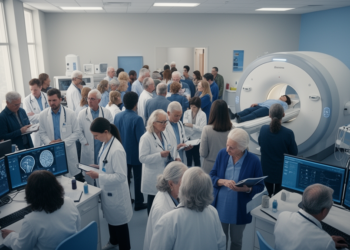
KARI dataset opens multimodal Alzheimer imaging resource for 1,645 adults
The KARI dataset provides 6,217 multimodal imaging acquisitions from 1,645 adults spanning healthy aging, preclinical Alzheimer disease and symptomatic illness.
The KARI dataset provides 6,217 multimodal imaging acquisitions from 1,645 adults spanning healthy aging, preclinical Alzheimer disease and symptomatic illness.

A new review reveals that synaptic failure—not plaque burden—is the strongest driver of Alzheimer's cognitive decline, and plant-derived phytochemicals may ...
A new mouse study shows that early chronic cerebral hypoperfusion spatially biases tau pathology and drives neuroinflammation at the onset ...
An integrated analysis of human genetics, patient-derived cell models and electronic health records has identified 19 Alzheimer's drug targets in ...
A new review argues that neurons can acquire senescence-like states in aging and neurodegenerative disease, but peripheral senescence markers cannot ...
A new review proposes a four-axis framework of clinical phenotype, biological context, network topography, and tempo to define the heterogeneity ...
Scientists created CJ1, a hydrophobic tagging molecule that selectively destroys the DAPK1 kinase via the proteasome, reducing tau phosphorylation, neurofibrillary ...
A new structural study reveals how patient autoantibodies recognize the neuronal protein IgLON5, offering a molecular explanation for a rare ...
Researchers have found that higher levels of the ATIP protein in postmortem brains of older adults with Alzheimer's disease are ...
New research in Nature Communications shows that degeneration in deep subcortical brain regions becomes progressively linked to cortical tau accumulation ...

Embark on a thrilling journey of discovery with Scienmag.com—your ultimate source for cutting-edge breakthroughs. Immerse yourself in a world where curiosity knows no limits and tomorrow’s possibilities become today’s reality!