


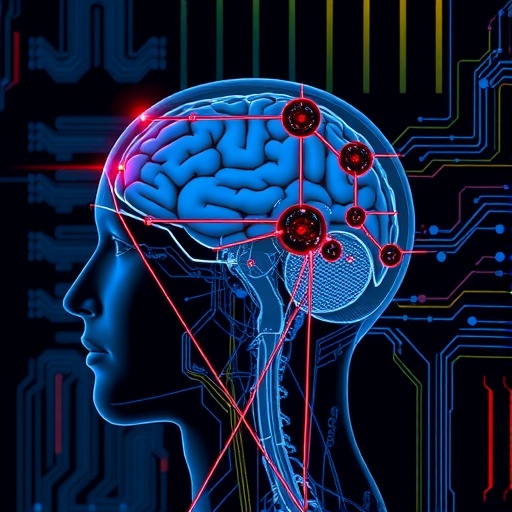
For decades, implantable brain-computer interfaces (BCIs) have promised direct control for people with severe motor disabilities. Yet the technology remains out of reach for most patients: implanted devices require expensive brain surgery and carry inherent risks. As a result, only a small number of individuals worldwide have benefited, despite years of progress.
A team at Carnegie Mellon University, led by biomedical engineer Bin He, has pursued a different path—noninvasive BCIs that can be deployed more safely and at far lower cost. Over the past decade, their systems have supported tasks ranging from drone flight to robotic-arm control, and more recently, fine finger-level movements.
The central obstacle is accuracy and controllability. Noninvasive signals are noisier and training can be slow. Conventional approaches often rely on passive calibration: the human adapts to the machine’s decoder, while the algorithm updates using fixed mathematical objectives. That one-way relationship can leave users and models “out of sync.”
In a study published in Nature Communications, He and colleagues introduce a hybrid learning framework designed to make human and machine training converge together. The method combines human learning dynamics with machine learning optimization, using a sensory-guided structure that shapes user strategies while the algorithm selectively emphasizes the most informative neural patterns.
Technically, the framework unifies reinforcement-like neuroplasticity with gradient-based decoder refinement. Instead of treating tactile feedback as an afterthought, the system uses it to steer learning trajectories, aligning brain activity changes with the decoder’s optimization targets.
In experiments with 31 participants untrained in BCIs, the approach produced fast and sustained gains as task complexity increased. Participants reached average discrete accuracies of 86% in one-dimensional cursor control and 77.5% in two-dimensional cursor control. Continuous control accuracy averaged 77.5% (1D) and 66.9% (2D).
These results are notable because noninvasive BCIs typically demand extensive training to reach comparable performance. By reducing that burden, the researchers move closer to a scalable interface that can generalize beyond a narrow calibration session.
He argues the work is a step toward noninvasive control with accuracy approaching implanted systems. Beyond laboratory benchmarks, the team sees translational potential for neurorehabilitation, assistive communication, and prosthetic control—where faster onboarding and stronger user engagement are critical for real-world deployment.
Cite Scienmag News
Teresa Odom. (July 16, 2026). Joint human-machine learning boosts noninvasive BCI performance. Scienmag. https://scienmag.com/joint-human-machine-learning-boosts-noninvasive-bci-performance/
Teresa Odom. "Joint human-machine learning boosts noninvasive BCI performance." Scienmag, 16 July 2026, https://scienmag.com/joint-human-machine-learning-boosts-noninvasive-bci-performance/. Accessed 3 September 2026.
Teresa Odom. "Joint human-machine learning boosts noninvasive BCI performance." Scienmag. July 16, 2026. https://scienmag.com/joint-human-machine-learning-boosts-noninvasive-bci-performance/


