

Wednesday, October 21, 2026
Science
No Result
View All Result
  • Login
  • HOME
  • SCIENCE NEWS
  • CONTACT US
  • HOME
  • SCIENCE NEWS
  • CONTACT US
No Result
View All Result
Scienmag
No Result
View All Result
Home Science News

John S. Dugdale’s six decades of fieldwork reshaped New Zealand entomology

October 21, 2026
in Science News
Gavin Prescott
By Gavin Prescott Scienmag Editorial Profile - Ecology and Ecosystem Dynamics
Reading Time: 3 mins read
0
John S. Dugdale, the Entomologist Who Mapped New Zealand’s Moths, Dies at 86

John S. Dugdale, the Entomologist Who Mapped New Zealand's Moths, Dies at 86

65
SHARES
587
VIEWS
Share on FacebookShare on Twitter
ADVERTISEMENT

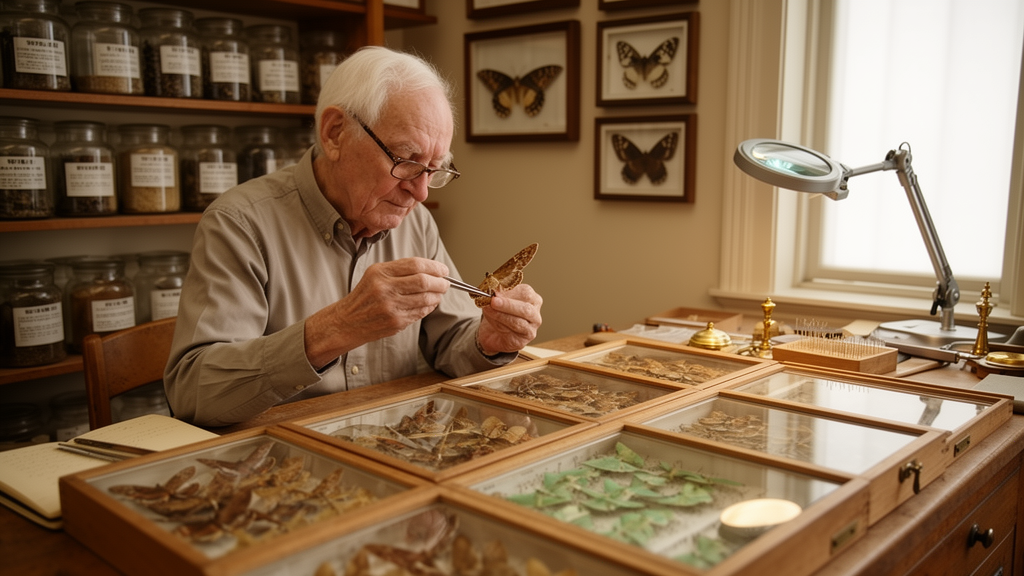
John S. Dugdale, a New Zealand entomologist who died on 4 September 2020 at age 86, assembled vast insect collections, established moth life histories and helped modernize the classification of New Zealand Lepidoptera over a career lasting about six decades, according to a memorial account of his work.

Born in Christchurch on 5 April 1934, Dugdale attended Christchurch Cathedral Grammar School and Canterbury University. A holiday job studying forest insects east of Taupo at the Forest Research Institute in Rotorua became a full-time position. During the 1950s and 1960s, he built an extensive institute collection and became a frequently consulted specialist on Lepidoptera, tachinid flies and cicadas.

After joining the DSIR in 1967, Dugdale made a major contribution to the New Zealand Arthropod Collection. His expeditions covered most insect orders and habitats from sea level to the alpine zone, including the Chathams, Poor Knights and Auckland Islands. The New Zealand Lepidoptera drawers now contain about 105,000 specimens, although the memorial states that his own contribution was never counted.

He reared numerous species, establishing life histories and host-plant associations for many taxa, and preserved early stages as vouchers linked to reared adults. His field and biological information was described as crucial to conservation and biosecurity. Collecting extended across the Pacific to the Cook Islands, Tonga, Niue, Fiji, Vanuatu, Western Samoa and New Caledonia between 1975 and 1994. His New Caledonian holdings have been little studied and may contain new taxa, while his notes and correspondence preserve information about Pacific Lepidoptera.

Dugdale’s landmark publication was the 1988 annotated catalogue of New Zealand Lepidoptera, published as volume 14 of Fauna of New Zealand. Research during a year-long London stay in 1980–81 included examining type specimens in the Natural History Museum, making notes and sketches, designating lectotypes and photographing primary types. The catalogue combined taxonomic notes and observations with a key to Lepidoptera families and clarified numerous names that had confused earlier workers.

His specialized studies included New Zealand subantarctic Lepidoptera, larval characters in Geometridae, female genitalia examined in more than 40 species across six insect orders, and an illustrated guide to leaf-litter caterpillars in southern beech forests. The genitalia study supported recognition of the close relationship between swift moths and Mnesarchaeidae. He also revised groups including Tortricidae, Plutellidae and 30 species of New Zealand Hepialidae.

During the 1990s, Dugdale collaborated with biochemists on sex-pheromone research that distinguished cryptic tortricid species barely separable by morphology. His broader approach integrated taxonomy with functional morphology, biogeography, ecology and conservation. Collaboration with Brian Patrick produced a 2000 review of the conservation status of New Zealand Lepidoptera, described in the memorial as more comprehensive than earlier lists of potentially threatened endemic butterflies and moths.

Dugdale was elected a Fellow of the Entomological Society of New Zealand in 2001 and served as its librarian from 1988 to 1996. His notes, drawings, collections and unpublished observations remained available for later researchers. At the time of the memorial’s publication, its author and Alan Emmerson planned to complete Dugdale’s nearly finished revision of the genus Declana. The memorial also records his family life and notes that he continued adding specimens to the collection into old age.

Subject of Research: The scientific career and legacy of New Zealand entomologist John S. Dugdale

Article Title: In memoriam: John S. Dugdale (5 Apr 1934–4 Sep 2020)

Article References: Hoare, R. J. B. (2022). In memoriam: John S. Dugdale (5 Apr 1934–4 Sep 2020). Nota Lepidopterologica, 45, 251-262. https://doi.org/10.3897/nl.45.89540

Image Credits: AI Generated

DOI: 10.3897/nl.45.89540

Keywords: John S. Dugdale, New Zealand entomology, Lepidoptera taxonomy, insect collecting, New Zealand Arthropod Collection, moth life histories, taxonomic revision, conservation assessment, Pacific fieldwork, memoriam, John, Dugdale

Cite Scienmag News

Gavin Prescott. (October 21, 2026). John S. Dugdale’s six decades of fieldwork reshaped New Zealand entomology. Scienmag. https://scienmag.com/john-s-dugdales-six-decades-of-fieldwork-reshaped-new-zealand-entomology/

Gavin Prescott. "John S. Dugdale’s six decades of fieldwork reshaped New Zealand entomology." Scienmag, 21 October 2026, https://scienmag.com/john-s-dugdales-six-decades-of-fieldwork-reshaped-new-zealand-entomology/. Accessed 21 October 2026.

Gavin Prescott. "John S. Dugdale’s six decades of fieldwork reshaped New Zealand entomology." Scienmag. October 21, 2026. https://scienmag.com/john-s-dugdales-six-decades-of-fieldwork-reshaped-new-zealand-entomology/


Tags: conservation assessmentDugdalefieldwork in New Zealand insectsimpact of Dugdale’s entomological workinsect collectinginsect conservation in New Zealandinsect expeditions in New Zealand and islandsinsect taxonomy and systematicsJohnJohn S. DugdaleJohn S. Dugdale insect collectionsLepidoptera classification modernizationLepidoptera host-plant relationshipsLepidoptera taxonomyMemoriammoth life historiesNew Zealand Arthropod CollectionNew Zealand entomologyNew Zealand moth life historiesPacific fieldworktachinid flies and cicadas researchtaxonomic revision
Share26Tweet16
Previous Post

Taxonomic review describes two new Episyron species and three new records for China

Next Post

Tanshinone IIA linked to bone, metabolic and protein changes in rat osteonecrosis study

Related Posts

Tanshinone IIA Shows Multi-Target Protective Effects in Steroid-Induced Hip Bone Death, Rat Study Finds
Science News

Tanshinone IIA linked to bone, metabolic and protein changes in rat osteonecrosis study

October 21, 2026
Two new spider wasps lift China’s Episyron count to eight species
Biology

Taxonomic review describes two new Episyron species and three new records for China

October 21, 2026
Ancient Spike Moss Trapped in Dominican Amber Fills 20-Million-Year Gap
Science News

Morphological study identifies probable first Miocene Selaginella macrofossil in Dominican amber

October 21, 2026
400°C cotton-stalk wood vinegar most strongly enhanced pig-manure compost humification
Science News

400°C cotton-stalk wood vinegar most strongly enhanced pig-manure compost humification

October 21, 2026
Case Report Confirms Gastric Leiomyosarcoma in a 4-Year-Old Horse
Science News

Case Report Confirms Gastric Leiomyosarcoma in a 4-Year-Old Horse

October 21, 2026
Research report: Radiative forcing variability and its moderation during a cyclonic event: a case study
Earth Science

Research report: Radiative forcing variability and its moderation during a cyclonic event: a case study

October 21, 2026
Next Post
Tanshinone IIA Shows Multi-Target Protective Effects in Steroid-Induced Hip Bone Death, Rat Study Finds

Tanshinone IIA linked to bone, metabolic and protein changes in rat osteonecrosis study

  • Mothers who receive childcare support from maternal grandparents show more optimized

    Mothers who receive childcare support from maternal grandparents show more parental warmth, finds NTU Singapore study

    27656 shares
    Share 11059 Tweet 6912
  • University of Seville Breaks 120-Year-Old Mystery, Revises a Key Einstein Concept

    1061 shares
    Share 424 Tweet 265
  • Bee body mass, pathogens and local climate influence heat tolerance

    682 shares
    Share 273 Tweet 171
  • Researchers record first-ever images and data of a shark experiencing a boat strike

    546 shares
    Share 218 Tweet 137
  • Groundbreaking Clinical Trial Reveals Lubiprostone Enhances Kidney Function

    531 shares
    Share 212 Tweet 133
Science

Embark on a thrilling journey of discovery with Scienmag.com—your ultimate source for cutting-edge breakthroughs. Immerse yourself in a world where curiosity knows no limits and tomorrow’s possibilities become today’s reality!

RECENT NEWS

  • Tanshinone IIA linked to bone, metabolic and protein changes in rat osteonecrosis study
  • John S. Dugdale’s six decades of fieldwork reshaped New Zealand entomology
  • Taxonomic review describes two new Episyron species and three new records for China
  • Morphological study identifies probable first Miocene Selaginella macrofossil in Dominican amber

Categories

  • Agriculture
  • Anthropology
  • Archaeology
  • Athmospheric
  • Biology
  • Biotechnology
  • Blog
  • Bussines
  • Cancer
  • Chemistry
  • Climate
  • Earth Science
  • Editorial Policy
  • Marine
  • Mathematics
  • Medicine
  • Pediatry
  • Policy
  • Psychology & Psychiatry
  • Science Education
  • Science News
  • Social Science
  • Space
  • Technology and Engineering

Subscribe to Blog via Email

Enter your email address to subscribe to this blog and receive notifications of new posts by email.

Join 5,150 other subscribers

© 2025 Scienmag - Science Magazine

Welcome Back!

Login to your account below

Forgotten Password?

Retrieve your password

Please enter your username or email address to reset your password.

Log In
No Result
View All Result
  • HOME
  • SCIENCE NEWS
  • CONTACT US

© 2025 Scienmag - Science Magazine

Discover more from Science

Subscribe now to keep reading and get access to the full archive.

Continue reading