

Wednesday, October 21, 2026
Science
No Result
View All Result
  • Login
  • HOME
  • SCIENCE NEWS
  • CONTACT US
  • HOME
  • SCIENCE NEWS
  • CONTACT US
No Result
View All Result
Scienmag
No Result
View All Result
Home Science News

Morphological study identifies probable first Miocene Selaginella macrofossil in Dominican amber

October 21, 2026
in Science News
Margaret Porter
By Margaret Porter Scienmag Editorial Profile - Biodiversity Science
Reading Time: 3 mins read
0
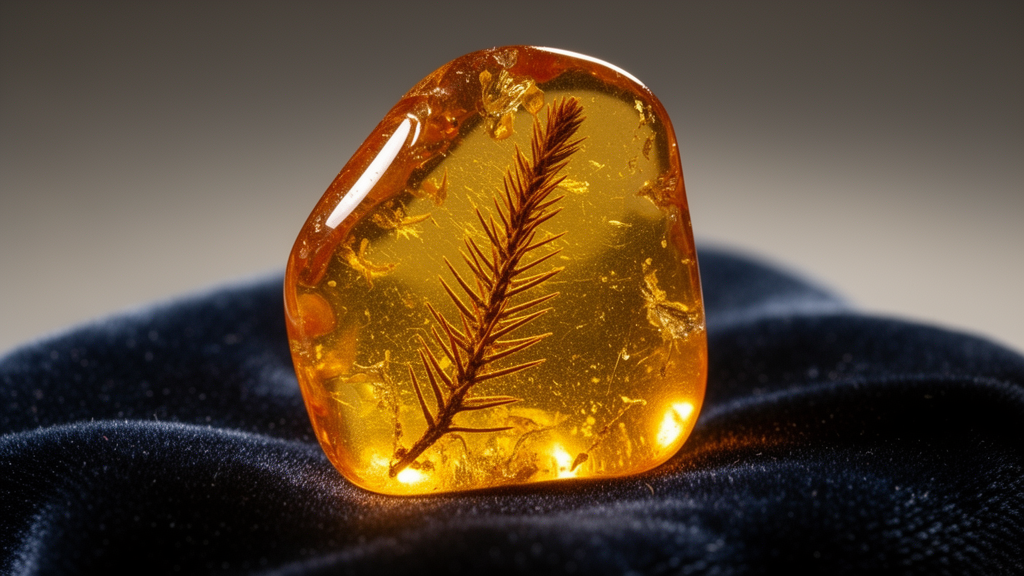
Ancient Spike Moss Trapped in Dominican Amber Fills 20-Million-Year Gap

Ancient Spike Moss Trapped in Dominican Amber Fills 20-Million-Year Gap

65
SHARES
587
VIEWS
Share on FacebookShare on Twitter
ADVERTISEMENT

A morphological study documented a new species of spike moss, Selaginella jorelisiae, preserved in Dominican amber. The authors identify the specimen as the first amber-preserved Selaginella fossil from the Western Hemisphere and the probable first Miocene macrofossil record for the genus. The holotype came from amber-bearing sediments in the Cordillera of the Dominican Republic.

Dominican amber is estimated to be 15–20 million years old, spanning the Early to early Middle Miocene. The researchers excluded preservation in younger copal because the included plant tissue is partly replaced by minerals, probably pyrite. This was a comparative study based on macromorphology.

Investigators manually ground and polished the amber, then examined it with dissecting and compound microscopes. Photographs were assembled from 8 to 34 focal planes. The fossil was described using established terminology and compared with published descriptions and herbarium specimens representing living Selaginella species from the West Indies.

The preserved shoot was once branched, with branches measuring 12 and 8.8 mm. Its vegetative leaves, or trophophylls, were dimorphic. Dorsal trophophylls measured 0.80–0.98 by 0.2–0.32 mm and were ovate and symmetric, with rounded bases, slightly keeled surfaces, aristate tips and minutely serrated margins.

The dorsal leaves had aristae measuring 0.27–0.35 mm, approximately one-third of leaf length, and margins bearing scattered teeth or cilia. Ventral trophophylls measured 1.20–1.45 by 0.45–0.62 mm. They were elliptic, with rounded, slightly asymmetric bases and apiculate tips.

Rhizophores, axillary trophophylls, strobili, spores and the leaf epidermis were not preserved. Despite these limitations, the combination of leaf shape, symmetry, apex form, auricles and the placement of marginal features distinguished the fossil from 10 living Greater Antillean species included in the comparison. Specific differences separated the fossil from S. heterodonta, which has broadly ovate dorsal trophophylls with cilia around the margin, and S. armata, which has broadly ovate, asymmetric ventral trophophylls.

Further distinctions in leaf-base symmetry, apex form and marginal cilia and teeth separated it from S. confusa, S. phiara, S. tenella, S. cordifolia, S. consimilis, S. urquiolae and S. flabellum. Although the fossil lacks reproductive structures, its anisophyllous vegetative shoot placed it within the rhizophoric clade of Selaginella. Its preservation was insufficient for confident assignment to the subgenera Ericetorum, Exaltatae, Gymnogynum, Lepidophyllae or Stachygynandrum.

The shoot also excluded the selaginella clade, whose members have isophyllous shoots, and subgenus Rupestrae, whose members have helically arranged vegetative leaves. Plant, fungal and lichen inclusions in Dominican amber have previously been associated with diverse Miocene Caribbean forest communities, including epiphytic habitats. Terrestrial and epilithic life forms are the most common among Selaginella species, although some species grow on tree trunks or other plants.

On this basis, the authors considered S. jorelisiae most likely a member of the herbaceous layer, potentially growing on cliffs, boulders, soil banks, mossy rocks or leaf litter. They could not exclude an epiphytic occurrence. The single incomplete specimen therefore documents Selaginellaceae in Greater Antillean humid forests during the Miocene, while leaving its subgeneric placement and precise ecological setting unresolved.

Subject of Research: Description and morphological comparison of a Miocene Selaginella fossil from Dominican amber

Article Title: First record of Selaginella from Miocene amber

Article References: López-García, A. G., Schmidt, A. R., Serguera, M., & Regalado, L. (2025). First record of Selaginella from Miocene amber. Fossil Record, 28(1), 57-66. https://doi.org/10.3897/fr.28.138310

Image Credits: AI Generated

DOI: 10.3897/fr.28.138310

Keywords: Selaginella, spike moss, Miocene, Dominican amber, fossil plant, macrofossil, paleobotany, Greater Antilles, morphology, First, record, amber

Cite Scienmag News

Margaret Porter. (October 21, 2026). Morphological study identifies probable first Miocene Selaginella macrofossil in Dominican amber. Scienmag. https://scienmag.com/morphological-study-identifies-probable-first-miocene-selaginella-macrofossil-in-dominican-amber/


Margaret Porter. "Morphological study identifies probable first Miocene Selaginella macrofossil in Dominican amber." Scienmag, 21 October 2026, https://scienmag.com/morphological-study-identifies-probable-first-miocene-selaginella-macrofossil-in-dominican-amber/. Accessed 21 October 2026.

Margaret Porter. "Morphological study identifies probable first Miocene Selaginella macrofossil in Dominican amber." Scienmag. October 21, 2026. https://scienmag.com/morphological-study-identifies-probable-first-miocene-selaginella-macrofossil-in-dominican-amber/

Tags: amberamber fossilization processDominican amberDominican amber plant preservationDominican Republic paleobotanyEarly to Middle Miocene plant fossilsFirstfirst amber-preserved Selaginellafossil plantGreater Antillesmacrofossilmacrofossil record of SelaginellaMioceneMiocene Selaginella fossilmorphologypaleobotanical identification techniquespaleobotanyplant microstructure analysisrecordSelaginellaspike mosstropical biodiversity in Miocenetropical Miocene floratropical plant morphology
Share26Tweet16
Previous Post

400°C cotton-stalk wood vinegar most strongly enhanced pig-manure compost humification

Next Post

Taxonomic review describes two new Episyron species and three new records for China

Related Posts

Two new spider wasps lift China’s Episyron count to eight species
Biology

Taxonomic review describes two new Episyron species and three new records for China

October 21, 2026
400°C cotton-stalk wood vinegar most strongly enhanced pig-manure compost humification
Science News

400°C cotton-stalk wood vinegar most strongly enhanced pig-manure compost humification

October 21, 2026
Case Report Confirms Gastric Leiomyosarcoma in a 4-Year-Old Horse
Science News

Case Report Confirms Gastric Leiomyosarcoma in a 4-Year-Old Horse

October 21, 2026
Research report: Radiative forcing variability and its moderation during a cyclonic event: a case study
Earth Science

Research report: Radiative forcing variability and its moderation during a cyclonic event: a case study

October 21, 2026
Spinal Hsp90 Blockade Boosts Morphine Pain Relief via DUSP15 in CGRP Neurons
Medicine

Mouse study links spinal Hsp90 inhibition to enhanced morphine pain relief through DUSP15 in CGRP neurons

October 21, 2026
Rarest Velvet Worm on Earth Found Alive Again in Jamaican Cave After 50 Years
Biology

Five cave velvet worms observed in Pedro Cave; Swansea records remain probable

October 21, 2026
Next Post
Two new spider wasps lift China’s Episyron count to eight species

Taxonomic review describes two new Episyron species and three new records for China

  • Mothers who receive childcare support from maternal grandparents show more optimized

    Mothers who receive childcare support from maternal grandparents show more parental warmth, finds NTU Singapore study

    27656 shares
    Share 11059 Tweet 6912
  • University of Seville Breaks 120-Year-Old Mystery, Revises a Key Einstein Concept

    1061 shares
    Share 424 Tweet 265
  • Bee body mass, pathogens and local climate influence heat tolerance

    682 shares
    Share 273 Tweet 171
  • Researchers record first-ever images and data of a shark experiencing a boat strike

    546 shares
    Share 218 Tweet 137
  • Groundbreaking Clinical Trial Reveals Lubiprostone Enhances Kidney Function

    531 shares
    Share 212 Tweet 133
Science

Embark on a thrilling journey of discovery with Scienmag.com—your ultimate source for cutting-edge breakthroughs. Immerse yourself in a world where curiosity knows no limits and tomorrow’s possibilities become today’s reality!

RECENT NEWS

  • Taxonomic review describes two new Episyron species and three new records for China
  • Morphological study identifies probable first Miocene Selaginella macrofossil in Dominican amber
  • 400°C cotton-stalk wood vinegar most strongly enhanced pig-manure compost humification
  • Case Report Confirms Gastric Leiomyosarcoma in a 4-Year-Old Horse

Categories

  • Agriculture
  • Anthropology
  • Archaeology
  • Athmospheric
  • Biology
  • Biotechnology
  • Blog
  • Bussines
  • Cancer
  • Chemistry
  • Climate
  • Earth Science
  • Editorial Policy
  • Marine
  • Mathematics
  • Medicine
  • Pediatry
  • Policy
  • Psychology & Psychiatry
  • Science Education
  • Science News
  • Social Science
  • Space
  • Technology and Engineering

Subscribe to Blog via Email

Enter your email address to subscribe to this blog and receive notifications of new posts by email.

Join 5,150 other subscribers

© 2025 Scienmag - Science Magazine

Welcome Back!

Login to your account below

Forgotten Password?

Retrieve your password

Please enter your username or email address to reset your password.

Log In
No Result
View All Result
  • HOME
  • SCIENCE NEWS
  • CONTACT US

© 2025 Scienmag - Science Magazine

Discover more from Science

Subscribe now to keep reading and get access to the full archive.

Continue reading