


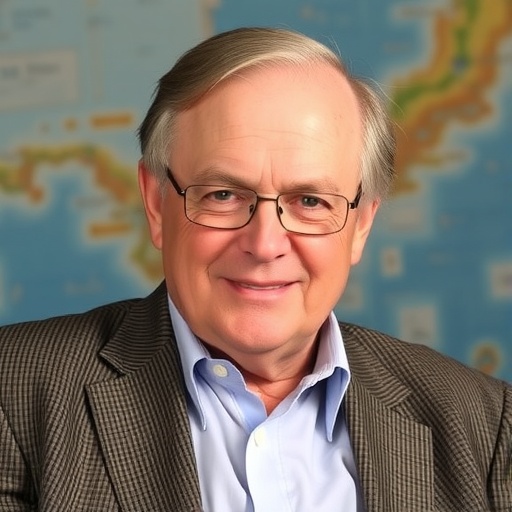
Jim Rogers, the veteran investor known for traveling across continents by motorcycle to study economies firsthand, has offered a warning and a strategy for navigating an increasingly unstable financial world: investors should resist the crowd, investigate the forces shaping markets, and accept that uncertainty cannot be eliminated—only understood and managed.
In an interview published in the KeAi journal Risk Sciences, Rogers examined the challenges created by technological disruption, geopolitical tension, expanding sovereign debt, and the redistribution of economic influence among major and emerging economies. His central argument is rooted in a contrarian investment philosophy, but he emphasized that contrarianism does not mean automatically opposing popular opinion. Instead, it means developing an independent conclusion through evidence, analysis, and direct observation, then having the discipline to maintain that conclusion when public sentiment moves in the opposite direction.
“If you want to be successful, you need to do what other people are not doing,” Rogers said. “If you follow the crowd, you will not be successful no matter what you do. What you have to do is to look out the window and see what you know is going to happen next.” The statement reflects a broader principle in behavioral economics: markets are influenced not only by information, but also by imitation, fear, optimism, and the tendency of investors to assume that recent trends will continue indefinitely. When large numbers of market participants respond to the same expectations, asset prices can become detached from underlying economic conditions, increasing the possibility of sharp corrections.
Rogers argued that independent judgment begins with persistent questioning. Investors, he suggested, should examine how an asset generates value, which economic variables affect its performance, and whether current prices already reflect widespread optimism. This process requires more than reading headlines or reacting to short-term price movements. It involves studying historical patterns, fiscal policies, demographic changes, commodity supplies, technological adoption, and the incentives influencing governments and corporations. Such research cannot guarantee a profitable outcome because financial systems are complex and often shaped by unexpected events, but it can improve the quality of decisions by separating measurable risks from emotional reactions.
One of the most significant risks discussed in the interview is the growth of U.S. government debt. Public debt becomes a financial concern when borrowing expands faster than the economy’s capacity to generate income, particularly if interest costs consume a growing share of government revenue. Higher debt levels can restrict policy choices, increase sensitivity to interest-rate changes, and raise questions about the long-term purchasing power of a currency. Rogers also warned that periods of calm can encourage complacency. When markets rise for an extended period, investors may underestimate the likelihood of disruption and assume that policymakers will always be able to contain crises. Historically, however, debt cycles and financial bubbles have often ended through inflation, recession, currency depreciation, or abrupt repricing across multiple asset classes.
Rogers took a long historical view of China, distinguishing temporary setbacks from the deeper structural forces that have shaped the country’s economic development. He acknowledged that China faces challenges and may make policy mistakes, but emphasized its repeated ability to recover after periods of difficulty. This perspective reflects the importance of examining economies across decades rather than judging them solely through a single business cycle. China’s future performance will depend on factors including productivity, demographic change, technological capacity, domestic consumption, financial stability, and its relationship with global trade. Rogers also pointed to India as a long-term opportunity, particularly because social attitudes toward entrepreneurship and wealth creation are changing. In economic terms, such cultural shifts can influence business formation, capital allocation, innovation, and the willingness of individuals to take productive risks.
The interview also addressed the growing debate over fiat currencies and cryptocurrencies. Fiat money is currency issued by a government that is not directly backed by a physical commodity such as gold. Its value depends largely on confidence in the issuing institution, the stability of the economy, the management of the money supply, and the currency’s usefulness in trade. Rogers expressed skepticism about the long-term resilience of fiat currencies, especially when governments accumulate large debts or expand the money supply aggressively. He remained cautious toward cryptocurrencies, whose prices can be highly volatile and whose regulatory and technological foundations continue to develop. At the same time, he distinguished cryptocurrencies from blockchain, the distributed-record technology that allows transactions or data entries to be verified across a network rather than recorded only by a central authority. Blockchain may have applications in payment systems, supply-chain tracking, identity management, and digital ownership even if individual digital tokens fail to retain value.
In contrast to many newer financial instruments, Rogers said he continues to have confidence in tangible assets such as gold and silver. Precious metals are limited physical resources with established roles in jewelry, industry, central-bank reserves, and portfolio diversification. They do not generate earnings or dividends in the way that a productive company can, but investors often use them as potential stores of value during periods of inflation, currency instability, or declining confidence in financial institutions. Their prices can still fall, sometimes sharply, and ownership does not remove investment risk. Rogers’ preference illustrates a broader debate over whether portfolios should emphasize productive assets, monetary substitutes, or physical commodities when confidence in conventional financial systems is under pressure.
Artificial intelligence was another major focus of the discussion. Rogers recognized that AI could transform industries by automating information processing, identifying patterns in large datasets, generating content, and assisting with scientific and commercial decision-making. Technically, modern AI systems use algorithms trained on large collections of data to estimate relationships, classify information, produce predictions, or generate new outputs. Their effectiveness depends on the quality of training data, the design of the model, computational resources, and the context in which the system is used. Rogers nevertheless warned investors not to enter fields they do not understand simply because they are fashionable. A rapidly expanding technology sector can produce genuine breakthroughs, but it can also attract speculation, inflated valuations, intense competition, and companies whose commercial prospects remain uncertain. “Invest only in what you have knowledge about,” he cautioned, adding that investors must also know when to exit.
The interview presented investing as a discipline that combines economic analysis with emotional control. Preparation can reduce the probability of avoidable mistakes, but it cannot eliminate uncertainty because markets respond to wars, political decisions, natural disasters, scientific discoveries, and changes in collective psychology. Rogers’ approach therefore places particular emphasis on patience, curiosity, and the willingness to admit when an original judgment is wrong. He also described his daughters as his greatest investment, revealing a personal dimension behind his public views on risk and return. The comment suggests that the principles used in financial decision-making—long-term thinking, careful attention, resilience, and responsible stewardship—can extend beyond markets. In an era defined by rapid technological change and shifting global power, Rogers’ message is ultimately less about predicting a single winning asset than about developing the knowledge and independence required to make decisions when certainty is impossible.
Web References: https://doi.org/10.1016/j.risk.2026.100057
References: Risk Sciences, DOI: 10.1016/j.risk.2026.100057
Cite Scienmag News
Courtney Benton. (August 14, 2026). Jim Rogers Urges Independent Thinking and Deep Research Amid Investment Uncertainty. Scienmag. https://scienmag.com/jim-rogers-urges-independent-thinking-and-deep-research-amid-investment-uncertainty/
Courtney Benton. "Jim Rogers Urges Independent Thinking and Deep Research Amid Investment Uncertainty." Scienmag, 14 August 2026, https://scienmag.com/jim-rogers-urges-independent-thinking-and-deep-research-amid-investment-uncertainty/. Accessed 3 September 2026.
Courtney Benton. "Jim Rogers Urges Independent Thinking and Deep Research Amid Investment Uncertainty." Scienmag. August 14, 2026. https://scienmag.com/jim-rogers-urges-independent-thinking-and-deep-research-amid-investment-uncertainty/


