Cell-free DNA (cfDNA) methylation analysis has become one of the most promising avenues for noninvasive disease detection, but a widespread technical flaw has quietly distorted the data behind it. A team at Stanford University now reports a computational framework called JEEPERS that detects and corrects errors introduced by so-called jagged DNA fragment ends, and shows that the fix improves performance across cancer detection, tumor monitoring, cell type deconvolution and epigenetic age estimation. The study, published in Nature Methods, addresses a problem the authors show affects most circulating double-stranded DNA fragments.
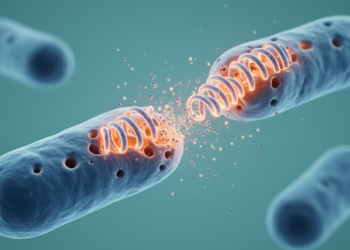
The root of the problem lies in how cfDNA molecules are built. In blood plasma, cfDNA fragments are typically short double-stranded pieces with a modal length of about 167 base pairs, generated by nonrandom chromatin cleavage and often carrying single-stranded overhangs at their 5′ or 3′ termini. During conventional double-stranded library preparation for methylation sequencing, these overhangs must be repaired before adapter ligation: 5′ overhangs are filled in by synthesis templated on the opposing strand, while 3′ overhangs are cleaved off to create blunt ends. Crucially, the cytosines incorporated into the newly synthesized strands are unmethylated, regardless of the native methylation state of the original molecule.
The consequence is systematic. All cytosines, including CpG dinucleotides, in the newly extended strands become completely unmethylated at the 3′ ends, erasing the native methylation status of those regions upon repair and amplification. To quantify how pervasive this is, the researchers performed enzymatic methyl-seq (EM-seq) profiling on cfDNA from three healthy adults, tracking individual double-stranded DNA duplexes with customized duplex adapters. Comparing methylation levels between the two reads of each pair (R1 and R2), they found CpG methylation substantially higher near the 5′ ends of molecules than near the 3′ ends, with the magnitude varying with fragment length.
Using genomic loci that are highly methylated across multiple human tissues, which they termed invariant hypermethylated regions, the team estimated the fraction of jagged fragments at both single- and double-strand levels. On average, about 58% of cfDNA duplexes were affected by jagged ends in at least one strand, while roughly 36% of simplexes carried jagged ends, with average affected jagged lengths of about 74 and 60 bases respectively. Jaggedness also varied with fragment size in a pattern reflecting nucleosome organization: mononucleosome- and dinucleosome-sized fragments showed less jaggedness than other cfDNA species, consistent with partial protection of DNA wrapped around nucleosomes.
The team considered several experimental alternatives before settling on a computational solution. Single-stranded library preparation, enzymatic blunting of jagged ends, and incorporation of methylated cytosines during end repair each introduced their own biases, including skewed fragment size distributions, underestimation of jaggedness prevalence, and globally inflated methylation levels, even at non-CpG sites. Fixed in silico trimming of 10 to 30 bases from the 3′ end reduced terminal bias but left residual strand asymmetry, and because jagged-end lengths vary across molecules, fixed trimming can either undercorrect or discard informative bases.
JEEPERS instead corrects the errors in silico while preserving fragment size distribution, global methylation patterns and nucleosome positioning. The algorithm merges methylation patterns from paired reads at the fragment level and identifies jagged ends by locating the last methylated CpG site near the 3′ end. It operates in two modes: for fragments with duplex support, the intact 5′-end mate provides a molecule-matched reference to correct the jagged-end-affected region of its partner strand; for fragments lacking a duplex mate, JEEPERS uses sibling-supported reference fragments from the same genomic locus, selected by matching methylation patterns across anchor CpGs outside the affected segment. Remarkably, only about 9x sequencing coverage appeared sufficient to reduce methylation differences between read pairs to under 5%, and correction worked comparably in whole-genome bisulfite sequencing data lacking duplex information.
To test accuracy under controlled conditions, the researchers built in silico spike-in experiments. They purified tumor epithelial cells from two non-small cell lung cancer (NSCLC) tumors by fluorescence-activated cell sorting, profiled the genomic DNA methylation, simulated cfDNA-like fragment size distributions, and introduced defined end-repair errors to generate jagged-end-simulated cfDNA, which they then mixed into healthy control cfDNA data across a range of tumor fractions. After JEEPERS correction, methylation profiles were consistently restored toward the original genomic DNA profiles, with post-correction correlations increasing as expected with rising tumor fraction. Accuracy at the checkpoint CpG used for per-fragment correction reached about 95%, and more than 97.5% of fragments had enough similarly methylated reference molecules for reliable correction.
The framework also enabled biological discoveries. Because double-stranded libraries with unique molecular identifiers preserve duplex structure, JEEPERS could profile hemimethylated CpGs, where one strand of the CpG dyad is methylated and the other is not. Comparing tumor and tumor-adjacent normal tissue in eight individuals with NSCLC, the team found tumors harbored significantly higher hemimethylation rates with consistent strand biases. More strikingly, integrating a strand-resolved single-nucleotide variant genotyping pipeline with methylation profiling revealed allele-specific methylation effects: EGFR L858R mutant fragments consistently carried significantly greater methylation than wild-type counterparts, and the mutation, which creates a new CpG dinucleotide, appeared to recruit methylation to nearby CpGs within mutant fragments. The EGFR T790M resistance mutation, which disrupts an existing CpG, showed a complementary pattern, with nearby CpGs gaining methylation in mutant fragments.
In a clinical application, the team profiled cfDNA from 58 individuals with NSCLC using both CAPP-seq for mutations and EM-seq for epigenetic signals. They defined a Jaggedness Correction Rate (JCR), the fraction of fragments corrected by JEEPERS, and its integrated measure across fragment sizes (AUJCR). Later-stage tumors showed higher JCR levels, AUJCR correlated positively with tumor stage, and AUJCR was highly correlated with somatic mutation allele frequency measured by CAPP-seq, supporting its use as a tumor burden proxy, though the authors note it is an aggregate metric that may show higher variance than mutation allele frequency. In one individual with metastatic lung adenocarcinoma followed over 12 months and three therapies, epigenetic jaggedness signals tracked genetic lesion burden throughout treatment, and all serial cfDNA samples remained detectable using JEEPERS-corrected methylated allele fraction at 95% specificity.
Beyond cancer, the correction improved two widely used cfDNA analyses. In cell type deconvolution, double-stranded library preparation without correction produced implausibly high epithelial fractions in healthy cfDNA; after JEEPERS correction, estimated cell type fractions more closely resembled those from single-stranded library methods, with particularly strong gains for rarer cell types. For epigenetic age estimation using the pan-mammalian clock 2 in 39 individuals, end-repair errors degraded correlations between methylation age and chronological age, and JEEPERS correction reproducibly improved those correlations. Applied to published whole-genome bisulfite sequencing data from breast and prostate cancer cohorts, JEEPERS selectively restored methylation at known prostate cancer markers such as PITX2 and GSTP1 in tumor samples while leaving controls largely unchanged. The authors note limitations: JEEPERS detects errors primarily at CpG sites and may underestimate jaggedness in unmethylated regions, effective correction requires moderate sequencing depth above roughly 10x, and for some base substitution classes integrated genotyping may need up to about twice the coverage. The code is publicly available for non-commercial research use.
Subject of Research: A computational method for detecting and correcting jagged-end-induced methylation errors in cell-free DNA sequencing
Article Title: Enhanced cfDNA methylation profiling by detection and correction of jagged ends
Article References: Wang, R., Hamilton, E. G., Almanza, D., Bonilla, R., Sugio, T., Hui, A., Tian, F., Phillips, N. A., Liu, C. L., Yoo, C. H., Alig, S., Rossi, C., Juul, N., Chen, E. L., Liu, K. J., Shen, E. C., Shi, W. Y., Olsen, M., Kang, X., … Alizadeh, A. A. (2026). Enhanced cfDNA methylation profiling by detection and correction of jagged ends. Nature Methods. https://doi.org/10.1038/s41592-026-03278-5
Image Credits: AI Generated
DOI: 10.1038/s41592-026-03278-5
Keywords: cell-free DNA, methylation, JEEPERS, liquid biopsy, cancer detection, tumor monitoring, epigenetic clock, hemimethylation, EGFR, NSCLC, library preparation, genomics
Cite Scienmag News
Juliet Wilcox. (October 29, 2026). JEEPERS Corrects Hidden Methylation Errors in Cell-Free DNA Sequencing. Scienmag. https://scienmag.com/jeepers-corrects-hidden-methylation-errors-in-cell-free-dna-sequencing/
Juliet Wilcox. "JEEPERS Corrects Hidden Methylation Errors in Cell-Free DNA Sequencing." Scienmag, 29 October 2026, https://scienmag.com/jeepers-corrects-hidden-methylation-errors-in-cell-free-dna-sequencing/. Accessed 31 October 2026.
Juliet Wilcox. "JEEPERS Corrects Hidden Methylation Errors in Cell-Free DNA Sequencing." Scienmag. October 29, 2026. https://scienmag.com/jeepers-corrects-hidden-methylation-errors-in-cell-free-dna-sequencing/