


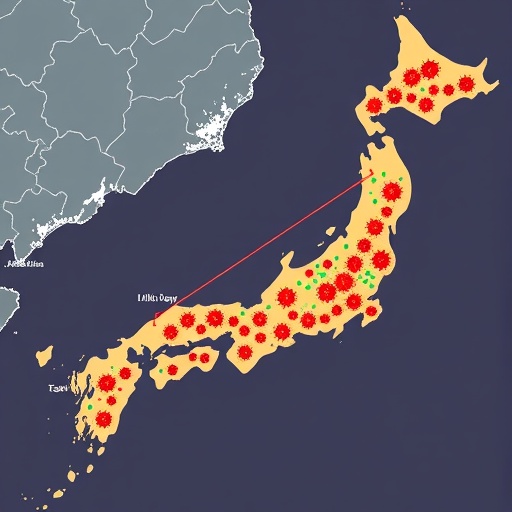
Kawasaki disease incidence in Japan rebounded after COVID-19 pandemic restrictions were relaxed, but the recovery was not uniform across age groups, according to a nationwide cohort study published in JAMA Network Open. The pattern was most pronounced among older children, while rates among infants changed comparatively little. The findings suggest that the environmental and infectious exposures associated with Kawasaki disease may differ substantially during early childhood and later childhood.
Kawasaki disease is an acute inflammatory illness that primarily affects children younger than 5 years. Its characteristic features can include persistent fever, rash, changes in the mouth and lips, inflammation of the eyes, swelling of the hands and feet, and enlarged lymph nodes. The disease is particularly important because inflammation of the medium-sized arteries can lead to coronary artery complications, including coronary artery dilation or aneurysms. Although intravenous immunoglobulin and other treatments have reduced the risk of severe cardiac outcomes, the biological trigger of Kawasaki disease remains unresolved.
The Japanese study examined national patterns of Kawasaki disease over time, comparing the pandemic period with the years before and after COVID-19-related restrictions. During the pandemic, measures such as mask-wearing, school closures, reduced travel, social distancing, and changes in health care access altered the circulation of respiratory and other infectious agents. These interventions were associated with changes in the incidence of several childhood illnesses, providing researchers with a large-scale natural experiment for investigating possible environmental contributors to Kawasaki disease.
The analysis found that Kawasaki disease incidence increased again after restrictions were relaxed. However, the timing and magnitude of this rebound varied according to age. Older children showed a stronger recovery in incidence, whereas infants experienced relatively limited changes. This age-dependent pattern is difficult to explain with a single exposure affecting all children in the same way and instead points toward differences in how children encounter potential triggers, how their immune systems respond, or both.
One possible explanation is that pandemic precautions reduced exposure to microbial or viral stimuli that older children commonly encounter through schools, child-care settings, public transportation, and broader social networks. When those interactions resumed, the resulting increase in exposure may have contributed to the larger rebound observed in this age group. Mask use and reduced crowding could also have delayed exposure to common respiratory pathogens, producing a temporary shift in the age at which children encountered them.
The findings do not establish that a specific virus causes Kawasaki disease. Researchers have long considered infectious agents—including viruses—as possible triggers, but no single pathogen has been consistently identified as the cause. Kawasaki disease may instead arise when genetically or immunologically susceptible children develop an unusually intense inflammatory response after exposure to one of several environmental stimuli. The relevant trigger could vary by age, season, geography, or the composition of circulating microbial communities.
The comparatively stable pattern among infants may offer an important clue. Infants have limited contact with schools and large social groups, and their exposure pathways may be more closely linked to household members, caregivers, indoor environments, or age-specific biological processes. Their developing immune systems also differ from those of older children, potentially influencing both susceptibility and the clinical recognition of disease. If infant cases are generated through different pathways, analyses that combine all pediatric age groups could obscure meaningful biological distinctions.
The study therefore supports an age-stratified approach to Kawasaki disease research. Rather than treating the illness as a single condition with one universal trigger, investigators may need to examine separate exposure networks and immune mechanisms in infants, preschool-aged children, and older children. Such research could include pathogen surveillance, analysis of household and community contacts, characterization of airway and gut microbiomes, and studies of host genetic or immunological susceptibility. Linking these data to precise timelines of infection and environmental change could help clarify why incidence varies so strongly across age groups and seasons.
The authors caution that population-level changes cannot by themselves prove causation. The relaxation of restrictions coincided with changes in health-seeking behavior, diagnostic practices, school attendance, vaccination patterns, and the circulation of many pathogens. These factors may have influenced the number of Kawasaki disease diagnoses independently or in combination. Nevertheless, the nationwide scale and the contrasting age-specific patterns provide evidence that the pandemic period altered the epidemiological landscape in ways that may help reveal hidden features of Kawasaki disease pathogenesis.
For clinicians and public health researchers, the results highlight the importance of monitoring Kawasaki disease across distinct pediatric age groups rather than relying only on overall incidence. Continued surveillance in Japan and other countries may show whether the post-pandemic rebound persists, diminishes, or shifts as patterns of viral circulation and social contact stabilize. Understanding these changes could ultimately improve early recognition of Kawasaki disease and guide research toward the age-specific biological pathways that precede inflammation of the coronary arteries.
Web References: https://doi.org/10.1001/jamanetworkopen.2026.26910
References: Ae R, et al. Nationwide cohort study of Kawasaki disease in Japan. JAMA Network Open. DOI: 10.1001/jamanetworkopen.2026.26910.
Cite Scienmag News
Phoebe Ingram. (August 4, 2026). Japan’s Kawasaki Disease Epidemiology After the COVID-19 Pandemic, 2023–2024. Scienmag. https://scienmag.com/japans-kawasaki-disease-epidemiology-after-the-covid-19-pandemic-2023-2024/
Phoebe Ingram. "Japan’s Kawasaki Disease Epidemiology After the COVID-19 Pandemic, 2023–2024." Scienmag, 4 August 2026, https://scienmag.com/japans-kawasaki-disease-epidemiology-after-the-covid-19-pandemic-2023-2024/. Accessed 4 September 2026.
Phoebe Ingram. "Japan’s Kawasaki Disease Epidemiology After the COVID-19 Pandemic, 2023–2024." Scienmag. August 4, 2026. https://scienmag.com/japans-kawasaki-disease-epidemiology-after-the-covid-19-pandemic-2023-2024/


