


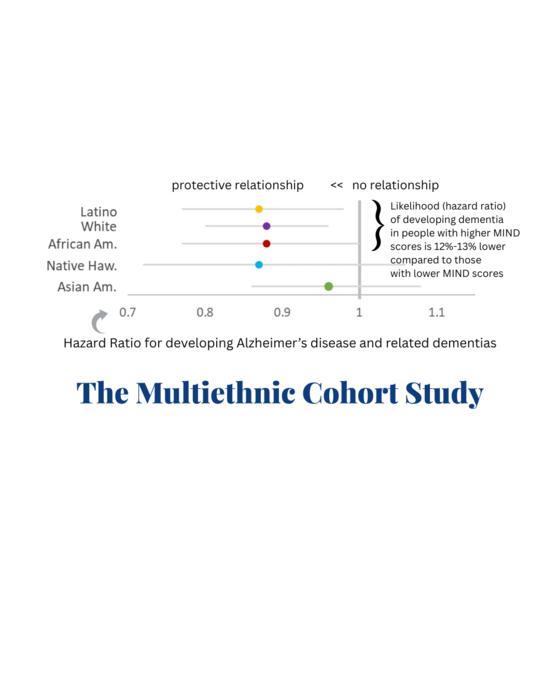
A groundbreaking study presented at the 2025 meeting of the American Society for Nutrition provides compelling evidence that adherence to the MIND diet—a hybrid of the Mediterranean and DASH diets designed to protect brain health—significantly reduces the risk of developing Alzheimer’s disease and related dementias. Utilizing a vast dataset from the Multiethnic Cohort Study, researchers observed a marked decrease in dementia incidence among individuals demonstrating high compliance with this dietary pattern.
The MIND diet, an acronym for Mediterranean-DASH Intervention for Neurodegenerative Delay, strategically integrates principles from two well-established nutrition plans: the Mediterranean diet, renowned for its emphasis on fruits, vegetables, whole grains, nuts, and olive oil, and the DASH diet, originally developed to manage hypertension. What sets the MIND diet apart is its targeted focus on foods rich in neuroprotective compounds, including leafy greens, berries, and nuts—foods that have been shown to mitigate oxidative stress and inflammation, both implicated in neurodegeneration.
More than just an observational footnote, this study stratified results across racial and ethnic groups, revealing a nuanced relationship between diet and dementia risk. Participants who identified as African American, Latino, or White exhibited a notably stronger protective association, with a roughly 13% reduction in dementia risk. Conversely, the diet’s efficacy appeared diminished among Asian American participants and showed only a marginal trend among Native Hawaiians. These findings suggest that cultural dietary patterns and genetic predispositions may modulate the effectiveness of the MIND dietary regimen.
Longitudinal data spanning over a decade elucidated that participants who enhanced their adherence to the MIND diet over time reaped even greater benefits—a compelling 25% reduction in dementia risk compared to those whose dietary habits worsened. This observation points toward the plasticity of brain health in response to lifestyle modifications irrespective of baseline diet quality or age, highlighting that it is never too late to adopt neuroprotective nutritional practices.
Mechanistically, the MIND diet’s neuroprotective effects are hypothesized to stem from its rich antioxidant and anti-inflammatory profile. Key constituents such as flavonoids and polyphenols, abundant in berries and leafy greens, may reduce amyloid-beta aggregation and tau pathology, central hallmarks of Alzheimer’s disease. Additionally, unsaturated fats in nuts and olive oil support neuronal membrane integrity and facilitate synaptic plasticity, crucial for maintaining cognitive function.
This investigation was spearheaded by Dr. Song-Yi Park, PhD, associate professor at the University of Hawaii at Manoa, who emphasized the broader implications of their findings: the study corroborates the potential of mid- to late-life dietary interventions in forestalling cognitive decline. By leveraging extensive epidemiological data from nearly 93,000 U.S. adults aged between 45 and 75 years at baseline, the research offers robust statistical power to delineate diet-dementia linkages across diverse populations.
Importantly, while the type and quantity of brain-healthy foods consumed were critical, the study also accounted for potential confounding factors including socioeconomic status, education, and comorbidities, reinforcing the independent protective role exerted by diet quality. This rigorous adjustment underscores nutrition as a modifiable risk factor that could be targeted universally for dementia prevention.
Despite the encouraging findings, Dr. Park cautioned that the observational nature of the data necessitates further interventional trials to establish causality unequivocally. The researchers also highlighted the need for culturally tailored diet recommendations, recognizing that one-size-fits-all approaches may inadequately address the unique dietary landscapes and genetic susceptibilities encountered within multiethnic populations.
The ethnic disparities uncovered raise intriguing questions about underlying mechanisms: for instance, Asian Americans’ diminished association with the MIND diet might reflect their adherence to alternative dietary customs rich in nutrients yet not captured fully by the MIND scoring system. These differences could embody protective elements distinct from the Mediterranean or DASH paradigms, warranting deeper investigation.
Given the escalating global burden of dementia projected to accompany aging demographics, this study’s implications are profoundly timely. Public health initiatives incorporating evidence-based nutritional guidance, especially those promoting the principles of the MIND diet, could serve as accessible, non-pharmacologic strategies to alleviate the societal impact of neurodegenerative diseases.
The upcoming NUTRITION 2025 conference will provide an important forum for disseminating these findings, fostering dialogue among nutrition scientists, clinicians, and public health experts. The session exploring dietary patterns and global health perspectives promises to catalyze translational efforts aligning nutritional epidemiology with clinical interventions.
In summary, this research fortifies the paradigm that diet is not merely a matter of cardiovascular health or weight management but extends deeply into cognitive longevity and brain resilience. Embracing the MIND diet might represent one of the most practical and impactful avenues to delay or even prevent the onset of Alzheimer’s and its associated dementias, offering hope amidst an aged and diversifying population.
News Publication Date: Not specified (Presented at NUTRITION 2025, May 31–June 3, 2025)
Web References:
Cite Scienmag News
Daisy Hatcher. (June 2, 2025). It’s Never Too Late to Improve Your Brain Health Through Better Nutrition. Scienmag. https://scienmag.com/its-never-too-late-to-improve-your-brain-health-through-better-nutrition/
Daisy Hatcher. "It’s Never Too Late to Improve Your Brain Health Through Better Nutrition." Scienmag, 2 June 2025, https://scienmag.com/its-never-too-late-to-improve-your-brain-health-through-better-nutrition/. Accessed 4 September 2026.
Daisy Hatcher. "It’s Never Too Late to Improve Your Brain Health Through Better Nutrition." Scienmag. June 2, 2025. https://scienmag.com/its-never-too-late-to-improve-your-brain-health-through-better-nutrition/


