

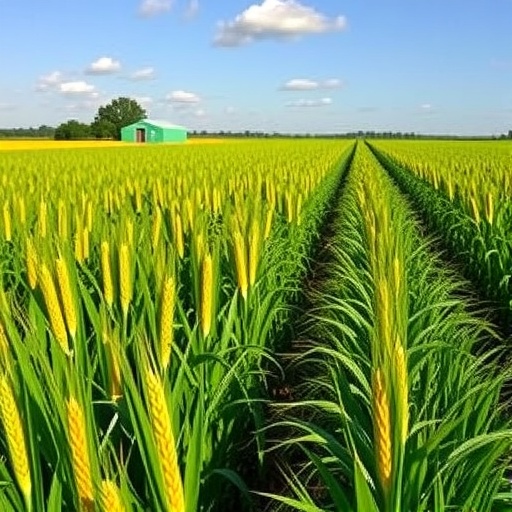
In the realm of agriculture, the intersection of water management and carbon emissions is gaining critical attention, particularly in the context of climate change. A recent study led by researchers including Gava, Cotrim, and Teodoro has shed light on how strategic irrigation practices can not only conserve water but also reduce soil CO₂ emissions in wheat and triticale cultivars. As global temperatures continue to rise, the need for efficient agricultural strategies that align environmental sustainability with crop productivity has never been more pressing.
The study is significant because it addresses two pressing global issues: water scarcity and greenhouse gas emissions. The careful management of water resources in agriculture is necessary to ensure food security. With increasing droughts and shifting precipitation patterns due to climate change, traditional irrigation practices may lead to unsustainable water use. The researchers investigated irrigation strategies that optimize water use while simultaneously reducing the carbon footprint associated with agricultural practices.
In the experimental design, the researchers analyzed different irrigation strategies employed on wheat and triticale cultivars. They meticulously documented soil carbon emissions under varying moisture conditions. What stood out in their findings were the subtle yet impactful differences in CO₂ emissions between conventional irrigation practices and more water-efficient strategies. The data suggests that thoughtful adjustments to irrigation scheduling can lead to significant reductions in soil carbon emissions, thus providing a dual benefit of preserving water and mitigating climate impact.
One of the remarkable aspects of this research is its implications for both environmental conservation and agricultural productivity. Traditional irrigation methods often result in excessive water usage, leading not only to wastage of a precious resource but also to higher carbon emissions from depleted soils. By adopting strategies that align irrigation schedules with plant water needs, farmers can enhance their crop yields while also contributing to a decrease in the overall carbon emissions of their agricultural operations.
The study proposes several irrigation strategies that can lead to these desired outcomes. For example, deficit irrigation, where crops are allowed to experience mild water stress, has been shown to lead to higher root biomass and improve soil structure. This, in turn, enhances the soil’s carbon storage potential. Moreover, employing technologies such as soil moisture sensors to guide irrigation decisions offers a precision farming approach that minimizes both water waste and emissions.
Another facet to consider is the economic aspect of implementing these irrigation strategies. With increased global focus on sustainability, farmers are often faced with the challenge of balancing profitability and ecological responsibility. The adoption of sustainable practices can result in initial costs; however, as the study indicates, long-term benefits, such as lower irrigation costs and potentially increased yields, may offset this initial investment. Consequently, embracing these innovative strategies could serve as a win-win scenario for both farmers and the environment.
The researchers also highlight the significance of local soil characteristics in determining the effectiveness of these irrigation approaches. Soil types can vary significantly even within a small geographic area, influencing how water behaves and how soil microorganisms interact with carbon compounds. This variable underscores the necessity for localized studies and tailored farming strategies that address the needs of diverse agricultural contexts. Consequently, creating regional guidelines based on empirical research could enhance the sustainability efforts in various agricultural settings.
In the face of climate change, the findings of this study also emphasize the urgency for policy makers to support sustainable agricultural practices. The research could inform agricultural policies by providing evidence for water-efficient irrigation as part of broader initiatives aimed at carbon emission reductions. By promoting conservation practices within policy frameworks, governments can effectively encourage practices that not only safeguard water resources but also squarely address the challenge of climate change within agricultural systems.
Furthermore, this research opens avenues for future studies exploring additional crops and varied agricultural settings under similar irrigation frameworks. As wheat and triticale are critical crops for global food systems, extending this research could yield additional insights into varied cultivars that would also benefit from optimized irrigation practices. Moreover, future exploration into the interplay between soil health and carbon emissions could yield more comprehensive strategies for mitigating climate impacts.
As public awareness grows regarding environmental issues, integrating scientific research into mainstream agricultural practice will be imperative. This study serves as a vital reminder of the symbiotic relationship between water management and carbon emissions. The remarkable interplay detailed in the research reveals that through thoughtful agricultural practices, farmers hold a powerful tool in their hands—not just to feed the growing population, but also to cultivate a healthier planet.
In summary, the innovative irrigation strategies proposed in this study could pave the way for a significant shift towards more sustainable agricultural practices, capable of addressing the dual challenges of water scarcity and rising carbon emissions. The ocean of scientific knowledge continues to expand, emphasizing the importance of further research and application of sustainable practices in agriculture.
These insights are a clarion call to farmers, policymakers, and researchers alike, urging a collaborative approach towards achieving agricultural practices that are both productive and environmentally sound. The findings from Gava and his team provide a critical foundation for this endeavor, merging agricultural efficiency with a commitment to a sustainable future.
This research can serve as a blueprint for future innovations in agricultural practices. It calls for immediate exploration and application of these techniques, ensuring that as we advance our farming systems, we do so with a clear vision of harmony between agriculture and the environment in mind.
Subject of Research: Irrigation strategies and their impact on soil CO₂ emissions in wheat and triticale cultivars.
Article Title: Less water and less carbon emission: irrigation strategies reduce soil CO2 emissions in wheat and triticale cultivars.
Article References:
Gava, R., Cotrim, M.F., Teodoro, L.P.R. et al. Less water and less carbon emission: irrigation strategies reduce soil CO2 emissions in wheat and triticale cultivars. Discov Agric 3, 277 (2025). https://doi.org/10.1007/s44279-025-00453-8
Image Credits: AI Generated
DOI: https://doi.org/10.1007/s44279-025-00453-8
Keywords: Irrigation strategies, water conservation, soil emissions, carbon footprint, sustainable agriculture.


