


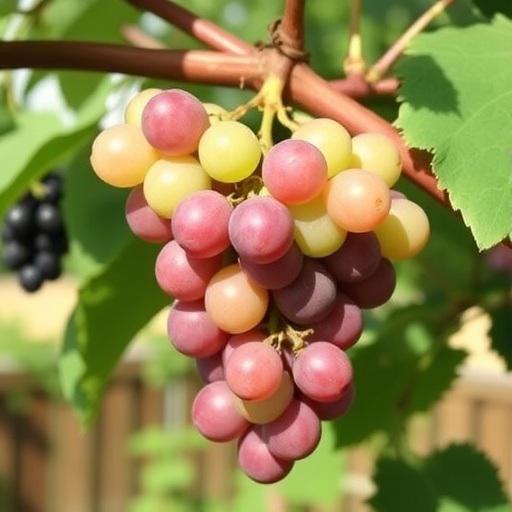
In a groundbreaking stride for horticultural science and viticulture, researchers have developed innovative genetic markers that can accurately predict whether muscadine grapes will be seedless and self-pollinating well before the plants mature. This advancement, spearheaded by Margaret Worthington and colleagues affiliated with the University of Arkansas and esteemed institutions such as Cornell University and the USDA, promises to revolutionize grape breeding programs by significantly shortening the time and reducing the resources traditionally required to develop superior grape cultivars.
At the heart of this achievement lies the utilization of Kompetitive Allele-Specific PCR (KASP) markers, a genotyping technique capable of detecting specific genetic traits with remarkable precision. By analyzing DNA extracted from grapevine leaf samples, breeders can now identify crucial features such as flower sex and stenospermocarpic seedlessness—a form of seedlessness where the fruit develops without viable seeds. The reported accuracy rates are exceptional, with 100 percent correct predictions for flower sex and 99.7 percent for seedlessness, underscoring the robustness of these markers across diverse grape varieties, including hybrids between Vitis vinifera and Muscadinia.
The implications extend far beyond muscadines, a native North American grape species valued for its disease resistance and adaptability. Traditionally, integrating the prized seedlessness and flavor profiles of Vitis vinifera with the resilience of muscadines has been hampered by genetic incompatibilities and fertility barriers. Muscadines belong to a separate subgenus than Vitis vinifera, making crossbreeding akin to interspecies mating that often results in infertile progeny—a botanical parallel to mules arising from horses and donkeys. The capacity to pinpoint seedless, perfect-flowered individuals at the seedling stage circumvents these challenges by allowing breeders to cull unsuitable candidates early, thus concentrating resources on promising crosses.
This research encompasses more than 1,100 plants, combining over 900 Vitis-Muscadinia hybrids from the Arkansas Fruit Breeding Program with around 200 cultivated and wild grape specimens. It is tightly integrated within the VitisGen3 Project and the Vitis-x-Muscadinia initiative, federally funded through the USDA’s Specialty Crop Research Initiative. Such collaboration exemplifies how public research endeavors can drive cutting-edge innovation in agricultural genetics, rendering their tools and data openly accessible to the global grape breeding community.
An integral part of the project was validating these diagnostic markers under both controlled and field conditions. After DNA testing on leaf tissue, predictions were meticulously compared with phenotypic observations on mature vines bearing fruit. This rigorous verification confirmed the markers’ reliability—critical for their deployment in commercial breeding pipelines. Worthington’s team has already incorporated the markers into their selection processes since 2024, allowing for early seedling screening and expediting the breeding cycle.
On a historical note, the quest to combine muscadines with Vitis vinifera stretches back over a century, fueled by the complementary traits each species offers. Muscadines contribute rugged disease resistance and suitability to the American Southeast’s climate, while Vitis vinifera provides superior fruit flavor, consumer desirability, and the valued trait of seedlessness. The development of seedless muscadine cultivars represents a long-sought goal that promises to broaden muscadines’ appeal, especially among fresh fruit consumers and younger demographics.
Much of the complexity in muscadine breeding stems from their dioecious nature: individual plants produce exclusively male or female flowers, necessitating pollen transfer between plants for fertilization. The discovery of “perfect-flowered” muscadines in the mid-20th century—plants capable of self-pollination—formed a crucial breakthrough enabling more reliable fruit set in breeding programs. However, the minute size of muscadine flowers complicates controlled crosses, making it challenging to remove male flower parts and prevent undesired pollination. The application of genetic markers facilitates informed breeding decisions without the labor-intensive crossbreeding traditionally required.
Significant progress in seedless muscadine breeding has already occurred, as evidenced by cultivars like RazzMatazz® and Oh My!®, developed by Gardens Alive! in recent years. Worthington’s program at the Arkansas Agricultural Experiment Station is building on this legacy, advancing seedless germplasm and anticipating commercial release in the near future. Their first two muscadine cultivars, Mighty Fine™ and Altus™, unveiled in 2025, emphasize improved cold hardiness and are tailored for fresh market and winemaking, respectively, although they still contain seeds.
Looking forward, the integration of genetic insights with traditional breeding holds promise for refining traits beyond seedlessness and flower fertility—attributes such as flavor, texture, skin thickness, and yield remain vital targets. By reducing the number of progenies grown to maturity through early molecular screening, breeders can allocate more resources to promising candidates, ultimately accelerating cultivar development. This approach exemplifies a paradigm shift in plant breeding, where molecular tools enable precision selection and enhanced efficiency.
The broader impact of this research is profound, heralding new possibilities for sustainable viticulture, crop improvement, and fruit quality enhancement. Seedless, disease-resistant muscadines adapted to variable climates can invigorate regional economies, diversify markets, and encourage healthier eating patterns. Moreover, the open accessibility of these diagnostic markers empowers grape breeders worldwide, fostering innovation and collaboration in an ever-evolving field.
In conclusion, the convergence of genetic technology and classical breeding embodied in this study embodies the future of agricultural science. By unlocking the genetic secrets of flower sex determination and seedlessness, scientists are delivering tangible tools to address longstanding challenges in grape cultivation. The delivery of this knowledge to practitioners underscores the fertile intersection of research and application, promising a new era of optimized fruit cultivars tailored to consumer needs and environmental resilience.
News Publication Date: March 4, 2026.
Web References:
References:
Margaret Worthington et al., “Diagnostic KASP Markers for Flower Sex and Stenospermocarpic Seedlessness in Diverse Vitis, Muscadinia, and Wide Hybrid Populations,” HortScience, 2026.
Cite Scienmag News
Juliet Wilcox. (April 8, 2026). Genetic Markers Accelerate Development of Seedless Muscadine Grapes. Scienmag. https://scienmag.com/genetic-markers-accelerate-development-of-seedless-muscadine-grapes/
Juliet Wilcox. "Genetic Markers Accelerate Development of Seedless Muscadine Grapes." Scienmag, 8 April 2026, https://scienmag.com/genetic-markers-accelerate-development-of-seedless-muscadine-grapes/. Accessed 4 September 2026.
Juliet Wilcox. "Genetic Markers Accelerate Development of Seedless Muscadine Grapes." Scienmag. April 8, 2026. https://scienmag.com/genetic-markers-accelerate-development-of-seedless-muscadine-grapes/


