


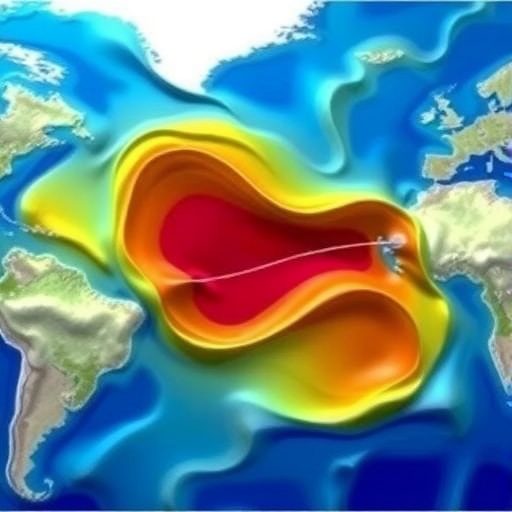
In a groundbreaking study published in Nature Communications, scientists have unveiled a crucial link between iron availability and the size distribution among key mesoplankton groups inhabiting the upper ocean. This discovery sheds light on the intricate interplay between trace metals and marine food webs, with significant implications for ocean ecology and biogeochemical cycling.
Mesoplankton, microscopic organisms drifting in the ocean’s upper layers, serve as a pivotal component in marine ecosystems. These tiny animals, ranging in size from 200 micrometers to several millimeters, form an essential trophic bridge between the smallest plankton and larger predators. Understanding factors that influence their size distribution is vital, as size governs feeding behavior, reproductive capacity, and vulnerability to predation.
The study, led by Dugenne, Corrales-Ugalde, Luo, and colleagues, focused on three major mesoplanktonic groups: copepods, appendicularians, and chaetognaths. Utilizing extensive oceanographic datasets combined with cutting-edge analytical techniques, the team examined the correlation between dissolved iron concentrations and the size structure of these organisms across various oceanic regions.
Iron, a trace metal and a limiting micronutrient in many marine environments, plays a foundational role in regulating primary productivity. However, its influence on higher trophic levels, particularly mesoplankton size composition, had remained poorly understood. This research bridges that knowledge gap by demonstrating that iron availability directly influences the biomass allocation towards different size classes within mesoplankton communities.
Their findings reveal that in iron-rich areas, larger mesoplankton tend to dominate, potentially accelerating carbon transfer up the food chain and enhancing biological carbon sequestration. Conversely, in iron-depleted zones, smaller mesoplankton prevail, which might constrain energy flow efficiency and alter predator-prey dynamics in the ocean’s surface layers.
Mechanistically, iron availability affects phytoplankton growth and composition, altering the nutritional quality and size of primary producers. Such changes cascade through the food web, impacting mesoplankton growth rates and size spectra. The authors suggest that iron limitation not only throttles primary production but also modulates the physical and ecological structure of plankton communities.
This work leverages advanced statistical models and global datasets, demonstrating robust patterns across diverse oceanic regions. It also highlights the importance of accounting for trace metal dynamics when predicting the responses of marine ecosystems to environmental changes, such as ocean warming and acidification.
Understanding how micronutrients like iron govern the size framework of mesoplankton could refine existing biogeochemical models that forecast ocean productivity and carbon cycling. With oceans playing a critical role in regulating Earth’s climate, insights into such foundational ecological processes are pivotal for accurate climate projections.
The revelation of a key biogeochemical control on mesoplankton size structure opens new avenues for marine research, emphasizing the nuanced and interconnected nature of nutrient cycling, plankton ecology, and global climate systems. Future studies will likely explore how variations in iron input—due to natural or anthropogenic factors—may ripple through ocean ecosystems in the coming decades.
Cite Scienmag News
Violet Maxwell. (July 14, 2026). Iron’s Crucial Role in Shaping Major Upper Ocean Mesoplankton Size. Scienmag. https://scienmag.com/irons-crucial-role-in-shaping-major-upper-ocean-mesoplankton-size/
Violet Maxwell. "Iron’s Crucial Role in Shaping Major Upper Ocean Mesoplankton Size." Scienmag, 14 July 2026, https://scienmag.com/irons-crucial-role-in-shaping-major-upper-ocean-mesoplankton-size/. Accessed 3 September 2026.
Violet Maxwell. "Iron’s Crucial Role in Shaping Major Upper Ocean Mesoplankton Size." Scienmag. July 14, 2026. https://scienmag.com/irons-crucial-role-in-shaping-major-upper-ocean-mesoplankton-size/


