


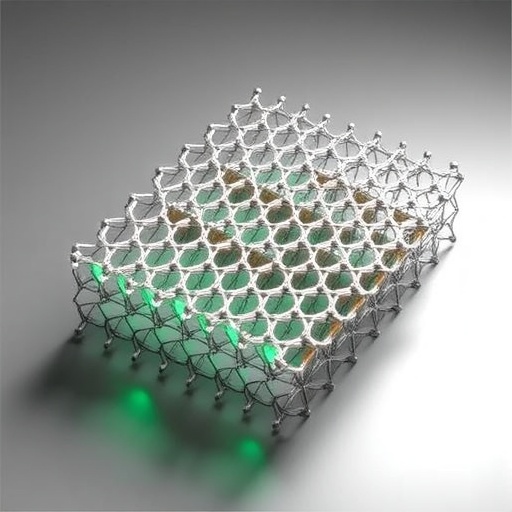
For years, researchers have pursued a tantalizing goal in battery science: making oxygen atoms inside a cathode participate in storing electricity without causing the material to fall apart. A new study now reports a strategy that could bring that goal closer to practical sodium-ion batteries. By using iron ions as chemical “mediators,” scientists have regulated lattice-oxygen redox in a layered oxide cathode, dramatically increasing the reversibility of the process and enabling a sodium-ion pouch cell to reach an energy density of 206 Wh kg⁻¹.
The work, published in Nature Energy, focuses on the layered oxide Na₂/₃Mn₇/₁₂Mg₁/₄Fe₁/₆O₂. This material contains sodium, manganese, magnesium, iron and oxygen arranged in a crystal structure designed to host sodium ions. During battery operation, sodium ions move between the cathode and anode, while electrons travel through the external circuit. Most conventional cathode materials rely primarily on changes in the oxidation state of transition-metal ions to balance this charge transfer. In the new material, however, oxygen within the crystal lattice also becomes an active participant.
This phenomenon, known as lattice-oxygen redox, can substantially increase the amount of charge a cathode stores. Oxygen atoms are normally treated as structural components of an electrode, but under sufficiently deep charging conditions they can lose or gain electronic charge. When oxygen is oxidized, electrons are removed from oxygen-derived states, creating highly reactive electronic configurations that may include oxygen holes, oxygen–oxygen interactions or even the release of oxygen gas. These processes can contribute extra capacity, but they can also trigger irreversible structural changes, voltage loss and rapid performance degradation.
The central innovation in the study is the use of iron ions to control this difficult chemistry. According to the researchers, Fe⁴⁺ ions capture electrons from lattice oxygen during charging. In other words, rather than allowing oxidized oxygen to remain in a highly unstable electronic state, the iron species act as an intermediate reservoir for the electrons removed during the charging reaction. During discharge, Fe²⁺ ions then donate electrons back to the oxidized oxygen through chemical pathways. This iron-mediated exchange helps return oxygen to a more reduced state and closes the redox cycle.
The distinction between an electrochemical and a chemical pathway is important. In a conventional electrode reaction, charge compensation is often described as a direct exchange between the external circuit and the active atoms in the cathode. The researchers’ findings indicate that iron can provide an internal route for transferring electronic charge between transition-metal centers and oxygen. By inserting this mediator into the redox process, the cathode may avoid leaving oxygen trapped in irreversible high-energy configurations after charging.
The result is a major improvement in oxygen-redox reversibility. The study reports that only about 75% of the lattice-oxygen redox process was reversible without the full benefit of iron mediation, whereas the engineered cathode increased that value to 99%. Such a change is critical because the practical value of oxygen redox depends not only on how much charge it can deliver in the first cycle, but also on whether the oxygen chemistry can be repeated without damaging the host structure.
Deep cycling can destabilize layered oxide cathodes in several ways. Oxygen oxidation may weaken metal–oxygen bonds, promote rearrangement of the transition-metal layers and create local structural defects. In some materials, oxygen can escape from the lattice, leaving vacancies that alter ion transport and electronic structure. These changes can cause capacity fade, increased resistance and a gradual decline in the voltage delivered by the battery. A more reversible oxygen-redox reaction could therefore preserve both capacity and structural integrity over repeated charging and discharging.
The choice of sodium-ion technology gives the result broader significance. Sodium is more abundant and geographically widespread than lithium, making sodium-ion batteries attractive for cost-sensitive applications and large-scale energy storage. Yet sodium-ion cathodes must still deliver competitive energy density, especially because sodium ions are heavier than lithium ions and generally require different host structures. Layered oxides offer a potentially high-capacity platform, but their long-term stability has remained a major obstacle. The iron-mediated approach addresses that obstacle while retaining the additional charge available from oxygen redox.
The researchers tested the material in a sodium-ion pouch cell, a format that more closely resembles a practical battery than a small laboratory coin cell. The device achieved an energy density of 206 Wh kg⁻¹ and operated for 100 cycles at a current density of 50 mA g⁻¹, retaining 87.8% of its capacity. These figures do not by themselves establish commercial readiness, since industrial batteries must also meet demanding requirements involving cost, safety, fast charging, lifetime over hundreds or thousands of cycles and performance across a wide range of temperatures. Nevertheless, the results show that carefully designed oxygen chemistry can function in a larger cell architecture rather than remaining only a laboratory curiosity.
The study also points toward a broader design principle for next-generation cathodes: unstable redox reactions may be made useful by giving them a controlled internal partner. Instead of attempting to suppress lattice-oxygen activity entirely, researchers can potentially regulate it through selected transition-metal ions that shuttle electronic charge at the right stages of cycling. In the reported compound, iron performs that role through the Fe⁴⁺/Fe²⁺ states, linking the oxygen sublattice to the metal framework. If the concept can be extended to other compositions and validated over longer operating lifetimes, it could help transform oxygen redox from a source of degradation into a dependable mechanism for increasing battery energy density.
Cite Scienmag News
Faith Mcneil. (August 20, 2026). Iron-driven reversible lattice oxygen redox boosts stable 200 Wh/kg sodium-ion batteries. Scienmag. https://scienmag.com/iron-driven-reversible-lattice-oxygen-redox-boosts-stable-200-wh-kg-sodium-ion-batteries/
Faith Mcneil. "Iron-driven reversible lattice oxygen redox boosts stable 200 Wh/kg sodium-ion batteries." Scienmag, 20 August 2026, https://scienmag.com/iron-driven-reversible-lattice-oxygen-redox-boosts-stable-200-wh-kg-sodium-ion-batteries/. Accessed 3 September 2026.
Faith Mcneil. "Iron-driven reversible lattice oxygen redox boosts stable 200 Wh/kg sodium-ion batteries." Scienmag. August 20, 2026. https://scienmag.com/iron-driven-reversible-lattice-oxygen-redox-boosts-stable-200-wh-kg-sodium-ion-batteries/


