


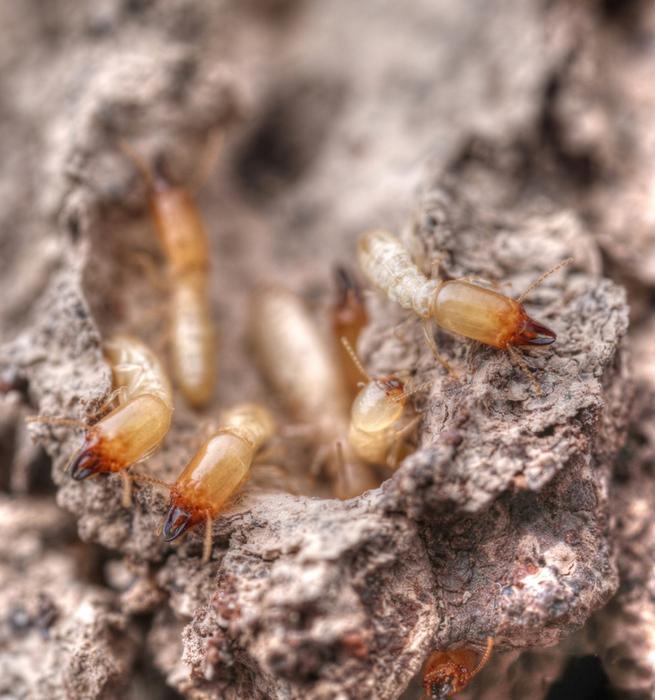
With climate change continuing its relentless march, the world faces not only rising temperatures and extreme weather, but also an insidious threat to our homes: invasive termites. And the bill could be steep – invasive termites currently cost over 40 billion USD annually.

Credit: David Mora –
With climate change continuing its relentless march, the world faces not only rising temperatures and extreme weather, but also an insidious threat to our homes: invasive termites. And the bill could be steep – invasive termites currently cost over 40 billion USD annually.
In a new study published in the open-access journal Neobiota, PhD student Edouard Duquesne and Professor Denis Fournier from the Evolutionary Biology & Ecology lab (Université libre de Bruxelles) unveil the unsettling reality of invasive termites’ potential expansion into new territories.
Their research reveals that as temperatures rise and climate patterns shift, cities worldwide, from tropical hotspots like Miami, Sao Paulo, Lagos, Jakarta or Darwin to temperate metropolises like Paris, Brussels, London, New York or Tokyo, could soon find themselves under siege by these tiny yet destructive pests.
But how do termites, typically associated with tropical climates, find their way into cities far beyond their natural habitat? The answer lies in the interconnectedness of our modern world. Urbanisation, with its dense populations and bustling trade networks, provides the perfect breeding ground for termite invasions.
Moreover, the global movement of goods, including wooden furniture transported by private vessels, offers unsuspecting pathways for these silent invaders to hitch a ride into our homes.
“A solitary termite colony, nestled within a small piece of wood, could clandestinely voyage from the West Indies to your Cannes apartment. It might lurk within furniture aboard a yacht moored at the Cannes Film Festival marina,” say the researchers.
“Mating is coming. Termite queens and kings, attracted by lights, may initiate reproduction, laying the groundwork for new colonies to conquer dry land,” they continue.
Duquesne and Fournier’s research emphasises the need for a paradigm shift in how we approach invasive species modelling. By integrating connectivity variables like trade, transport, and population density, their study highlights the importance of understanding the intricate interactions that facilitate termite spread.
In light of these findings, the researchers urge swift action from policymakers and citizens alike. Major cities, regardless of their climate zone, must implement strict termite control measures to protect homes and infrastructure.
“Citizens can play a crucial role by leveraging technology, such as AI-assisted apps like iNaturalist, to detect and report potential termite sightings, turning ordinary residents into vigilant guardians of their environment,” say the researchers.
“As we confront the challenges of a rapidly changing climate, awareness and proactive measures are our best defence against the creeping menace of invasive termites,” they conclude.
Original source:
Duquesne E, Fournier D (2024) Connectivity and climate change drive the global distribution of highly invasive termites. NeoBiota 92: 281-314.
Journal
NeoBiota
Article Title
Connectivity and climate change drive the global distribution of highly invasive termites
Article Publication Date
30-Apr-2024
Cite Scienmag News
Sloane Callahan. (April 30, 2024). Invasive termites dining in our homes: soon a reality in most cities. Scienmag. https://scienmag.com/invasive-termites-dining-in-our-homes-soon-a-reality-in-most-cities/
Sloane Callahan. "Invasive termites dining in our homes: soon a reality in most cities." Scienmag, 30 April 2024, https://scienmag.com/invasive-termites-dining-in-our-homes-soon-a-reality-in-most-cities/. Accessed 5 September 2026.
Sloane Callahan. "Invasive termites dining in our homes: soon a reality in most cities." Scienmag. April 30, 2024. https://scienmag.com/invasive-termites-dining-in-our-homes-soon-a-reality-in-most-cities/

