


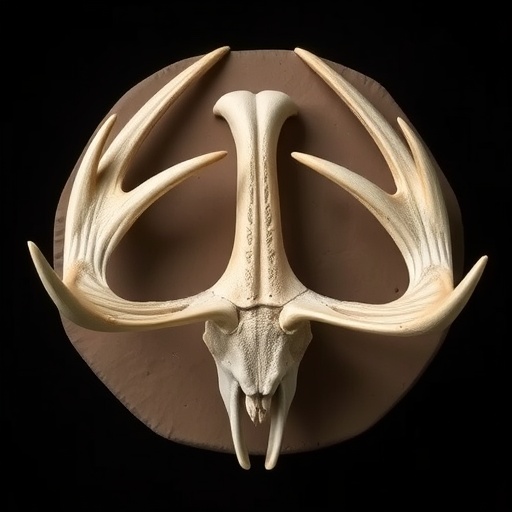
In a significant development in the archaeological sciences, a team of researchers has introduced a novel method for the morphometric identification of deer species based on postcranial bones. The study, led by Valerio Aniceti, Michele Rizzetto, and Francesco Giacalone, focuses on three prominent European deer species: the red deer (Cervus elaphus), the fallow deer (Dama dama), and the roe deer (Capreolus capreolus). This groundbreaking research, detailed in their recent publication in Archaeological and Anthropological Sciences, aims to enhance the accuracy of species identification in archaeological contexts and provide deeper insights into past ecological dynamics.
The primary motivation behind this innovative method, termed “Cervified,” stems from the challenges faced by archaeologists in accurately identifying postcranial bones. Traditional identification techniques often rely on fragmentary remains, which can lead to misidentification due to morphological similarities among species. By employing sophisticated morphometric analyses, the team proposed a more systematic approach that can reduce the instances of error and enhance the robustness of archaeological interpretations.
The researchers meticulously gathered a comprehensive dataset of postcranial measurements from the three deer species. The dataset included a range of skeletal elements, allowing for a thorough comparative analysis that captures subtle morphological differences. These measurements formed the backbone of their morphometric analyses, permitting the identification of species based on both size and shape, critical elements in distinguishing between the closely related deer species.
To implement the Cervified method, the researchers utilized advanced statistical techniques, including multivariate analysis and geometric morphometrics. These approaches enabled them to visualize and quantify variations in bone morphology that might not be apparent through traditional identification methods. The results demonstrated significant enough distinctions between the species, validating the efficacy of their approach and setting a new standard for future research.
One of the standout features of this research is its potential to improve the understanding of past human interactions with these species. By providing a more reliable means of identification, researchers can reconstruct ancient ecosystems with greater accuracy, revealing how humans may have exploited these vital resources. Such insights hold promise for unraveling complex relationships between prehistoric populations and their environments, shedding light on dietary practices, hunting strategies, and even cultural values reflected in the remains.
Moreover, the application of the Cervified method extends beyond theoretical implications. It also holds practical significance for contemporary conservation efforts. As today’s deer populations face increasing pressures from habitat loss and climate change, understanding historical population dynamics can inform current management practices. By recognizing how populations responded to environmental changes in the past, conservationists can develop more effective strategies to ensure the survival of these species in the future.
Furthermore, the study illustrates the interdisciplinary nature of modern archaeological research, where techniques from various scientific fields converge. The integration of geometric morphometrics and advanced statistical analyses showcases how collaborative efforts across disciplines can lead to innovative solutions for complex problems in heritage science. This interdisciplinary approach could inspire future research endeavors aiming to incorporate other species or even different skeletal elements.
The researchers emphasized the need for ongoing refinement and validation of the Cervified method, proposing that further studies are required to expand the dataset and explore additional geographic regions. This endeavor will not only bolster the method’s reliability but also enrich our understanding of regional variations among deer populations across Europe. In doing so, they hope to encourage other researchers in the field to embrace similar approaches, fostering a culture of rigorous, data-driven research in archaeology.
As we navigate the complexities of a rapidly changing world, the tools and methodologies developed by the team serve as a reminder of the importance of historical perspectives in contemporary conservation and ecological management. By recognizing the intricate tapestry of human-deer relationships across millennia, we can gain invaluable insights that have implications for sustainability and biodiversity today.
In conclusion, the Cervified method reflects a remarkable advancement in the field of archaeological science, allowing for more precise morphometric identification of vital species. The implications of this research stretch far beyond academia, resonating with current conservation efforts and shaping our understanding of human interactions with the natural world. As we look to the future, the efforts of Aniceti, Rizzetto, and Giacalone pave the way for a richer, more nuanced approach to studying our collective past, one that deepens our understanding of biodiversity and the intertwined fates of humans and wildlife.
This breakthrough in morphometric identification not only elevates archaeological methodology but also sparks optimism for the future of species conservation, paying homage to the delicate balance that has existed between humans and deer throughout history. As research continues to unfold, the potential for further discoveries promises to enrich both the academic community and conservationists alike, striving towards a better understanding of the ecological legacies we inherit.
As scholars dig deeper into the nuances of this research, the Cervified method may well become a cornerstone technique in the field, guiding future studies aimed at unearthing the intertwining histories of humanity and nature. By illuminating the past’s complexities, researchers hope to build a sustainable future for both our species and the diverse wildlife with whom we share our world.
Cite Scienmag News
Courtney Benton. (January 16, 2026). Introducing Cervified: Identifying Deer Bones in Archaeology. Scienmag. https://scienmag.com/introducing-cervified-identifying-deer-bones-in-archaeology/
Courtney Benton. "Introducing Cervified: Identifying Deer Bones in Archaeology." Scienmag, 16 January 2026, https://scienmag.com/introducing-cervified-identifying-deer-bones-in-archaeology/. Accessed 4 September 2026.
Courtney Benton. "Introducing Cervified: Identifying Deer Bones in Archaeology." Scienmag. January 16, 2026. https://scienmag.com/introducing-cervified-identifying-deer-bones-in-archaeology/


