

Tuesday, October 20, 2026
Science
No Result
View All Result
  • Login
  • HOME
  • SCIENCE NEWS
  • CONTACT US
  • HOME
  • SCIENCE NEWS
  • CONTACT US
No Result
View All Result
Scienmag
No Result
View All Result
Home Science News Medicine

Interprofessional peer teaching linked to higher clinical skills scores in small randomized nursing study

October 20, 2026
in Medicine
Ophelia Keating
By Ophelia Keating Scienmag Editorial Profile - Health Services Research
Reading Time: 2 mins read
0
Nursing Students Taught by Peers and Medics Sharpen Clinical Skills, Study Finds

Nursing Students Taught by Peers and Medics Sharpen Clinical Skills, Study Finds

65
SHARES
587
VIEWS
Share on FacebookShare on Twitter
ADVERTISEMENT

Interprofessional peer teaching was associated with higher clinical skills scores than teacher-centered instruction in a small, single-blind interventional study involving third-semester nursing students. The study abstract reports a mean objective structured clinical examination score of 93.08 ± 3.52 in the interprofessional peer teaching group, compared with 87.60 ± 8.24 in the teacher-centered group, a statistically significant difference (p = 0.005). The two groups did not differ significantly in satisfaction or test anxiety.

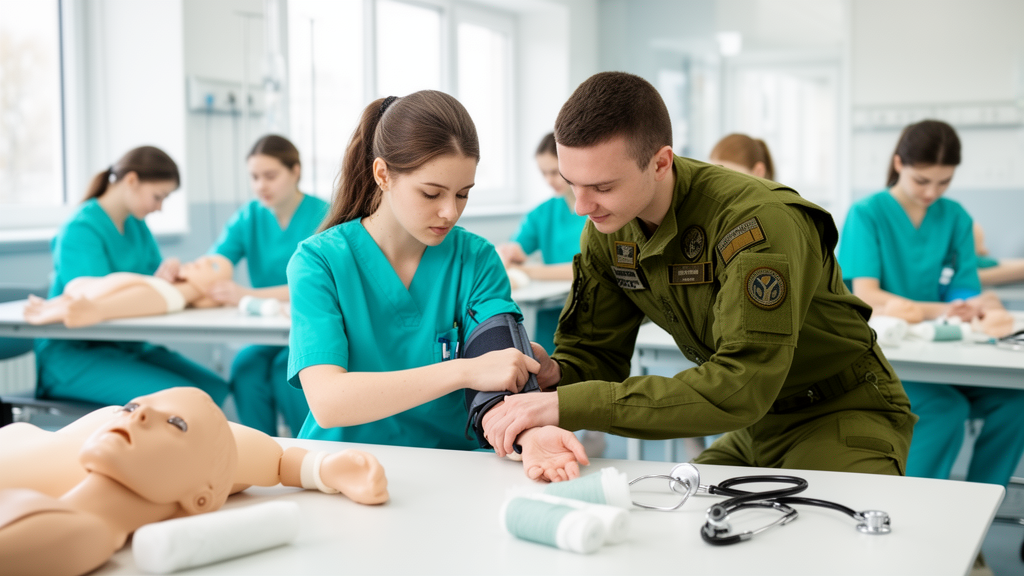
The trial was conducted from September to December 2018 and included 49 third-semester nursing students selected using census sampling. Participants were randomly allocated by computer-generated random sequence to teacher-centered instruction (n = 25) or interprofessional peer teaching (n = 24). The groups were comparable in demographic characteristics. In the teacher-centered condition, instruction was delivered by a faculty member using traditional methods. In the interprofessional condition, a seventh-semester nursing student with the highest OSCE score served as peer mentor, while a medical intern performed a practical ward-related task.

Students completed the Learner Satisfaction Questionnaire and the Friedman Test Anxiety Questionnaire. Mean satisfaction scores were 83.71 ± 17.80 for interprofessional peer teaching and 82.76 ± 10.55 for teacher-centered instruction (p = 0.823). Mean test anxiety scores were 55.33 ± 6.43 and 53.32 ± 6.56, respectively (p = 0.284). The abstract reports that data were analyzed in SPSS version 18 using chi-square tests, Fisher’s exact tests, independent t-tests and repeated-measures tests. Thus, the measured difference was specific to clinical skills scores in this trial; the reported results did not demonstrate a significant between-group difference in either satisfaction or test anxiety.

The findings are based on the published abstract, which does not provide details about baseline OSCE scores, attrition, confidence intervals, the duration of follow-up or the procedures used to maintain single blindness. The sample was also small, comprising 49 students, so the results characterize outcomes in this study population and do not establish that the same effects would occur in other nursing programs or educational settings. The study compared two instructional approaches among nursing students and did not evaluate clinical benefits for patients or clinical practice.

Subject of Research: Comparison of teacher-centered and interprofessional peer teaching for nursing students’ clinical skills, test anxiety and satisfaction

Article Title: Comparison of teacher-centered and interprofessional peer teaching approaches on clinical skills, test anxiety, and satisfaction among nursing students: a single-blind interventional study

Article References: Akbari, A., Shojaei, M., Hosseini, F., & Abolhasani, Y. (2026). Comparison of teacher-centered and interprofessional peer teaching approaches on clinical skills, test anxiety, and satisfaction among nursing students: a single-blind interventional study. BMC Nursing. https://doi.org/10.1186/s12912-026-05353-w

Image Credits: AI Generated

DOI: 10.1186/s12912-026-05353-w

Keywords: nursing education, interprofessional teaching, peer teaching, clinical skills, OSCE, test anxiety, student satisfaction, randomized trial, Comparison, teacher-centered, interprofessional, peer

Cite Scienmag News

Ophelia Keating. (October 20, 2026). Interprofessional peer teaching linked to higher clinical skills scores in small randomized nursing study. Scienmag. https://scienmag.com/interprofessional-peer-teaching-linked-to-higher-clinical-skills-scores-in-small-randomized-nursing-study/


Ophelia Keating. "Interprofessional peer teaching linked to higher clinical skills scores in small randomized nursing study." Scienmag, 20 October 2026, https://scienmag.com/interprofessional-peer-teaching-linked-to-higher-clinical-skills-scores-in-small-randomized-nursing-study/. Accessed 20 October 2026.

Ophelia Keating. "Interprofessional peer teaching linked to higher clinical skills scores in small randomized nursing study." Scienmag. October 20, 2026. https://scienmag.com/interprofessional-peer-teaching-linked-to-higher-clinical-skills-scores-in-small-randomized-nursing-study/

Tags: clinical skillsclinical skills assessment in nursing studentsComparisoneffectiveness of peer teaching in clinical skills developmentimpact of peer mentoring on nursing clinical performanceinnovative teaching methods in nursing educationinterprofessionalinterprofessional collaboration in nursing traininginterprofessional learning in healthcare educationinterprofessional peer teaching in nursing educationinterprofessional teachingNursing educationnursing student satisfaction and test anxietyobjective structured clinical examination (OSCE) scoresOSCEpeerpeer teachingpeer-led vs teacher-centered instructionrandomized controlled study in nursing educationrandomized trialsmall sample nursing researchstudent satisfactionteacher-centeredtest anxiety
Share26Tweet16
Previous Post

Household cluster-randomized trial finds fewer symptom-defined respiratory episodes with study hand sanitizer

Next Post

Laboratory study reports visible-light hydrogen production with WO3/Fe2O3/GO nanocomposite

Related Posts

New Stigma Scale Captures the Hidden Burden Faced by Abuse Survivors in Botswana
Medicine

Known-groups study finds acceptable psychometric properties for an intersectional IPV stigma scale in Botswana

October 20, 2026
Volunteer Health Workers in Bolivia Stay Motivated by Helping Others, Study Finds
Medicine

Mixed-methods study links volunteer community health workers’ motivation in Bolivia to training, support and incentives

October 20, 2026
Health Literacy Shields Cataract Patients From Surgical Fear, Study Finds
Medicine

Health literacy moderates the link between health perception and surgical fear in cataract patients

October 20, 2026
Silent Gut Colonization With Drug-Resistant Bacteria Foreshadows Deadly ICU Infections
Medicine

Retrospective cohort reports frequent subsequent CRE infection after rectal colonization in adult ICU patients

October 20, 2026
Where a Man Lives Can Steal Years From His Life, Landmark State-by-State Map Reveals
Medicine

Study finds substantial state differences in U.S. men’s health across racial and ethnic groups

October 20, 2026
Review maps light-based strategies for reshaping cellular and immune responses
Medicine

Review maps light-based strategies for reshaping cellular and immune responses

October 20, 2026
Next Post
Tungsten, Iron Oxide and Graphene Oxide Team Up to Split Water for Hydrogen

Laboratory study reports visible-light hydrogen production with WO3/Fe2O3/GO nanocomposite

  • Mothers who receive childcare support from maternal grandparents show more optimized

    Mothers who receive childcare support from maternal grandparents show more parental warmth, finds NTU Singapore study

    27656 shares
    Share 11059 Tweet 6912
  • University of Seville Breaks 120-Year-Old Mystery, Revises a Key Einstein Concept

    1061 shares
    Share 424 Tweet 265
  • Bee body mass, pathogens and local climate influence heat tolerance

    682 shares
    Share 273 Tweet 171
  • Researchers record first-ever images and data of a shark experiencing a boat strike

    546 shares
    Share 218 Tweet 137
  • Groundbreaking Clinical Trial Reveals Lubiprostone Enhances Kidney Function

    531 shares
    Share 212 Tweet 133
Science

Embark on a thrilling journey of discovery with Scienmag.com—your ultimate source for cutting-edge breakthroughs. Immerse yourself in a world where curiosity knows no limits and tomorrow’s possibilities become today’s reality!

RECENT NEWS

  • Known-groups study finds acceptable psychometric properties for an intersectional IPV stigma scale in Botswana
  • Mixed-methods study links volunteer community health workers’ motivation in Bolivia to training, support and incentives
  • Laboratory study reports visible-light hydrogen production with WO3/Fe2O3/GO nanocomposite
  • Interprofessional peer teaching linked to higher clinical skills scores in small randomized nursing study

Categories

  • Agriculture
  • Anthropology
  • Archaeology
  • Athmospheric
  • Biology
  • Biotechnology
  • Blog
  • Bussines
  • Cancer
  • Chemistry
  • Climate
  • Earth Science
  • Editorial Policy
  • Marine
  • Mathematics
  • Medicine
  • Pediatry
  • Policy
  • Psychology & Psychiatry
  • Science Education
  • Science News
  • Social Science
  • Space
  • Technology and Engineering

Subscribe to Blog via Email

Enter your email address to subscribe to this blog and receive notifications of new posts by email.

Join 5,150 other subscribers

© 2025 Scienmag - Science Magazine

Welcome Back!

Login to your account below

Forgotten Password?

Retrieve your password

Please enter your username or email address to reset your password.

Log In
No Result
View All Result
  • HOME
  • SCIENCE NEWS
  • CONTACT US

© 2025 Scienmag - Science Magazine

Discover more from Science

Subscribe now to keep reading and get access to the full archive.

Continue reading