


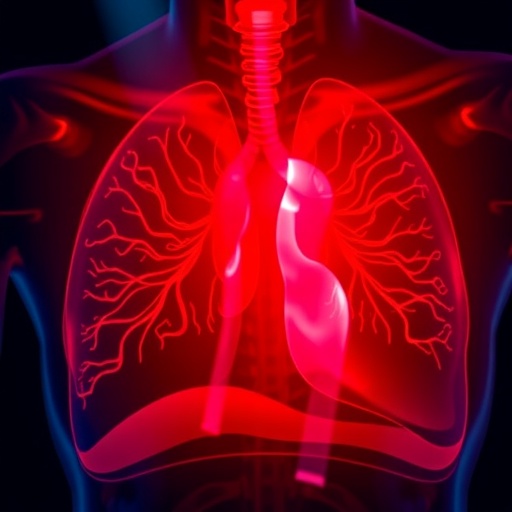
In a groundbreaking advancement poised to revolutionize neonatal care, a research team has unveiled a novel approach to predicting the severity of bronchopulmonary dysplasia (BPD) among extremely low gestational age newborns (ELGANs). Published in Pediatric Research, this study introduces intermittent hypoxemia (IH) metrics as pivotal biomarkers to enhance the precision of BPD severity predictions. These insights promise to unlock new paradigms in neonatal respiratory management, with potential ripple effects on long-term outcomes in a highly vulnerable population.
Bronchopulmonary dysplasia, a chronic lung disease predominantly affecting premature infants, has remained a persistent challenge due to its complex etiology and unpredictable clinical course. Traditional predictive models, while informative, have often lacked the granularity to account for fluctuating oxygenation episodes, especially intermittent hypoxemia events characterized by transient drops in blood oxygen levels. These events, as the study elucidates, bear a significant, previously underappreciated relationship with lung injury progression in ELGANs.
The researchers embarked on a meticulous investigation that integrated continuous oxygen saturation monitoring with longitudinal assessments of respiratory outcomes. By quantifying the frequency, duration, and severity of IH episodes, they crafted refined metrics that more accurately mirrored the physiological stress experienced by immature pulmonary systems. This data not only amplified predictive accuracy but also illuminated pathophysiological mechanisms underpinning BPD development.
Central to the study was the realization that intermittent hypoxemia is not merely a byproduct of immature lung function but a potent contributor to ongoing pulmonary inflammation and vascular remodeling. The oscillating hypoxic episodes instigate oxidative stress pathways that exacerbate tissue injury, culminating in the fibrotic and vascular abnormalities emblematic of severe BPD. By capturing these dynamics quantitatively, clinicians are now equipped with a more nuanced tool to gauge disease trajectory.
The implications of incorporating IH metrics into clinical practice are profound. Early and precise identification of infants at elevated risk for severe BPD could enable tailored interventions—ranging from optimized ventilatory strategies to novel pharmacologic regimens aimed at mitigating hypoxic insult. Consequently, this precision forecasting promises not only improved survival but also enhanced quality of life by reducing the burden of chronic respiratory morbidity.
Moreover, the methodological framework employed sets a precedent for future neonatal research. Harnessing high-resolution physiological monitoring data and applying sophisticated analytic techniques, such as time-series analysis and machine learning algorithms, exemplifies the cutting-edge intersection of technology and medicine. This integrative approach facilitates dynamic risk stratification beyond static demographic or laboratory variables.
The study also prompts a reevaluation of current oxygen saturation targets in neonatal intensive care units. By demonstrating that recurrent intermittent hypoxemia episodes serve as critical indicators of adverse pulmonary outcomes, it compels a balance between avoiding hyperoxia-related toxicity and minimizing hypoxemia-related injury. This delicate equilibrium underscores the complexity inherent in neonatal respiratory management and the necessity for individualized therapeutic protocols.
Importantly, the research sample comprised ELGANs, a demographic particularly susceptible to BPD due to their extreme prematurity and underdeveloped lungs. By focusing on this high-risk subgroup, the study ensures that findings are highly relevant to those infants most in need of early intervention. This targeted approach enhances the translational potential of the study’s conclusions within neonatal intensive care environments.
Beyond respiratory outcomes, intermittent hypoxemia has been implicated in neurodevelopmental impairment, another devastating complication in ELGANs. While this study centers on pulmonary predictions, its findings may catalyze broader investigations into IH’s systemic effects, potentially informing holistic care strategies that address both pulmonary and neurological vulnerabilities.
The research adheres to rigorous ethical standards and employs advanced statistical modeling to validate the robustness of IH metrics. Prospective validation cohorts and multi-center collaborations are anticipated in subsequent studies to generalize these findings and facilitate widespread clinical adoption. Such endeavors reflect a commitment to evidence-based advancements that transcend institutional confines.
Given the rapid pace of technological innovation in neonatal monitoring, future iterations of IH metric integration could be seamlessly embedded into bedside monitors, providing continuous real-time risk assessments. This evolution would empower clinicians with immediate, actionable insights, fostering proactive rather than reactive care paradigms. The envisioned future of neonatal respiratory care is thus one of heightened vigilance and precision.
Clinicians and researchers alike have lauded this paradigmatic shift as a beacon of hope in the fraught landscape of premature infant care. By marrying physiological insight with technological prowess, the study delineates a clear roadmap towards mitigating the morbidity associated with BPD—a condition historically marked by therapeutic challenges and unpredictable outcomes.
Interdisciplinary synergy was pivotal throughout the research, melding neonatology, pulmonology, bioinformatics, and biomedical engineering. This collaborative spirit exemplifies the modern scientific ethos required to tackle multifaceted clinical problems, illustrating how cross-disciplinary efforts yield impactful solutions that single-discipline approaches may overlook.
In conclusion, the integration of intermittent hypoxemia metrics into predictive models for bronchopulmonary dysplasia severity signifies a watershed moment in neonatal medicine. By affording a deeper understanding of the underpinnings of lung injury in ELGANs, this study equips care providers with sophisticated tools to enhance early diagnosis, personalize treatment approaches, and ultimately improve neonatal outcomes on a substantial scale.
Cite Scienmag News
Harold Sullivan. (April 30, 2026). Intermittent Hypoxemia Improves BPD Severity Prediction. Scienmag. https://scienmag.com/intermittent-hypoxemia-improves-bpd-severity-prediction/
Harold Sullivan. "Intermittent Hypoxemia Improves BPD Severity Prediction." Scienmag, 30 April 2026, https://scienmag.com/intermittent-hypoxemia-improves-bpd-severity-prediction/. Accessed 5 September 2026.
Harold Sullivan. "Intermittent Hypoxemia Improves BPD Severity Prediction." Scienmag. April 30, 2026. https://scienmag.com/intermittent-hypoxemia-improves-bpd-severity-prediction/


