


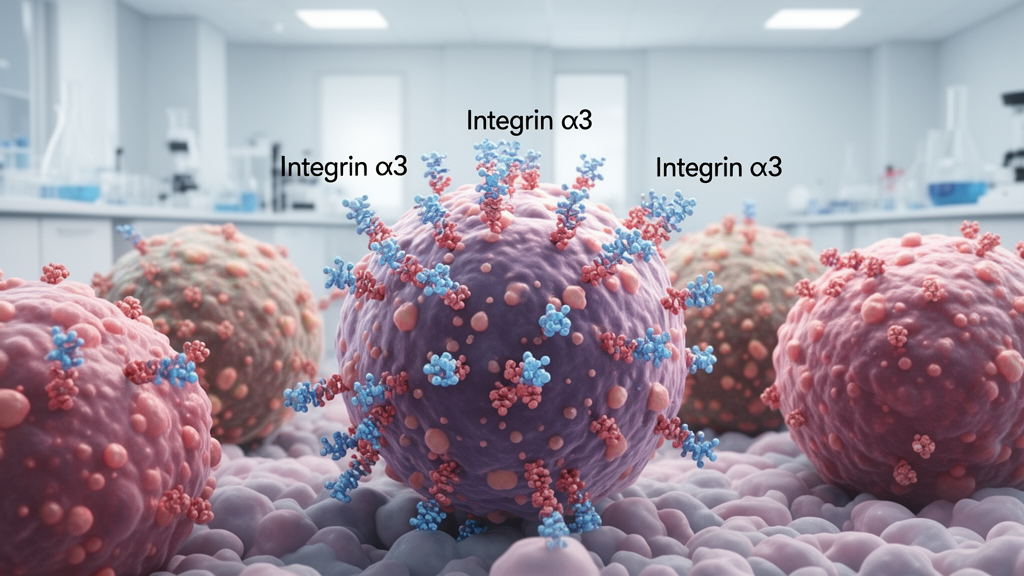
Elevated expression of the cell-surface protein integrin α3 (ITGA3) is associated with breast cancer recurrence and poorer clinical outcomes, according to a study published in Cancer Pathogenesis and Therapy that evaluated the molecule across the disease’s major molecular subtypes. The findings position ITGA3 as a potential prognostic biomarker and a candidate therapeutic target, while also tempering expectations about its usefulness for predicting response to existing targeted drugs.
Integrin α3 pairs with integrin β1 to form a heterodimeric receptor, and it has previously been identified as a possible biomarker and therapeutic target in several epithelial malignancies. Its clinical relevance in breast cancer, however, had remained incompletely characterized. To address this gap, the research team measured ITGA3 protein levels in archival breast cancer specimens using immunohistochemistry on tissue microarrays comprising 148 samples and on 21 whole-tissue sections. Complete clinicopathologic and outcome data were available for 108 patients, spanning hormone receptor-positive/HER2-negative tumors, HER2-positive tumors, and triple-negative breast cancer.
ITGA3 expression, quantified using H-scores, was detected in 85.2% of the breast cancer specimens analyzed. Protein levels were significantly higher in hormone receptor-positive/HER2-negative and HER2-positive tumors than in triple-negative breast cancer, a difference that reached statistical significance at p < 0.0050. When the researchers correlated expression levels with survival, high ITGA3 expression was associated with shorter recurrence-free survival, with p < 0.0001.
The prognostic signal extended beyond the local immunohistochemistry cohort. In an independent transcriptomic analysis of the Molecular Taxonomy of Breast Cancer International Consortium (METABRIC) cohort, tumors with ITGA3 alterations showed significantly worse relapse-free survival (p < 0.0001) and overall survival (p < 0.0500). A parallel analysis of The Cancer Genome Atlas Breast Invasive Carcinoma (TCGA-BRCA) cohort was used to evaluate ITGA3 mRNA expression, co-expressed signaling pathways, and associations with therapeutic response.
Transcriptomic profiling revealed that ITGA3 co-expressed with estrogen receptor 1 (ESR1), the erb-b2 receptor tyrosine kinase 2 (ERBB2) gene, and luminal markers. The investigators also observed enrichment of estrogen receptor signaling and of the phosphoinositide 3-kinase–protein kinase B–mechanistic target of rapamycin (PI3K/AKT/mTOR) pathway among tumors expressing ITGA3, suggesting that the integrin’s clinical behavior may be linked to these well-established breast cancer signaling axes.
Notably, ITGA3 expression was not predictive of response to tamoxifen or trastuzumab, the standard endocrine and HER2-directed therapies. This means that although ITGA3 marks a group of patients with higher recurrence risk, the study did not find evidence that measuring it could guide decisions about these two specific treatments.
The authors conclude that elevated ITGA3 expression is associated with breast cancer recurrence and poor clinical outcomes, supporting its potential role as a prognostic biomarker and candidate therapeutic target. Because the study was observational, measuring expression and correlating it with outcomes rather than testing ITGA3-directed interventions, further work would be needed to determine whether targeting the integrin therapeutically can alter the course of the disease.
Subject of Research: ITGA3 expression as a prognostic biomarker across breast cancer molecular subtypes
Article Title: Integrin α3 (ITGA3) expression across breast cancer subtypes: Prognosis and therapeutic relevance
Article References: Integrin α3 (ITGA3) expression across breast cancer subtypes: Prognosis and therapeutic relevance. Original publication (Bibliographic details unavailable.)
Image Credits: AI Generated
DOI: Not provided
Keywords: breast cancer, ITGA3, integrin α3, prognosis, biomarker, triple-negative breast cancer, HER2-positive, METABRIC, TCGA-BRCA, recurrence-free survival, immunohistochemistry, Integrin
Cite Scienmag News
Nathaniel Bowman. (October 25, 2026). Integrin α3 emerges as prognostic marker across breast cancer subtypes. Scienmag. https://scienmag.com/integrin-%ce%b13-emerges-as-prognostic-marker-across-breast-cancer-subtypes/
Nathaniel Bowman. "Integrin α3 emerges as prognostic marker across breast cancer subtypes." Scienmag, 25 October 2026, https://scienmag.com/integrin-%ce%b13-emerges-as-prognostic-marker-across-breast-cancer-subtypes/. Accessed 25 October 2026.
Nathaniel Bowman. "Integrin α3 emerges as prognostic marker across breast cancer subtypes." Scienmag. October 25, 2026. https://scienmag.com/integrin-%ce%b13-emerges-as-prognostic-marker-across-breast-cancer-subtypes/


