

Sunday, October 25, 2026
Science
No Result
View All Result
  • Login
  • HOME
  • SCIENCE NEWS
  • CONTACT US
  • HOME
  • SCIENCE NEWS
  • CONTACT US
No Result
View All Result
Scienmag
No Result
View All Result
Home Science News Social Science

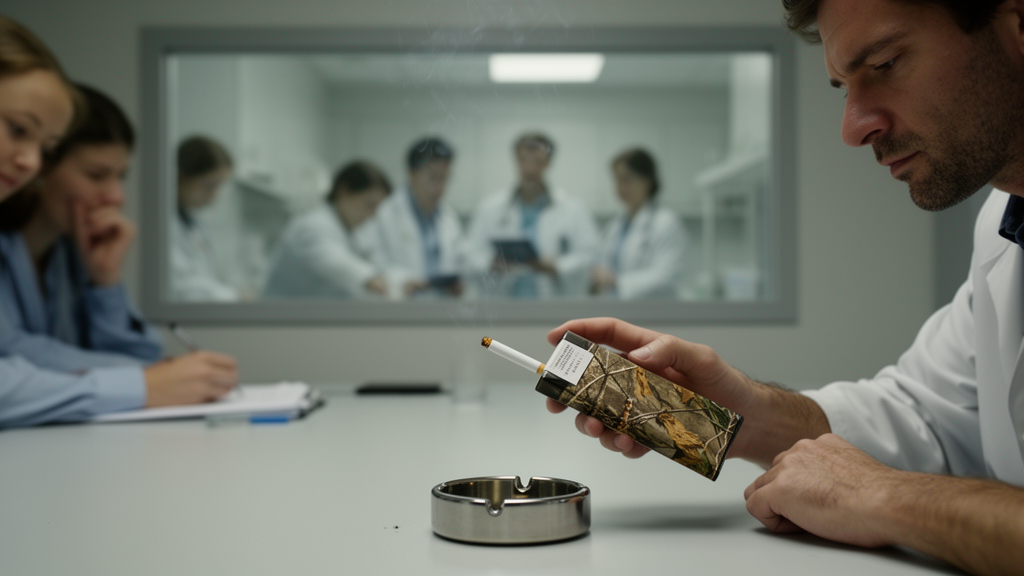
Experiments link Mimicry With More Smoking and Lower Quitting Intention

October 25, 2026
in Social Science
Glenn Wilkins
By Glenn Wilkins Scienmag Editorial Profile - Clinical Psychology
Reading Time: 3 mins read
0
Experiments link Mimicry With More Smoking and Lower Quitting Intention

Experiments link Mimicry With More Smoking and Lower Quitting Intention

65
SHARES
587
VIEWS
Share on FacebookShare on Twitter
ADVERTISEMENT

Adults whose movements were mimicked during a brief interview later smoked an average of 2.5 cigarettes—about twice the amount of participants whose gestures were not copied—in the first of two experiments testing whether social mimicry can sustain smoking behavior. In a second experiment, synchronized smoking reduced stated willingness to quit within five years from 8.80 to 2.65 on a 10-point scale, according to the researchers at SWPS University. The peer-reviewed study was published in the International Journal of Psychology.

The laboratory experiment involved 40 adults who were briefly interviewed about their health-related lifestyles. During interviews with some participants, the experimenter discreetly mimicked the participant’s movements; the control group received no such mimicry. Participants were subsequently invited to a smoking area. Those whose movements had been copied consumed an average of 2.5 cigarettes, twice as many as controls, and also reported greater liking for the experimenter. The findings are consistent with the researchers’ “social glue” hypothesis, which proposes that copying another person’s behavior can strengthen interpersonal connection. The study was experimental and the reported outcomes were immediate, but the small laboratory sample does not establish how long any effect would last or whether it would generalize to other settings.

The researchers subsequently conducted a field experiment involving 120 participants in smoking areas of Warsaw clubs and pubs. Participants were randomly divided among three conditions. In the control condition, the experimenter did not smoke. In the synchronized-mimicry condition, the experimenter took a puff shortly after the participant and exhaled smoke in the same direction. In a third condition, the experimenter also smoked, but did not synchronize the behavior with the participant. The contrast between synchronized and unsynchronized smoking was observed in this field experiment, allowing the researchers to test mimicry rather than only the presence of another smoker.

After a short lifestyle interview and questionnaire, participants rated their willingness to consider quitting within the next five years on a 10-point scale. The mean score was 2.65 in the synchronized-mimicry condition, compared with 8.80 in the non-smoking control group, while unsynchronized smoking did not produce the same reduction. Participants exposed to synchronized smoking also showed greater stated willingness to consider switching from conventional cigarettes to e-cigarettes, with the corresponding mean score increasing from 2.65 to 8.32. This apparent increase in interest in switching did not indicate greater willingness to stop smoking altogether. Because the field results were based on questionnaire responses, they measured stated intentions rather than verified smoking reduction, long-term abstinence or changes in nicotine dependence.

Based on the findings, the researchers proposed that anti-smoking campaigns and addiction-treatment strategies could take social mimicry into account. They suggested that transforming communal smoking areas into single-person spaces could reduce contact among smokers, potentially weakening the behavioral synchronization that perpetuates the habit. They also argued that educating smokers about mimicry could complement psychological, social and environmental approaches to tobacco addiction. These were proposed applications rather than interventions directly tested in the two experiments. The authors declared no conflicts of interest.

Subject of Research: Experimental evidence on social mimicry, cigarette consumption and intentions to quit smoking.

Article Title: Mimicry connects smokers and makes quitting difficult

Article References: Mimicry connects smokers and makes quitting difficult. Original publication (Bibliographic details unavailable.)

Image Credits: AI Generated

DOI: Not provided

Keywords: social mimicry, smoking behavior, tobacco addiction, cessation intentions, field experiment, laboratory experiment, social influence, e-cigarettes, smoking areas, public health, Mimicry, connects

Cite Scienmag News

Glenn Wilkins. (October 25, 2026). Experiments link Mimicry With More Smoking and Lower Quitting Intention. Scienmag. https://scienmag.com/experiments-link-mimicry-with-more-smoking-and-lower-quitting-intention/

Glenn Wilkins. "Experiments link Mimicry With More Smoking and Lower Quitting Intention." Scienmag, 25 October 2026, https://scienmag.com/experiments-link-mimicry-with-more-smoking-and-lower-quitting-intention/. Accessed 25 October 2026.

Glenn Wilkins. "Experiments link Mimicry With More Smoking and Lower Quitting Intention." Scienmag. October 25, 2026. https://scienmag.com/experiments-link-mimicry-with-more-smoking-and-lower-quitting-intention/


Tags: cessation intentionsconnectse-cigaretteseffects of synchronized behavior on health decisionsexperimental psychology on smoking addictionfield experimentimpact of imitation on smoking cessationimplications for smoking cessation interventionsinfluence of nonverbal communication on health habitslaboratory experimentlaboratory studies on mimicry and substance usemimicrymimicry and interpersonal connectionpeer influence on smoking intentionspsychological factors in smoking maintenancePublic healthsmoking areassmoking behaviorsocial bonding and health risk behaviorssocial influencesocial mimicrysocial mimicry and smoking behaviorsocial psychology of habit formationtobacco addiction
Share26Tweet16
Previous Post

Research report: Methicillin-resistant Staphylococcus aureus (MRSA): a systematic review and meta-analysis of prevalence and antibiotic resistance patterns in clinical isolates at health-care settings of South Asia

Next Post

Peppermint oil alters gut microbes and gas production in vitro

Related Posts

Regional STEM teacher program shows promise, but resources and time remain hurdles
Social Science

Regional STEM teacher program shows promise, but resources and time remain hurdles

October 25, 2026
Updated childhood bed-wetting guidance favors diagnosis, monitoring and tailored treatment
Social Science

Updated childhood bed-wetting guidance favors diagnosis, monitoring and tailored treatment

October 25, 2026
Growth turns green after a threshold in OECD economies, 33-year panel study finds
Social Science

Growth turns green after a threshold in OECD economies, 33-year panel study finds

October 25, 2026
Victorian survey links injury barriers to unequal social sport participation
Social Science

Victorian survey links injury barriers to unequal social sport participation

October 25, 2026
Weekly model links volatility across four cryptocurrencies and five stock markets
Social Science

Weekly model links volatility across four cryptocurrencies and five stock markets

October 25, 2026
Social media trial tests parental strategies against teen vaping
Social Science

Social media trial tests parental strategies against teen vaping

October 25, 2026
Next Post
Peppermint oil alters gut microbes and gas production in vitro

Peppermint oil alters gut microbes and gas production in vitro

  • Mothers who receive childcare support from maternal grandparents show more optimized

    Mothers who receive childcare support from maternal grandparents show more parental warmth, finds NTU Singapore study

    27656 shares
    Share 11059 Tweet 6912
  • University of Seville Breaks 120-Year-Old Mystery, Revises a Key Einstein Concept

    1061 shares
    Share 424 Tweet 265
  • Bee body mass, pathogens and local climate influence heat tolerance

    682 shares
    Share 273 Tweet 171
  • Researchers record first-ever images and data of a shark experiencing a boat strike

    546 shares
    Share 218 Tweet 137
  • Groundbreaking Clinical Trial Reveals Lubiprostone Enhances Kidney Function

    531 shares
    Share 212 Tweet 133
Science

Embark on a thrilling journey of discovery with Scienmag.com—your ultimate source for cutting-edge breakthroughs. Immerse yourself in a world where curiosity knows no limits and tomorrow’s possibilities become today’s reality!

RECENT NEWS

  • Double-layer curtain canopies shield Syrah grapes from extreme desert heat and lift wine quality
  • Peppermint oil alters gut microbes and gas production in vitro
  • Experiments link Mimicry With More Smoking and Lower Quitting Intention
  • Research report: Methicillin-resistant Staphylococcus aureus (MRSA): a systematic review and meta-analysis of prevalence and antibiotic resistance patterns in clinical isolates at health-care settings of South Asia

Categories

  • Agriculture
  • Anthropology
  • Archaeology
  • Athmospheric
  • Biology
  • Biotechnology
  • Blog
  • Bussines
  • Cancer
  • Chemistry
  • Climate
  • Earth Science
  • Editorial Policy
  • Marine
  • Mathematics
  • Medicine
  • Pediatry
  • Policy
  • Psychology & Psychiatry
  • Science Education
  • Science News
  • Social Science
  • Space
  • Technology and Engineering

Subscribe to Blog via Email

Enter your email address to subscribe to this blog and receive notifications of new posts by email.

Join 5,151 other subscribers

© 2025 Scienmag - Science Magazine

Welcome Back!

Login to your account below

Forgotten Password?

Retrieve your password

Please enter your username or email address to reset your password.

Log In
No Result
View All Result
  • HOME
  • SCIENCE NEWS
  • CONTACT US

© 2025 Scienmag - Science Magazine

Discover more from Science

Subscribe now to keep reading and get access to the full archive.

Continue reading