


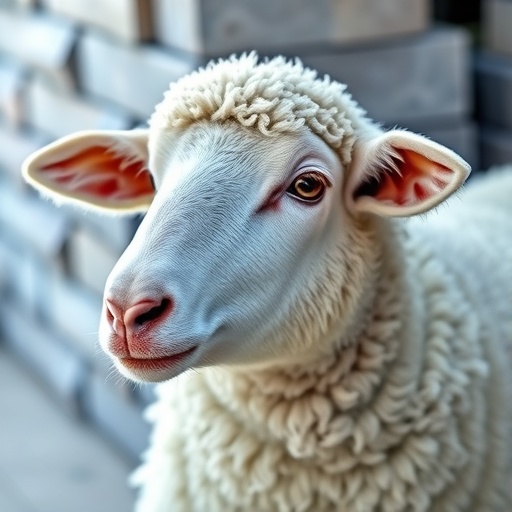
The flavor of a glass of sheep’s milk, long assumed to be dictated primarily by the animal’s genetics and diet, turns out to be shaped to a remarkable degree by trillions of microbes living in the rumen. A new study published in the journal Microbiome has systematically linked variation in the rumen microbiome to differences in the volatile organic compounds that define sheep milk flavor, offering some of the strongest evidence yet that the microbial community inside a ruminant’s first stomach acts as a biochemical architect of one of dairy’s most economically important sensory traits.
The research, led by a team at Northwest A&F University in Yangling, China, together with collaborators at the Gansu Yuansheng Zhongxin Dairy Sheep Industry Research Institute, analyzed 447 dairy sheep in one of the largest integrated metagenome and metabolome studies conducted on ruminant milk to date. Using volatilomics profiling of milk samples, the researchers detected 306 distinct volatile organic compounds, the chemical signatures responsible for aroma and flavor perception. From this expansive chemical inventory, they narrowed their focus to 29 compounds identified as key contributors to sheep milk flavor, including (E)-2-octenal, diallyl sulfur compounds, and p-cymene, each of which imparts distinctive sensory notes ranging from green, fatty aromas to garlic-like sulfur character and citrus-like freshness.
What emerged from the statistical dissection of these compounds was striking. For 20 of the 29 key flavor compounds, a larger proportion of phenotypic variance was explained by the rumen microbiome than by host genetic factors. In practical terms, this means that the composition of the microbial community fermenting feed in the animal’s rumen predicted the flavor chemistry of the milk more powerfully than the animal’s own DNA. This finding inverts a long-standing assumption in dairy breeding and production, where genetic selection has been the principal tool for shaping milk quality traits, and it suggests that the rumen ecosystem may represent an underexploited lever for improving dairy products.
To understand how microbial variation translated into flavor variation, the team performed deep metagenomic sequencing of rumen contents and compared animals grouped according to their milk volatile profiles. The analysis revealed significant differences in microbial community structure between the high and low volatile organic compound profile groups. Among 133 differentially abundant species, three emerged as key microbial signatures distinguishing the two flavor groups: Paludibacteraceae bacterium, Hallella mizrahii, and Sodaliphilus pleomorphus. These species, previously little celebrated in dairy science, now stand out as potential biomarkers of flavor phenotype, opening the door to microbial screening as a complement to conventional animal selection.
At the functional level, the researchers found that flavor-associated differences between the groups were concentrated in the metagenomic functional potential related to sulfur metabolism, nitrogen metabolism, and unsaturated fatty acid biosynthesis. This triad of biochemical pathways makes intuitive sense once the chemistry of milk flavor is considered. Sulfur compounds such as the diallyl sulfur species identified in the milk are direct products of microbial sulfur transformation, while aldehydes and other unsaturated lipid-derived volatiles trace back to the fate of polyunsaturated fatty acids in the rumen. Nitrogen metabolism, meanwhile, feeds into the amino acid and peptide pools from which numerous aroma-active compounds can be derived.
To connect function to organism, the team reconstructed 2,041 metagenome-assembled species-level genome bins, abbreviated SGBs, from the rumen sequence data. This reconstruction allowed them to link differentially abundant functional genes to their putative species-level carriers, effectively assigning responsibility for specific biochemical capabilities to individual microbial taxa. It is this gene-to-species mapping that transforms the study from a correlational catalog into a mechanistic hypothesis: rather than simply observing that certain microbes co-occur with certain flavors, the researchers could identify which organisms carry the genes whose activity plausibly generates or consumes the flavor precursor molecules.
One of the most concrete biochemical threads in the study concerned the aldehyde cluster of flavor compounds. Aldehydes, which contribute grassy and green aromas to milk at low concentrations, were positively correlated with ruminal linoleic acid and negatively correlated with stearic acid. This pattern fits the known biochemistry of lipid transformation in the rumen. Linoleic acid, an unsaturated fatty acid, serves as a substrate that rumen microbes sequentially hydrogenate, and intermediates along this pathway can escape complete saturation, pass into the milk, and be oxidized into aldehydes. Stearic acid, the fully saturated endpoint of that hydrogenation chain, represents the terminal product, so a rumen that has driven biohydrogenation to completion leaves fewer reactive intermediates behind.
The comparison between high and low volatile profile groups sharpened this picture considerably. Sheep in the high volatile profile group exhibited significantly lower abundances of enzymes associated with polyunsaturated fatty acid biohydrogenation, including BBI and PAI type isomerases and reductases, together with a clear divergence in enzyme-type preference between the groups. In other words, animals whose milk carried richer and more varied flavor chemistry harbored rumen microbial communities that were less efficient at saturating dietary unsaturated fatty acids. Incomplete biohydrogenation leaves a larger pool of unsaturated intermediates that can be incorporated into milk fat or converted into volatile oxidation products, and the new data indicate that the identity and enzymatic repertoire of the resident microbes governs where that process stalls.
Taken together, these results reveal a close relationship between the rumen microbial polyunsaturated fatty acid biohydrogenation potential and variation in milk flavor-associated volatile compounds. The study’s authors conclude that variation in the rumen microbiome is closely associated with inter-individual variation in key sheep milk flavor compounds, and that systematically characterizing the relationships between rumen microbial taxa, functional features, and milk flavor compounds provides new evidence for elucidating the potential mechanisms by which rumen microbes contribute to flavor formation in ruminant milk. While the work establishes association rather than definitive causation, the convergence of taxonomic signatures, functional gene differences, enzyme-level divergence, and metabolite correlations forms a coherent mechanistic chain that is difficult to dismiss.
The implications extend well beyond sheep. The rumen microbiome operates on the same biochemical principles in cattle, goats, and buffalo, and volatile organic compounds similarly determine consumer acceptance across the dairy industry. If rumen microbes exert a dominant influence on flavor variance in sheep milk, the same logic plausibly applies to cow’s milk destined for cheese, butter, and fluid consumption, where subtle differences in volatile chemistry can determine whether a product commands a premium price or blends into commodity shelves. Microbiome-informed feeding strategies, probiotic interventions, or even microbial selection alongside genetic selection could become realistic tools for flavor improvement.
The scale and rigor of the study deserve emphasis. Four hundred forty-seven animals provide statistical power that few rumen microbiome studies approach, and the integration of volatilomics, rumen metabolomics, deep metagenomics, and host genetic data within a single analytical framework is methodologically demanding. The reconstruction of 2,041 species-level genome bins from that dataset represents a substantial addition to the catalog of rumen microbial genomes and a resource that other researchers mining the links between rumen function and milk quality are likely to reuse extensively.
There are also practical Near-term consequences for the dairy sheep industry, which has grown rapidly in China and the Mediterranean basin as demand for specialty cheeses and niche dairy products expands. The study was supported by funding including the Major Project of Scientific and Technological Innovation 2030, the Key Research and Development Program of Shaanxi Province, and the National Natural Science Foundation of China, reflecting the strategic priority that China has placed on dairy sheep development. Partner institutions included the Gansu Yuansheng Agriculture and Animal Husbandry Technology company, which provided access to phenotypic databases and supported sample collection at the Jinchang Dairy Sheep Experimental Demonstration Base.
For consumers, the research hints at a future in which the flavor of fermented and fresh dairy products could be tuned not only through breed and pasture but through the invisible ecosystem of the rumen. For scientists, it reframes milk flavor as a trait co-produced by host and microbiome, with the microbial partner contributing more explanatory power than the genome in most of the flavor compounds measured. The next steps, the authors and the field more broadly anticipate, will involve validating these microbial signatures experimentally, testing whether manipulating key species such as Paludibacteraceae bacterium, Hallella mizrahii, or Sodaliphilus pleomorphus shifts milk volatile profiles, and determining whether the biohydrogenation enzyme landscape of the rumen can be steered through diet or microbial supplementation. If those experiments succeed, the path from rumen fermenter to flavor wheel will have been mapped end to end, and one of the oldest foods in human history will have acquired a new scientific depth.
Cite Scienmag News
Morgan Morrow. (September 9, 2026). Integrating metagenomes and metabolomes identifies microbes shaping sheep milk flavor. Scienmag. https://scienmag.com/integrating-metagenomes-and-metabolomes-identifies-microbes-shaping-sheep-milk-flavor/
Morgan Morrow. "Integrating metagenomes and metabolomes identifies microbes shaping sheep milk flavor." Scienmag, 9 September 2026, https://scienmag.com/integrating-metagenomes-and-metabolomes-identifies-microbes-shaping-sheep-milk-flavor/. Accessed 9 September 2026.
Morgan Morrow. "Integrating metagenomes and metabolomes identifies microbes shaping sheep milk flavor." Scienmag. September 9, 2026. https://scienmag.com/integrating-metagenomes-and-metabolomes-identifies-microbes-shaping-sheep-milk-flavor/


