

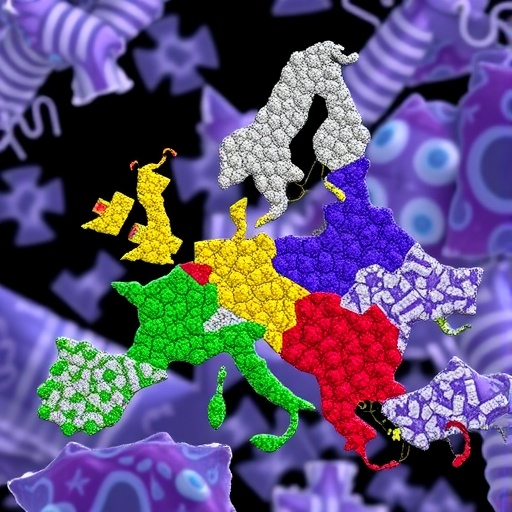
Today marks a monumental advancement in the European scientific landscape with the official launch of the German Instruct Center, Instruct-DE, hosted at the esteemed Goethe University Frankfurt. This initiative is a pivotal expansion of Instruct-ERIC, the European Research Infrastructure Consortium dedicated to providing unparalleled access to cutting-edge structural biology technologies across Europe. The establishment of Instruct-DE underscores Germany’s role as a powerhouse in molecular and structural life sciences, enabling German researchers to integrate seamlessly into a robust pan-European network of high-end research facilities.
Instruct-ERIC functions as a distributed infrastructure, uniquely channeling state-of-the-art methods and instrumentation for structural biology. Structural biology itself delves into the atomic-level understanding of biomolecules and macromolecular assemblies, utilizing sophisticated techniques including X-ray crystallography, nuclear magnetic resonance (NMR) spectroscopy, cryo-electron microscopy (cryo-EM), and advanced imaging methods. By incorporating Germany into this framework, the consortium broadens its geographic and technical scope, thus enhancing collective capacity to tackle biological complexity with unprecedented precision and scale.
Germany’s journey into Instruct-ERIC began with a comprehensive multi-year evaluation process culminating in the nation’s acceptance as a full partner in 2024. This strategic integration allows German institutions not only to utilize facilities abroad but also invites a reciprocal flow of scientific inquiry, enabling European researchers to leverage Germany’s exceptional technological capabilities. The creation of Instruct-DE stands as an emblem of international scientific collaboration, where knowledge, expertise, and resources transcend national boundaries to accelerate discovery.
Coordinated centrally at Goethe University Frankfurt, Instruct-DE operates on a decentralized model, pooling strengths from a consortium of premier research centers. Key partners include Helmholtz Munich, Helmholtz-Zentrum Berlin, DESY Hamburg, the European XFEL based in Hamburg, the University of Hamburg’s Center for Structural Systems Biology (CSSB), and Forschungszentrum Jülich. This collective orchestrates an integrated platform where multiple techniques converge, ranging from free-electron lasers and high-resolution NMR spectrometers to cryo-EM facilities, enabling comprehensive investigations into biomolecular structures and their dynamic functions.
Moreover, the network encompasses several national associated partners, including the Helmholtz Centre for Infection Research (HZI) in Braunschweig, University of Bayreuth, Leibniz Institute for Molecular Pharmacology (FMP) Berlin, and the Charité – Universitätsmedizin Berlin. These institutions significantly bolster Instruct-DE’s capability by contributing specialized technological innovations, biological expertise, and critical infrastructure that cater to a variety of research domains such as molecular pharmacology, infectious diseases, and clinical biochemistry.
In executing its mission, Instruct-DE integrates German cutting-edge technology into the European-wide Instruct Technology Catalog, an accessible database and portfolio of advanced scientific equipment and methodologies. Researchers across the 17 partner nations can access this wealth of resources at no cost, democratizing access to tools that were previously confined to isolated institutions. This radical accessibility enhances experimental reproducibility, collaborative synergy, and accelerates translational research efforts across disciplines like drug discovery, enzyme engineering, and mechanistic enzymology.
The incorporation of Germany into this European consortium marks a critical inflection point, as articulated by Instruct-ERIC Director Prof. Dr. Harald Schwalbe, who highlights the significance of Germany’s leadership in structural biology and the enrichment of transnational research collaborations. These developments are poised to catalyze a renaissance in structural biology, propelling intricate studies into protein folding, molecular recognition, membrane protein complexes, and macromolecular machines that underpin fundamental cellular processes.
German researchers benefit profoundly from this integration by gaining enhanced access to specialized experimental platforms, data processing pipelines, and training programs within Europe’s most advanced research environments. The initiative not only fortifies Germany’s position at the global forefront of structural biology but also generates new interdisciplinary research avenues, combining experimental data with computational modeling and integrative biology approaches to decipher complex biomolecular systems.
Beyond academic impact, Instruct-DE has significant potential to influence biomedical research and pharmaceutical development. The detailed understanding of molecular structures facilitates rational drug design, the development of next-generation therapeutics, and targeted interventions for diseases with structural aberrations. By fostering open access and shared expertise, the consortium accelerates innovation cycles and streamlines the translation of laboratory discoveries into clinical and industrial applications.
Crucially, Instruct-DE also serves as a training hub, where emerging scientists acquire expertise in the latest technologies and methodologies essential for modern structural biology. The initiative supports workshops, exchange programs, and collaborative projects fostering skill development and knowledge dissemination. This educational dimension ensures the sustainability of the infrastructure by cultivating a new generation of experts equipped to innovate and advance the field on a global scale.
The success of Instruct-DE epitomizes the broader European vision for research infrastructure: decentralization combined with integration fosters resilience, diversity, and excellence in scientific endeavors. By uniting distinct centers under a collaborative framework, the consortium overcomes limitations of singular facilities, promotes resource optimization, and enhances the scientific return on investment for public funding agencies.
Overall, the inauguration of Instruct-DE not only enriches scientific capabilities but also symbolizes a commitment to open science, equitable access, and collaborative advancement of knowledge. This initiative provides a powerful blueprint for future multinational scientific ventures aimed at unraveling the complexities of life at an atomic level, bridging the gap between technology, biology, and society for the benefit of all.
News Publication Date: October 17, 2025
Web References: Not provided
References: Not provided
Cite Scienmag News
Jason Bradley. (October 17, 2025). Instruct-DE Enhances Europe’s Structural Biology Research Infrastructure. Scienmag. https://scienmag.com/instruct-de-enhances-europes-structural-biology-research-infrastructure/
Jason Bradley. "Instruct-DE Enhances Europe’s Structural Biology Research Infrastructure." Scienmag, 17 October 2025, https://scienmag.com/instruct-de-enhances-europes-structural-biology-research-infrastructure/. Accessed 6 September 2026.
Jason Bradley. "Instruct-DE Enhances Europe’s Structural Biology Research Infrastructure." Scienmag. October 17, 2025. https://scienmag.com/instruct-de-enhances-europes-structural-biology-research-infrastructure/


