


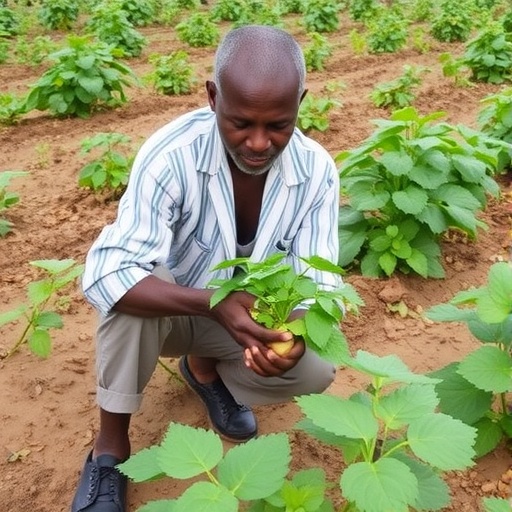
In the lush landscapes of Mbeya, Tanzania, the cultivation of Irish potatoes, scientifically known as Solanum tuberosum, experiences both the bounteous attributes of nature and the nefarious challenges posed by pests and diseases. Despite advancements in agricultural science, smallholder farmers continue to battle against these agrarian adversities, influencing their decision-making processes and the efficacy of their pest management practices. The survival of their crops hinges not just on environmental factors, but equally on the knowledge and strategies that farmers have accumulated through experience and education.
Understanding farmer knowledge becomes pivotal in agricultural discourse, particularly in regions like Mbeya where Irish potatoes serve as both a staple food and a crucial cash crop. Farmers are often equipped with a unique repository of knowledge forged by their interactions with the land across generations. This indigenous knowledge encompasses both traditional cultivation methods and learned practices from agricultural education. However, the interface between this knowledge and modern pest and disease management strategies often reveals gaps that can hinder progress and profitability.
Pest pressures in potato cultivation can result in considerable economic losses. Farmers confront a plethora of pests, including the notorious potato beetle and aphids, which can devastate an entire crop if unchecked. Understanding the biology and behavior of these pests serves as a foundational step in developing an effective management strategy. Knowledge of pest life cycles, feeding habits, and environmental tolerances can inform farmers when to apply control measures and which are most effective, significantly reducing reliance on chemical pesticides that can have long-term ecological consequences.
Furthermore, disease management presents unique challenges, with various pathogens capable of infecting potatoes, leading to diseases such as late blight and viral infections. These diseases can have devastating impacts on yield and quality and require farmers to adopt integrated pest management (IPM) techniques. Such strategies not only involve chemical interventions but also crop rotation, resistant varieties, and cultural practices that promote plant health. Nevertheless, it is often the implementation of these strategies that proves difficult, as it requires both resources and a willingness to shift from familiar practices.
The decision-making process for farmers engages a myriad of factors beyond simply pests and diseases. Economic constraints play a significant role, particularly for smallholder farmers who may face financial limitations that preclude investment in the necessary inputs for effective pest management. Limited access to agricultural extension services further exacerbates the situation, as farmers often lack the latest information on pest and disease management and are left relying on outdated or insufficient practices. The intersection of economics and agricultural knowledge creates a complex scenario where informed decision-making is critical yet often stymied.
Effective communication between researchers and farmers can bridge the knowledge gap. Initiatives aimed at enhancing farmers’ access to the latest agricultural research are vital for promoting awareness about integrated pest management and sustainable practices. Educational programs and workshops can empower farmers with fresh insights and boost their confidence in adopting innovative techniques. This shift toward a collaborative model can enhance the resilience of farming communities, equipping them to better navigate market dynamics and environmental pressures.
Moreover, as climate change continues to disrupt agricultural practices worldwide, understanding how altered environmental conditions affect pest and disease dynamics becomes increasingly vital. This will require an adaptive approach, where farmers are not only educated about current pest and disease issues but are also equipped to respond to emerging challenges as conditions evolve. Research must focus on the intersection of climate science and agriculture, ensuring that solutions remain relevant and practical within the evolving context of global warming.
In light of these challenges, the path forward necessitates a multi-faceted approach. Building a robust support network involving government agencies, NGOs, local universities, and research institutions can foster an environment conducive to change. This collaborative effort can streamline resources and information, allowing for a more integrated pest management framework that supports the nuanced realities faced by farmers.
As the global community continues to strive for food security, understanding and improving farmer knowledge, practices, and decision-making remains not just an agricultural concern but a moral imperative. Ensuring that farmers in regions like Mbeya are equipped with the knowledge to effectively manage crops against pests and diseases could significantly enhance their livelihoods and the regional economy. The implications stretch beyond the individual farmer and touch upon larger societal issues, including nutrition, employment, and resilience in the face of climate change-induced challenges.
Continued research in the domain of agricultural practices, particularly concerning pest and disease management, is essential. As the dynamics of both agricultural science and environmental conditions evolve, ongoing studies can ensure that the strategies remain relevant and effective. Tracking the advancements in technology and their application in the field can help further refine the techniques employed by farmers and create a sustainable future for Irish potato cultivation in Tanzania and beyond.
In conclusion, the journey towards effective pest and disease management in Irish potato cultivation in Mbeya, Tanzania highlights the integral role of farmer knowledge and practices. Addressing gaps in understanding, fostering access to education, and ensuring relevant support systems are all pivotal components of a comprehensive approach to agricultural sustainability. As this understanding deepens, it becomes clearer that the efficacy of pest management hinges not solely on chemical solutions, but rather on an amalgamation of knowledge, practices, and informed decision-making derived from the synergy between farmers and the scientific community.
Laizer, H.C. Understanding farmer knowledge, practices and decision-making in pest and disease management: the case of Irish potato (Solanum tuberosum) cultivation in Mbeya, Tanzania. Discov Agric 3, 260 (2025). https://doi.org/10.1007/s44279-025-00440-z
Cite Scienmag News
Alan Morgan. (November 27, 2025). Insights into Pest Management in Mbeya Potato Farming. Scienmag. https://scienmag.com/insights-into-pest-management-in-mbeya-potato-farming/
Alan Morgan. "Insights into Pest Management in Mbeya Potato Farming." Scienmag, 27 November 2025, https://scienmag.com/insights-into-pest-management-in-mbeya-potato-farming/. Accessed 3 September 2026.
Alan Morgan. "Insights into Pest Management in Mbeya Potato Farming." Scienmag. November 27, 2025. https://scienmag.com/insights-into-pest-management-in-mbeya-potato-farming/


