


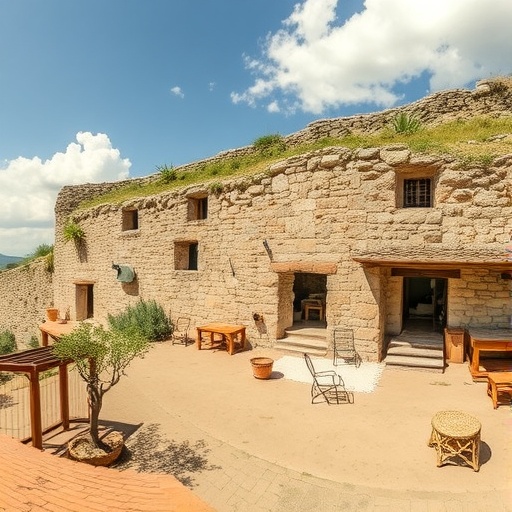
In a groundbreaking study, researchers have meticulously analyzed domestic activities at the Mid-Neolithic site of Molino Casarotto in Vicenza, Northeast Italy, shedding new light on the daily lives of ancient communities. This research, titled “Cooking, cleaning, and tossing: high-resolution analysis of domestic activities,” delves into the intricacies of household routines, emphasizing how these activities reflect broader social structures and cultural practices. The findings not only illuminate the domestic sphere of the Mid-Neolithic period but also contribute to our understanding of the evolution of human behavior in relation to their environments.
The team led by Cristiano, along with Gregorio and Federico, utilized a combination of advanced archaeological methods and high-resolution analysis to explore the residues and artifacts left behind by ancient inhabitants. These methodologies, including stratigraphic excavation, were pivotal in constructing a vivid picture of household life during this era. By carefully examining food preparation tools, waste disposal patterns, and spatial organization within the site, the researchers uncovered significant insights into daily routines that shaped community interactions.
Interestingly, the study highlights the relationship between culinary practices and social dynamics. The artifacts analyzed included grinding stones, cooking pots, and remains of foodstuffs, revealing a complex interplay of consumption and social gatherings. Through these findings, researchers posited that communal cooking and sharing of meals played a vital role in fostering social cohesion among groups, suggesting that even in prehistoric times, the act of breaking bread was a significant factor in building relationships and community ties.
Cleaning practices also emerged as an essential element of domestic life in the Mid-Neolithic. The analysis of debris and residues pointed to a sophisticated understanding of hygiene and waste management among inhabitants. This revelation challenges previously held notions that prehistoric peoples lived in unsanitary conditions. Instead, the evidence suggests that these communities had developed strategies to manage refuse efficiently, thereby enhancing their overall health and living conditions.
The research team also explored the role of discarding, a seemingly mundane activity that holds deeper meanings in archaeological contexts. By studying the patterns of waste disposal at Molino Casarotto, the researchers uncovered how certain items were deliberately set aside and eventually discarded, reflecting cultural values and practices surrounding material goods. This aspect of the research is vital, as it provides insights into the decision-making processes of ancient peoples and their relationships with objects and resources.
Moreover, the study considers the spatial organization of domestic areas within the site. By examining how different activities were distributed across living spaces, researchers were able to infer social hierarchies and roles within the domestic sphere. This nuanced interpretation emphasizes that domestic life was not merely a backdrop for survival but was intricately linked to social identity and community organization.
Through the combination of these various analytical approaches, the study illustrates how domestic activities at Molino Casarotto extended beyond physical tasks; they were laden with symbolic meanings and social implications. The findings unearthed by Cristiano and his colleagues indicate that even in the Mid-Neolithic, household activities were a complex amalgamation of labor, social interaction, and cultural expression.
As the research progresses, the team hopes to extend their findings beyond Molino Casarotto by comparing their results with other contemporary sites across Italy and Europe. This comparative approach could potentially unravel broader patterns of domesticity and social organization during the Neolithic period, offering a richer context to understand how ancient people adapted their lifestyles to changing environments and social dynamics.
The significance of this research extends to broader discussions within archaeology and anthropology, particularly concerning how we understand the evolution of human societies. By focusing on the minutiae of daily life, researchers pave the way for a more comprehensive view of history that integrates complex social behaviors with environmental adaptations. This paradigm shift highlights the importance of domestic spaces not just as locations of survival but as active arenas where culture and community were continuously negotiated and constructed.
As we reflect on the revelations from Molino Casarotto, we are reminded that the study of the past is not merely an academic exercise; it is fundamentally about understanding the human experience across time. The connections forged through cooking, cleaning, and communal living resonate with us today, reminding us of the enduring nature of social bonds and the ways in which we create meaning through our daily rituals.
This pioneering study, set to be published in “Archaeological and Anthropological Sciences,” not only contributes to the academic discourse surrounding the Neolithic but also invites a larger audience to appreciate the depth and complexity of ancient life. As we look toward future research, one thing is clear: the past continues to hold valuable lessons for our present and future, reflecting the timelessness of human connections.
In conclusion, the meticulous examination of domestic activities at Molino Casarotto not only enriches our understanding of the Mid-Neolithic but also reaffirms the idea that everyday practices are crucial for comprehending the broader fabric of human society. It paints a portrait of a community that, despite the passage of millennia, still shares fundamental similarities with us in its reliance on cooperation, cleanliness, and the essential act of gathering around food. The compelling narrative woven by this research underscores the importance of continuing to investigate our ancestors’ lives, as their stories are intrinsically tied to who we are today.
Cristiano, N., Gregorio, D.S. & Federico, P. Cooking, cleaning, and tossing: high-resolution analysis of domestic activities at the Mid-Neolithic site of Molino Casarotto (Vicenza, NE Italy).
Archaeol Anthropol Sci 18, 4 (2026). https://doi.org/10.1007/s12520-025-02353-w
Cite Scienmag News
Courtney Benton. (December 11, 2025). Insights into Neolithic Domestic Life at Molino Casarotto. Scienmag. https://scienmag.com/insights-into-neolithic-domestic-life-at-molino-casarotto/
Courtney Benton. "Insights into Neolithic Domestic Life at Molino Casarotto." Scienmag, 11 December 2025, https://scienmag.com/insights-into-neolithic-domestic-life-at-molino-casarotto/. Accessed 6 September 2026.
Courtney Benton. "Insights into Neolithic Domestic Life at Molino Casarotto." Scienmag. December 11, 2025. https://scienmag.com/insights-into-neolithic-domestic-life-at-molino-casarotto/


