


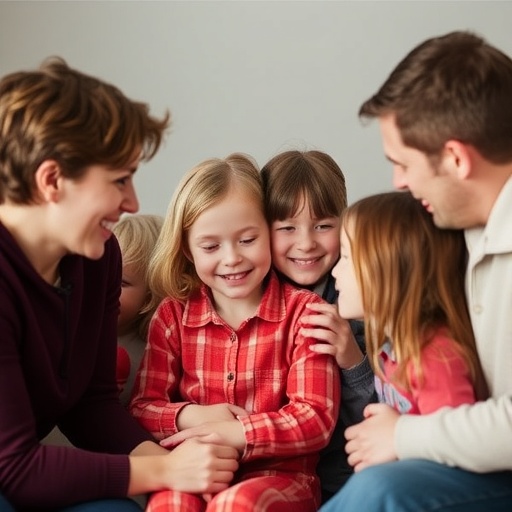
In recent years, the evolving landscape of family dynamics within LGBTQ+ communities has garnered tremendous academic and societal interest. Understanding the unique experiences, challenges, and protective factors that shape these families is critical for informing policy, social services, and public acceptance. In this progressive context, the Rainbow Austrian Longitudinal Family (RALF) study emerges as a groundbreaking research initiative. Spearheaded by a team led by B. Geidel, M. Siegel, and D. Steyrl, the study sets out to meticulously unravel the complex interplay of risk and resilience within Austrian LGBTQ+ parent families through an innovative, longitudinal, multi-method, and multi-rater design.
The RALF study, as outlined in their 2025 protocol published in BMC Psychology, represents an ambitious step forward in family psychology and LGBTQ+ studies. By adopting a longitudinal approach, the research team aims to track families over an extended period, allowing for dynamic assessment of how various factors influence family functioning and child development across crucial stages. Unlike cross-sectional studies, longitudinal designs facilitate a deeper understanding of causal relationships and temporal changes, thereby enriching evidence-based conclusions.
One of the hallmarks of the RALF study is its integrated multi-methodology framework. Recognizing that family dynamics are inherently complex and multifaceted, the researchers employ a diverse set of qualitative and quantitative data collection tools. These include standardized psychological assessments, in-depth interviews, observational measures, and ecological momentary assessments. This comprehensive methodology allows for capturing not only statistical trends but also nuances and lived experiences that traditional surveys might overlook.
Moreover, the multi-rater aspect of the study amplifies the reliability and validity of the data collected. By gathering information from multiple family members and external informants—such as teachers or healthcare professionals—the study mitigates individual biases and provides a richer, multi-dimensional view of family interactions and child wellbeing. This inclusive data collection technique is especially pertinent for LGBTQ+ families, where social acceptance and external perceptions may profoundly impact individual and family-level outcomes.
In terms of content focus, the RALF study intricately examines both risk and resilience factors. Risk factors might include experiences of stigmatization, minority stress, legal uncertainties, and social exclusion, all of which have been documented to influence mental health and familial cohesion negatively. Conversely, resilience factors involve internal family strengths such as adaptive coping strategies, supportive communication styles, positive identity development, and robust social support networks. Parsing these elements over time offers unprecedented insight into what enables some LGBTQ+ families to thrive despite external challenges.
The Austrian sociopolitical context provides a particularly insightful backdrop for this research. Austria has witnessed considerable advancements in LGBTQ+ rights, including legal recognition of same-sex partnerships and increasing social visibility. However, nuances persist, especially in rural areas or more conservative settings. The RALF study’s specific geographical focus allows researchers to contextualize findings within Austria’s evolving cultural milieu, shedding light on localized challenges and successes.
Another pivotal dimension of the study pertains to parenting practices within LGBTQ+ families. Early research has often concentrated on parental roles and child outcomes but frequently with limited methodological rigor or small sample sizes. By employing robust multi-method longitudinal data, the RALF study promises to advance our understanding of how diverse family structures and parental identities influence child development trajectories. This includes emotional, cognitive, and social domains, as well as potential disparities or advantages emergent from LGBTQ+ family environments.
The study also embraces intersectionality, acknowledging that family members’ identities and experiences are not monolithic. Factors such as gender identity, sexual orientation, ethnicity, socioeconomic status, and migratory background are accounted for in their design, enabling a nuanced analysis of how intersecting identities impact risk and resilience. This intersectional lens aligns with contemporary psychological and sociological scholarship, reinforcing the study’s relevance and comprehensiveness.
Nutrition, mental health, educational attainment, and peer relationships among children of LGBTQ+ parent families also form critical facets of investigation within RALF. By longitudinally assessing these outcomes, the study can inform preventive and supportive interventions tailored to LGBTQ+ families’ specific needs. This is vital, given that previous research has sometimes painted inconsistent or incomplete pictures of child wellbeing in these contexts.
Technological innovation is another feature embedded within the RALF project. The researchers utilize cutting-edge ecological momentary assessment (EMA) techniques that leverage smartphone-based data capture, allowing for real-time recording of emotional states and family interactions. This methodological innovation minimizes recall bias and enhances ecological validity, capturing data as families navigate their daily lives in authentic settings.
Ethical considerations remain central to the RALF study’s design, especially given the sensitivities involved in researching minority populations. The team prioritizes informed consent, confidentiality, and the minimization of participant burden. Furthermore, the study emphasizes participatory principles, engaging LGBTQ+ communities in the research process to ensure cultural competence and relevance. Such community-engaged approaches foster trust and empower participants, enhancing the quality and applicability of findings.
The potential translational impact of the RALF study cannot be overstated. Policymakers, educators, healthcare providers, and social workers stand to benefit from nuanced evidence that clarifies how to better support LGBTQ+ families. Tailored interventions and inclusive policies could emerge, addressing systemic barriers and amplifying resilience factors illuminated by the research. Moreover, the study’s outputs will undoubtedly enrich academic discourse, bridging gaps in literature and challenging prevailing assumptions about family diversity.
Perhaps most compellingly, the RALF study resonates beyond academia, contributing to broader societal dialogues on diversity, equity, and inclusion. As European societies grapple with expanding notions of family and identity, rigorous empirical findings like those expected from RALF provide an essential foundation for fostering acceptance and dismantling prejudices. Media, advocacy groups, and community organizers may leverage this knowledge to champion LGBTQ+ parent families’ rights and representation authentically.
In summary, the Rainbow Austrian Longitudinal Family (RALF) study exemplifies contemporary research excellence, combining methodological rigor with social relevance. It stands poised to deliver transformative insights that deepen our comprehension of how Austrian LGBTQ+ parent families navigate risk and resilience across time. Through its innovative design and comprehensive focus, RALF enriches scientific understanding and offers hope for a more inclusive future where diverse families flourish.
Cite Scienmag News
Glenn Wilkins. (May 28, 2025). Inside Austria’s Longest Study on LGBTQ+ Family Resilience. Scienmag. https://scienmag.com/inside-austrias-longest-study-on-lgbtq-family-resilience/
Glenn Wilkins. "Inside Austria’s Longest Study on LGBTQ+ Family Resilience." Scienmag, 28 May 2025, https://scienmag.com/inside-austrias-longest-study-on-lgbtq-family-resilience/. Accessed 3 September 2026.
Glenn Wilkins. "Inside Austria’s Longest Study on LGBTQ+ Family Resilience." Scienmag. May 28, 2025. https://scienmag.com/inside-austrias-longest-study-on-lgbtq-family-resilience/


